Crabs, Shrimps and Lobsters. Dressed to impress
Crustaceans (crabs, shrimps and lobsters) play the role of scavengers, cleaners, coral gardeners and hunters. They are an important food source for man and other mammals, including whales.
More than 10 million tons are harvested every year for human consumption. Krill, which happily are not widely fished, are the animals with the greatest biomass on the planet and critical in the food chain
Crustaceans.

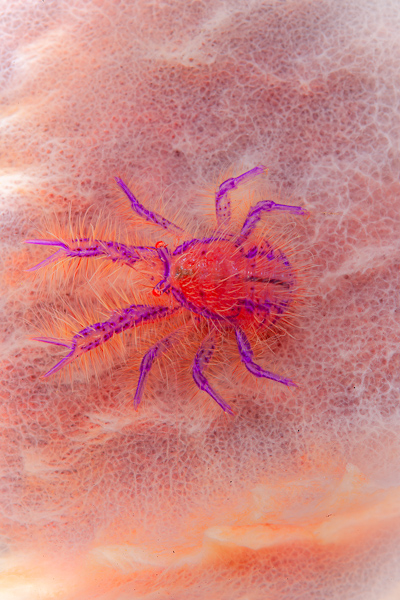
Crustaceans are invertebrates and there are 67,000 described species. Most are free living aquatic animals.
Their body is protected by an exo-skeleton which is a hard casing As the animal grows the old exoskeleton is shed and reformed periodically. To do this the animal dehydrates itself and shrinks its body. It then squeezes out of it's armour before rehydrating to swell its body by up to 30% while the new skeleton hardens. The old exoskeletons can be picked up intact, a perfect empty model of its owner.
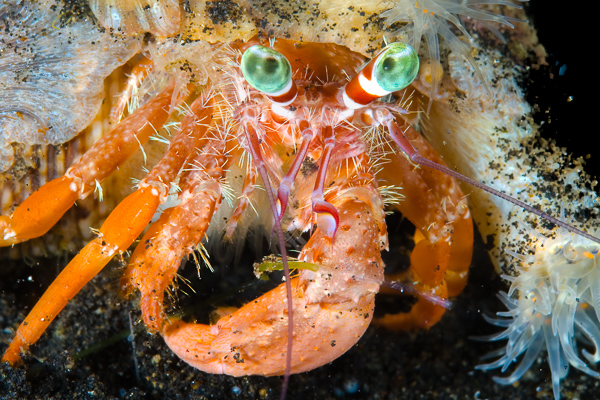
The hermit crab protects itself in someone else's old shell, upsizing his house as he grows. There is often fierce competition for good looking shells. Often crustaceans, especially crabs, will decorate their shells with sponges and anemones for camouflage and protection.

This decorator crab, covered in sponge and hydroids is barely recognisable as a crab at all.
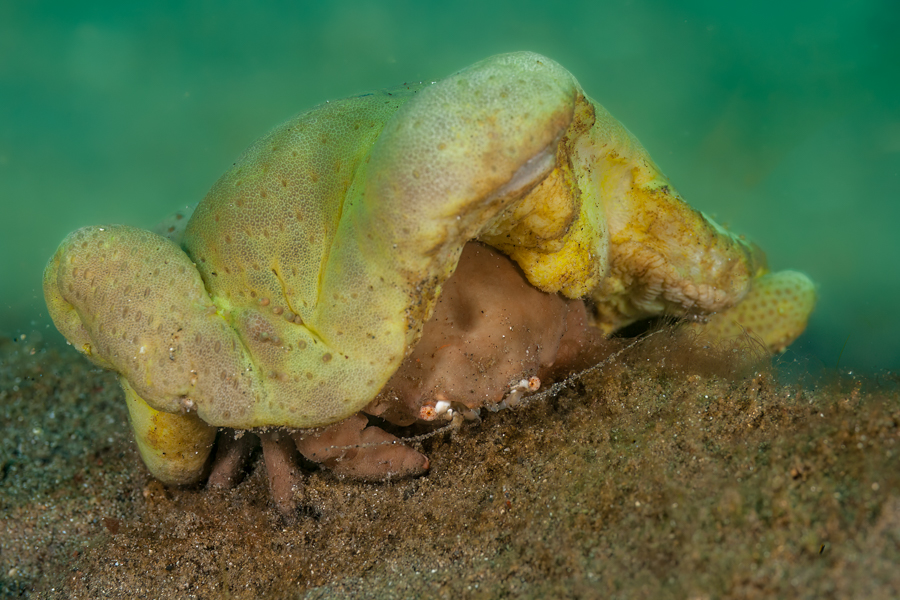
Wearing a beret of sponge!
.

Carrying a sea urchin
.
Crabs
Crabs in Kungkungan are everywhere. A veritable cornucopia of sizes, colours and bizarre and amazing adaptations to their unique environmental challenges, which constantly surprised and delighted us with each dive. Grotesque, dull, gnarled, heavily encased, well camouflaged crabs contrasted with dazzling bright candy crabs hidden in soft corals. Lace like crabs perched on tunicates, only visible if they moved.
The hermit crabs inspected and fought over shells as prospective new homes. The leaf crabs crouched under leaves attached to their shells to hide them from prying eyes. My personal favourite was the orangutan crab with its shaggy orange algae coat and pin sized golden eyes.
Some crabs swim, having modified back legs which act as paddles, some burrow and others crawl across the floor or shelter in decorated shells for protection.
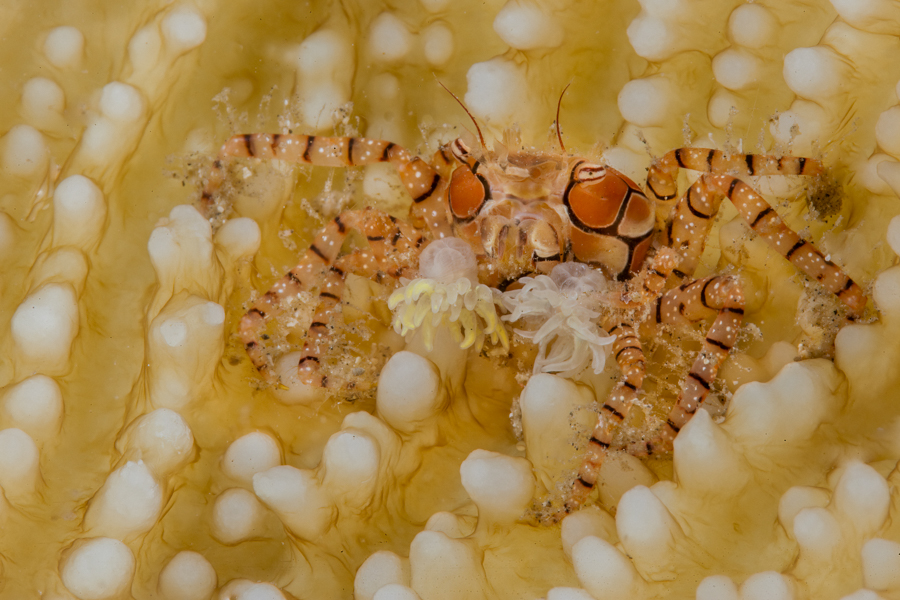
The boxer crab
He carries anemones on each front claw which he waves in the water to catch his prey on the sticky tentacles.
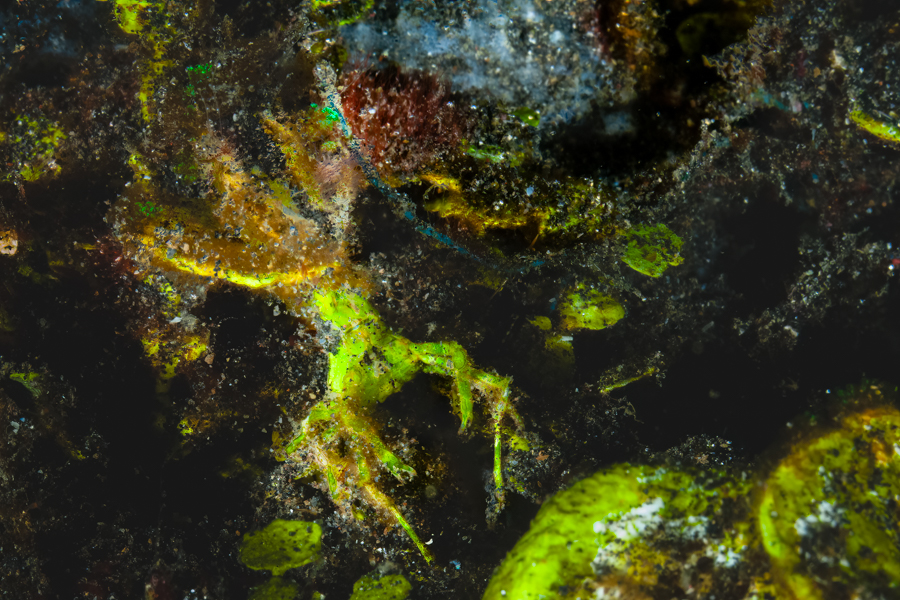
Leaf crab, virtually invisible amongst the weed
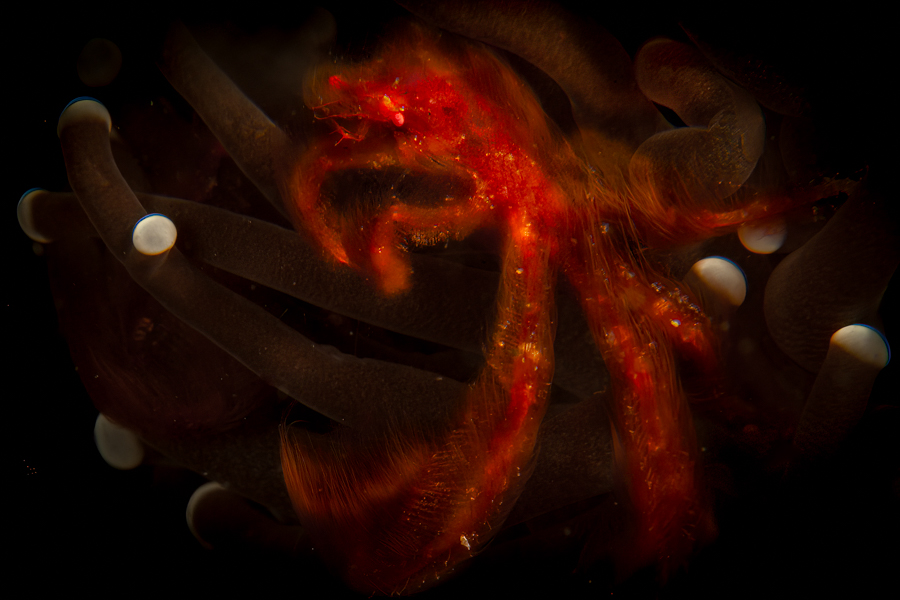
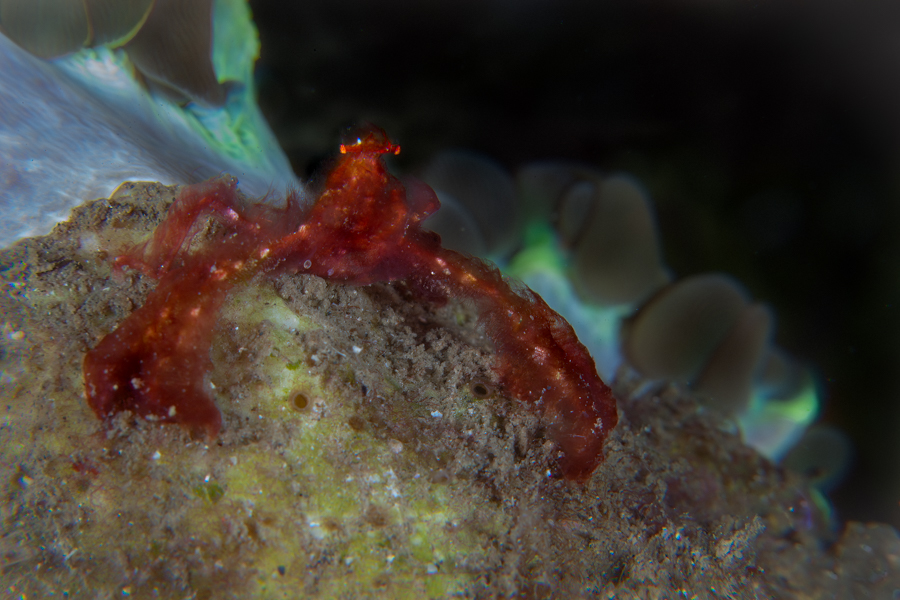
Orangutang crab
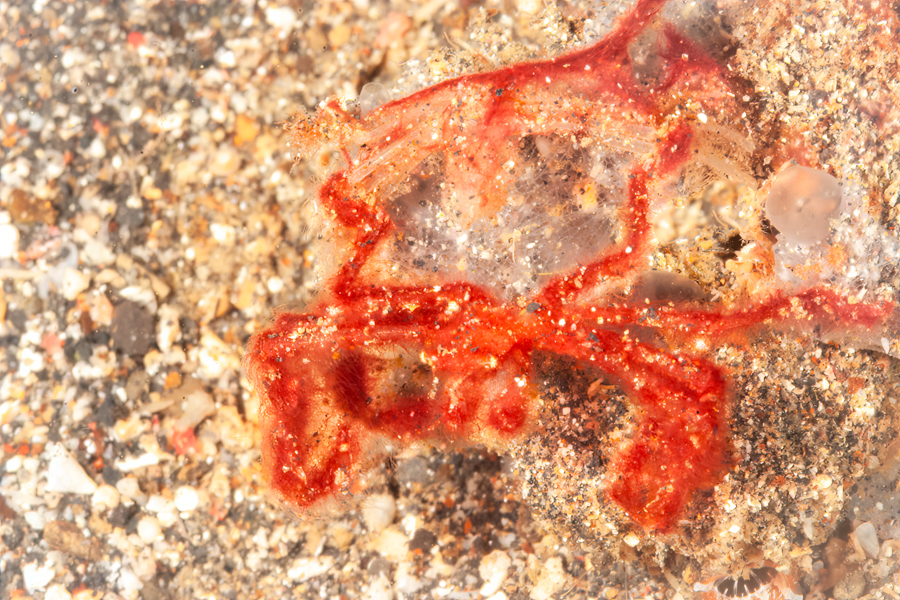
Moulting orangutang crab
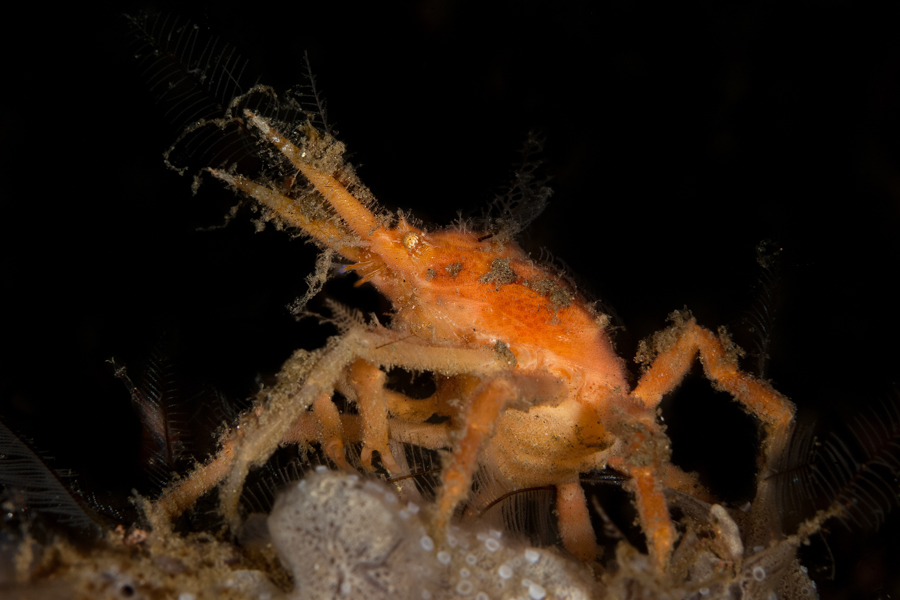
Horned crab

Decorator crab
There are many different decorator crabs in all shapes and sizes. Some will cover themselves with wood or paper or weed and others use polyps, hydroids, coral and sponge. Note all the hydroid polyps on this one and the layer of sponge and anemones on the photo below.

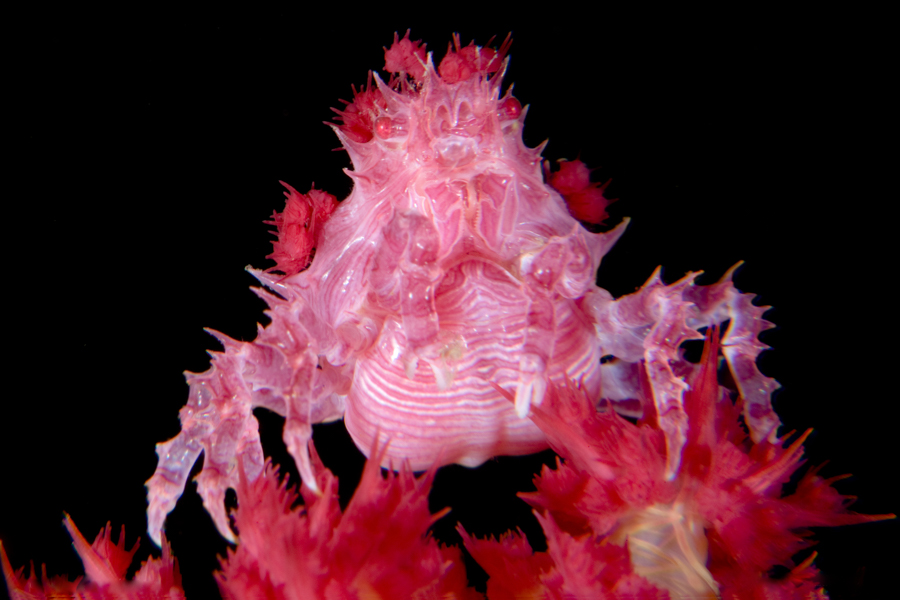
Candy crab
The candy crab (Hoplophyrs oatesii ) lives on the soft coral Dendronephthya. It blends perfectly with its host and even uses the polyps of the coral on its shell as camouflage and protection. The soft coral is a filter feeder and the crab probably eats trapped animals caught in the coral and acts as a cleaner for the coral.
This photograph took 20 minutes to take as the crab is so small, constantly moving and perfectly camouflaged.

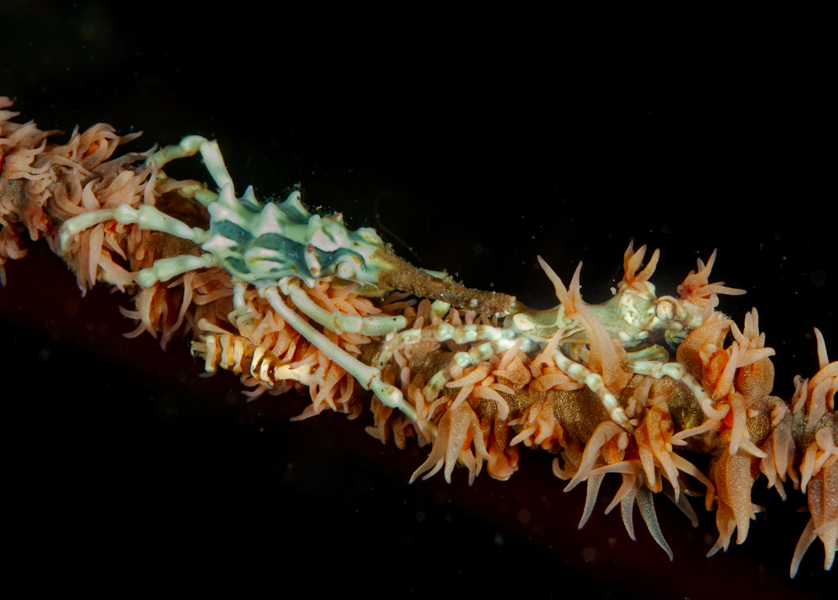
Whip corals represent an interesting habitat, acting as host to some interesting and very specific commensals. These include shrimp, gobies and crabs. This picture shows the whip coral or xeno crab ( Xenocarcinus tuberculatus). As is demonstrated in the picture, and in a manner similar to the candy crab, this crab also takes polyps from the host and deposits them on its body to provide camouflage and protection, As they grow they must moult and shed their exoskeletons and must then replace the polyps again.
Above you can see a crab with no polys, clearly recently moulted, facing its mate with polyps clearly visible on his back. There are often a pair of crabs on the same whip coral.

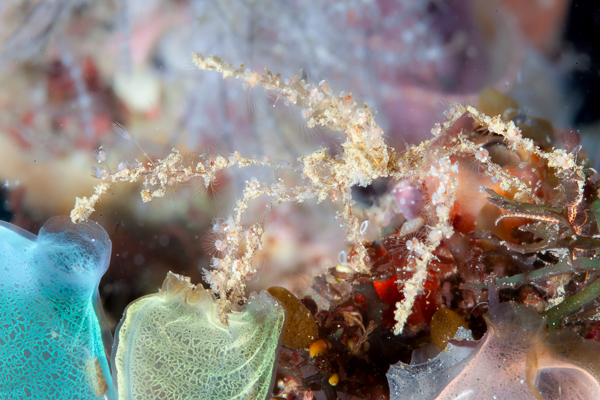
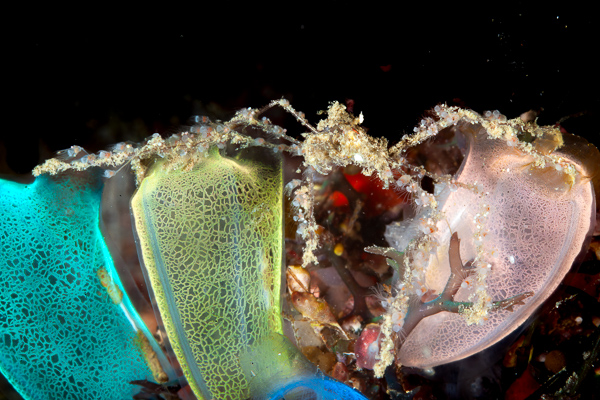
Spider crabs
These weird and wonderful crabs have long legs and tiny bodies and look just like spiders as they move across the seabed. Small polyps and sand particles complete the camouflage. This little guy is climbing over some colourful tunicates.
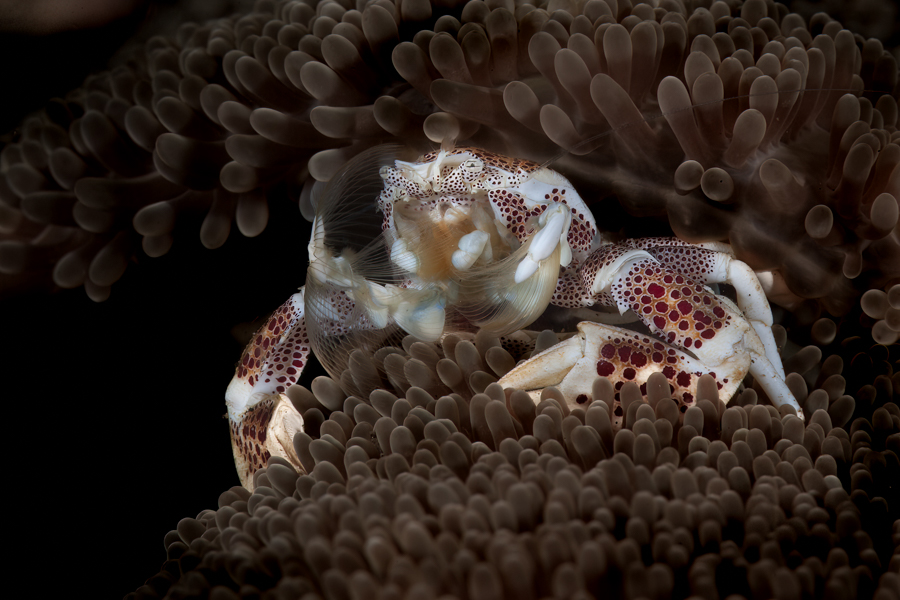
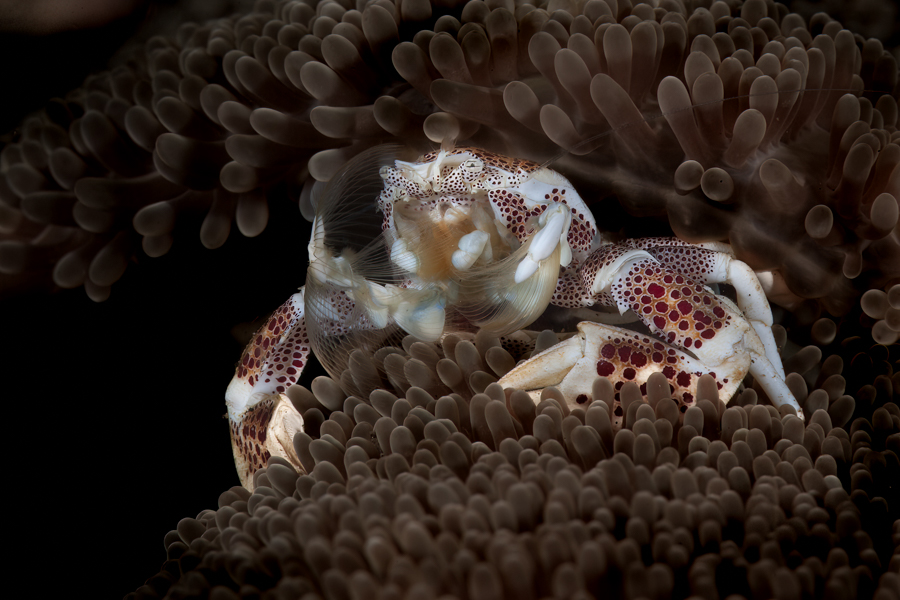
Porcelain crab
Often found in anemones, they filter feed from the safety of the anemones protection, and clip and eat the anemone tentacles.
Shrimps
The numbers, diversity, colour and form of the many shrimps of Kungkungan are mind blowing. The cleaners of the reef, they are also an important part of the food chain so they have lots of tricks to avoid detection.
Here are just a small selection we were privileged to find in our trip. Without the sharp eyed guides most of these would have remained hidden to our eyes!

The green hairy algae shrimp aka the little green shrimp, Phycocaris simulans
One of the most unusual and rare shrimps we encountered. Smaller than a pea it hides among the halimeda weed, to which it is uniquely adapted. Not much seems to be known about it but it does belong broadly in the cleaner shrimp family. Frankly it looks like it needs a clean itself!

Tiny commensal shrimp on a starfish
I don't know what this one is called but it so pretty and almost impossible to see. The starfish carry a whole community of commensal animals around with them.
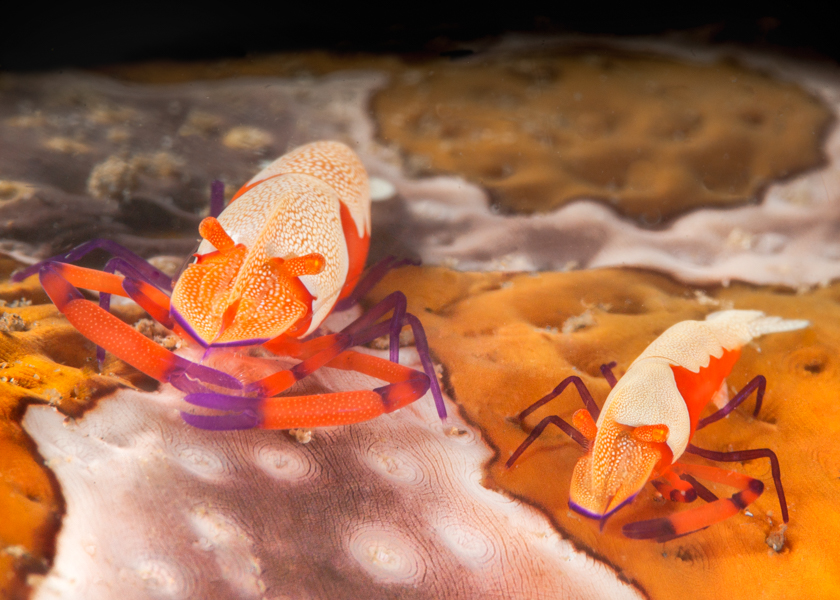
Emperor shrimp
The Imperial or emperor shrimp ( Periclimenes imperator ) is found extensively through out the Indo-Pacific. It is found on many invertebrate hosts such as the colourful sea cucumber, Bohadschia argus, where they hide in the anal canal.
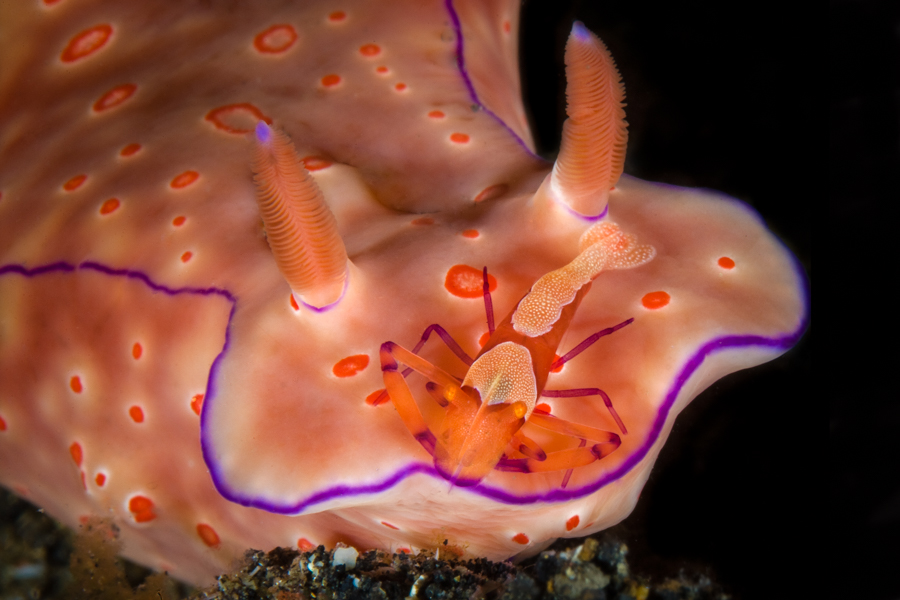
In the photograph above the shrimp was hitching a ride on the nudibranch, Certosoma trilobatum, one of the larger nudibranchs and thus large enough to be a convenient host, and from where it has been observed to feed on passing detritus. The ultimate hitch hiker!
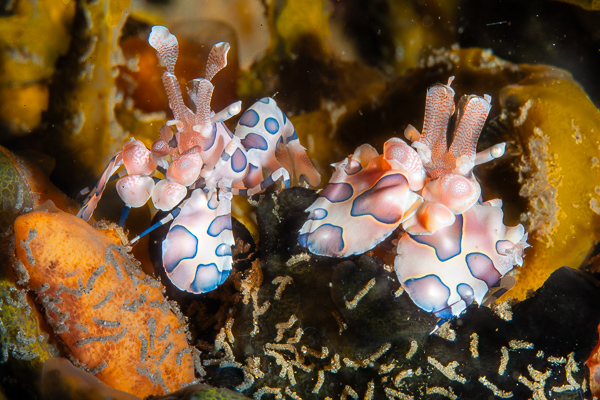

Harlequin shrimp
Harlequin shrimps ( Hymenocera elegans) are considered by many divers to be the most beautiful and photogenic of the species. They are territorial and are usually found in pairs. The large front pincers (chelipeds) are used for feeding and in communications. The female is larger than the male, The diet is small starfish which they paralyse by piercing them with the sharp front legs. This disables the starfishes hydraulic system and allows the shrimps to feed on the live captive at their leisure. In the picture below you can see the sharp needle like front leg, and the clipper like paddle.

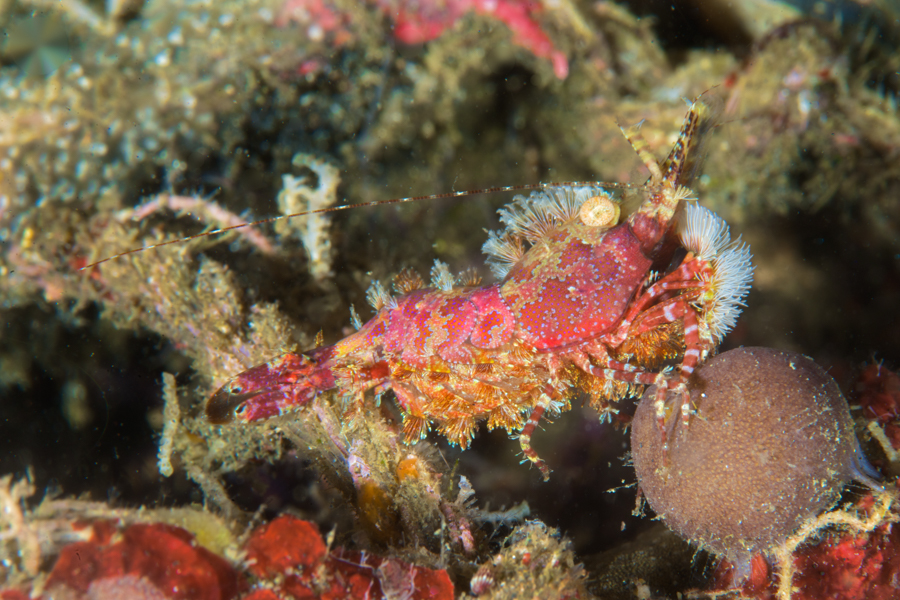
The common marble shrimp, Saron marmoratus
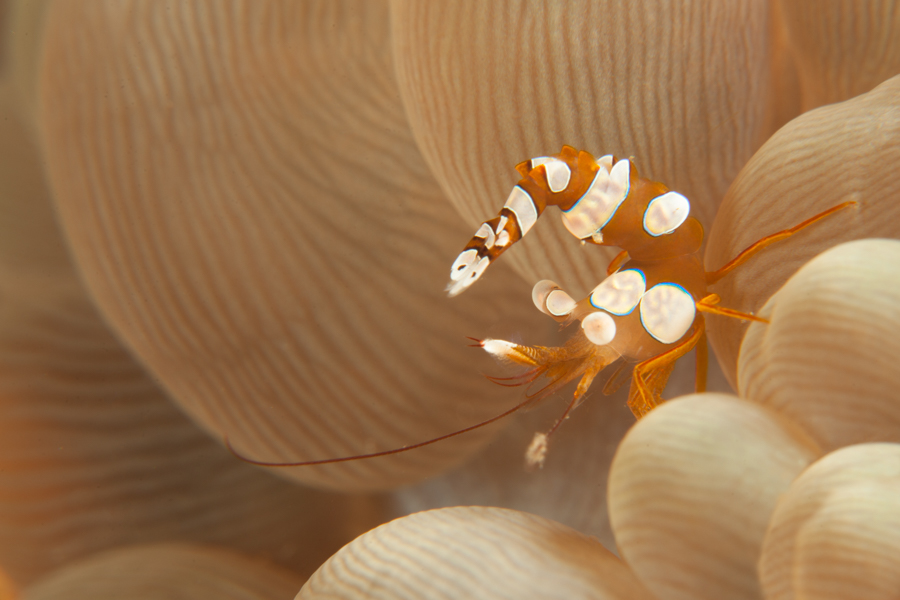
The sexy shrimp, Thor amboinensis
A familiar friend from our own eastern african shores
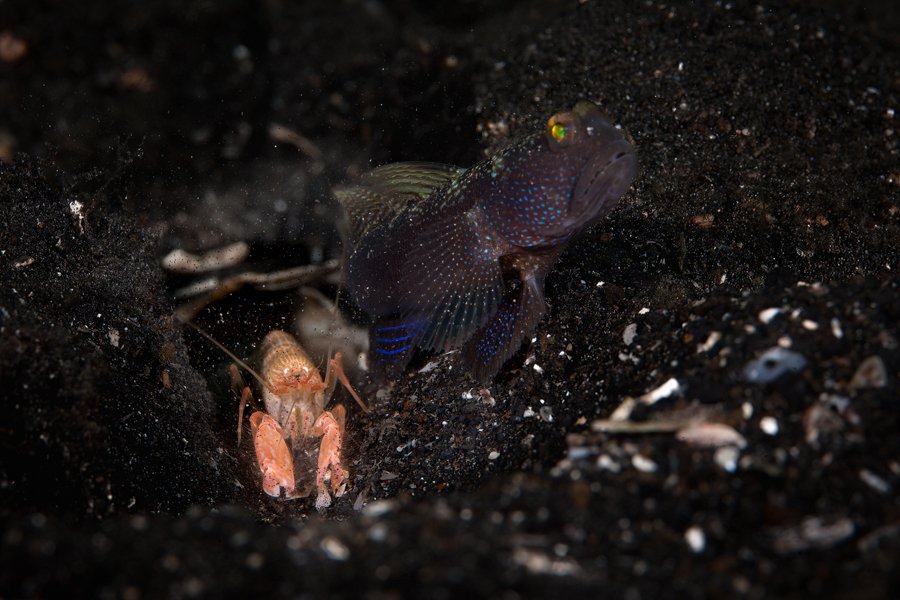
Partner shrimps
The partner goby lives with a blind shrimp in a sand burrow. The shrimp acts as the housekeeper and keeps the burrow clean. He has long antennae and keeps one on the back of the goby to receive warnings. The goby provides the eyes and ears of the pair signalling to the shrimp of approaching danger. The shrimp and goby are quite distinctive to the species.
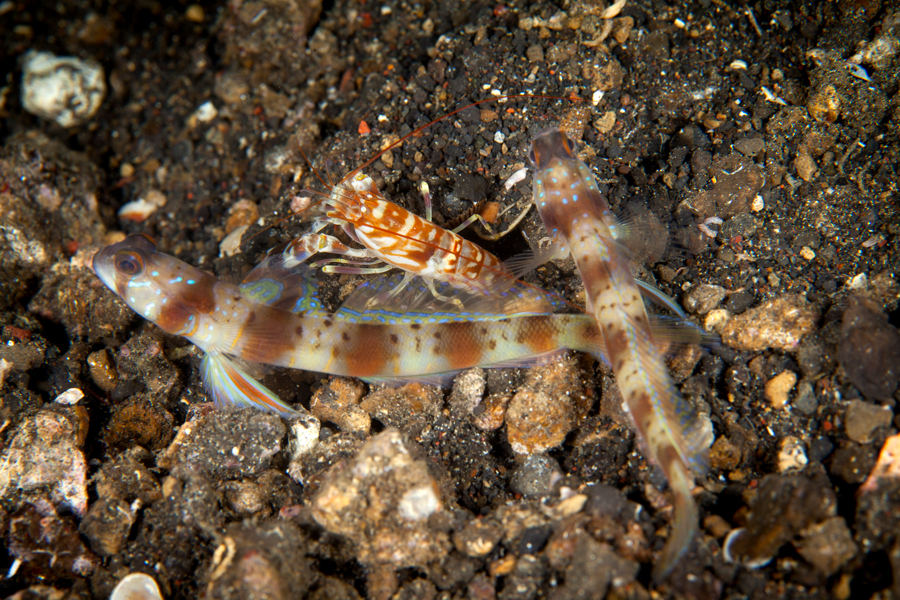

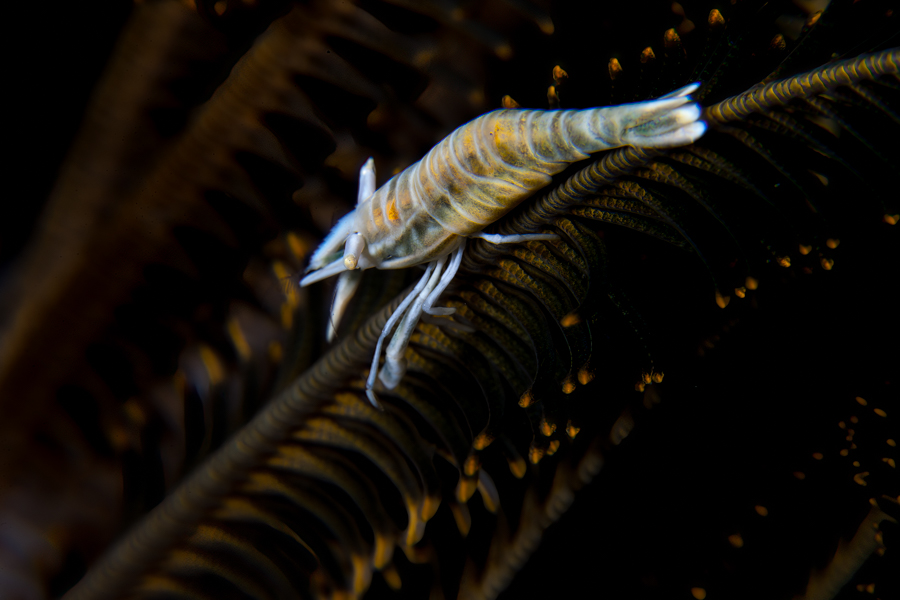
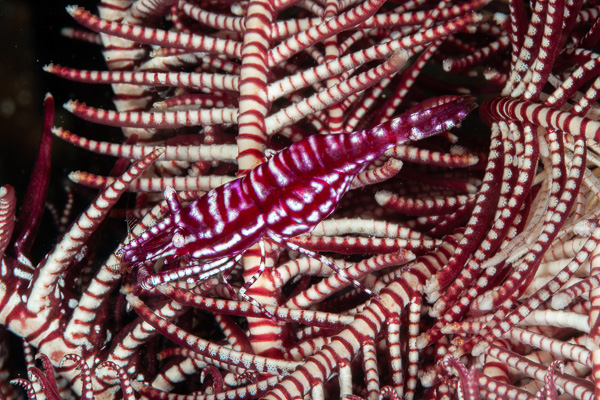
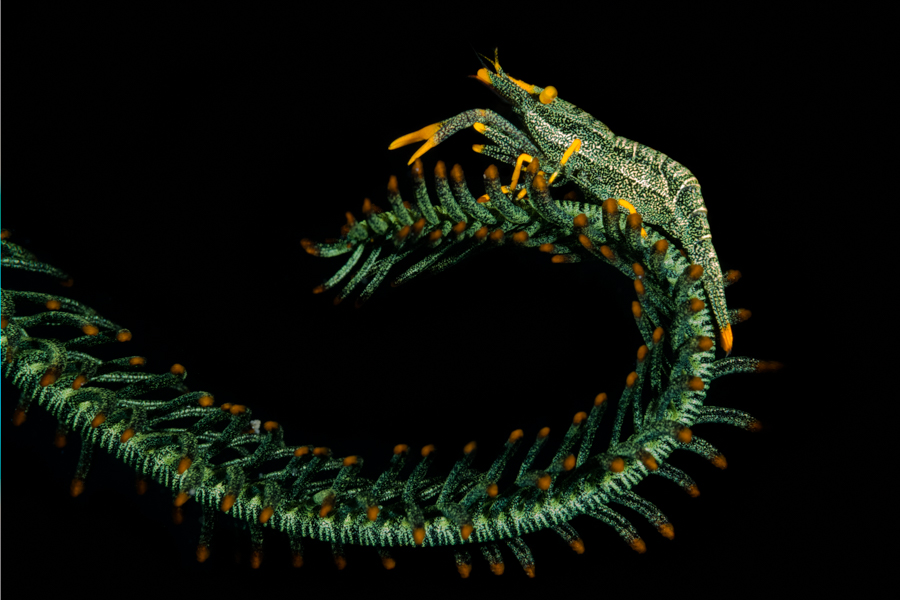
Crinoid shrimp
Feather stars ( Crinoids ) are over 600 million years old. They have arms arranged around a central disc containing the mouth and multiple leg like projections which anchor the crinoid onto rocks. Each arm has sticky feather like strands (pinnules). The arms wave in the current and filter small organisms from the water. The food dribbles down the arm to the mouth on the top of the disk. The crinoids congregate in current swept areas where passing food is plentiful. If disturbed the arms fold in and provide protective cover.
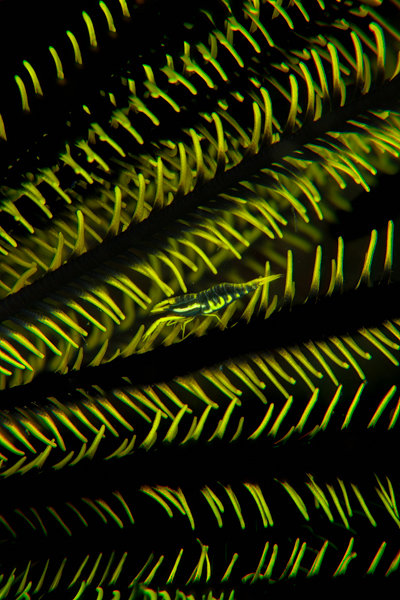
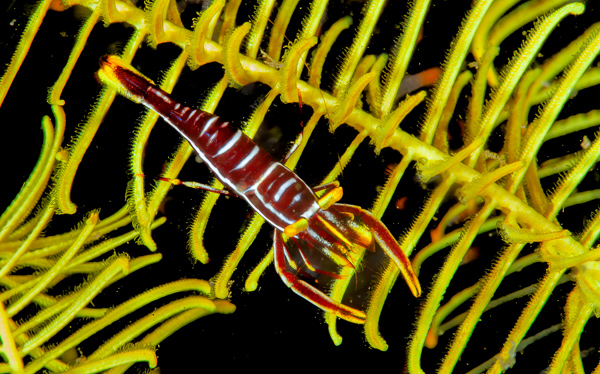
The feather star plays host to numerous animals. These animal do not eat the crinoid but shelter in its enveloping arms. These include fishes, worms, crinoid shrimps and squat lobsters. The crinoid shrimp develops a colour and texture which matches its host for perfect camouflage. The photo above right shows a crinoid shrimp which is presumably newly arrived on the yellow crinoid and just beginning to change his colouration to match.
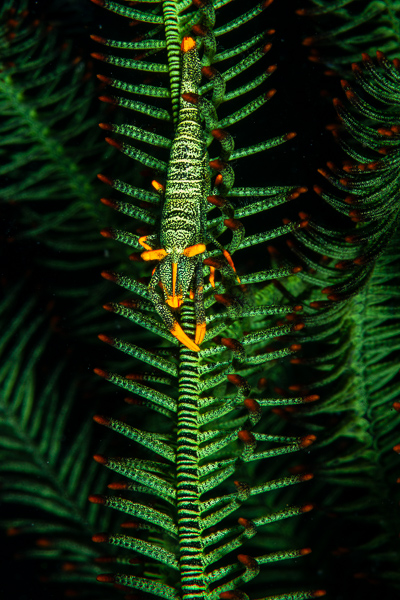
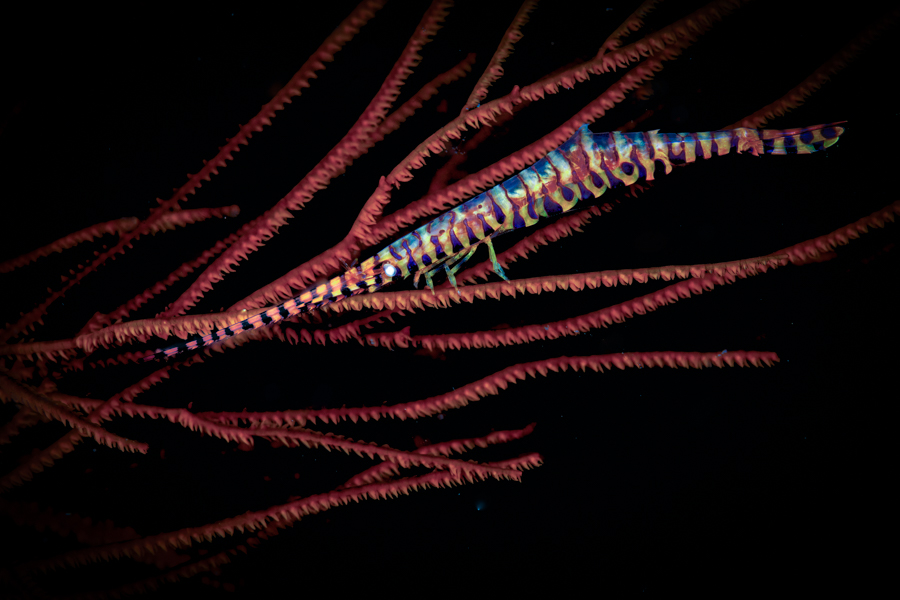
Pencil Shrimp
The pencil shrimp or saw blade shrimp is distinctive by virtue of its extremely slim and elongated shape. It is found amongst hard coral and usually takes on the colour of its host.

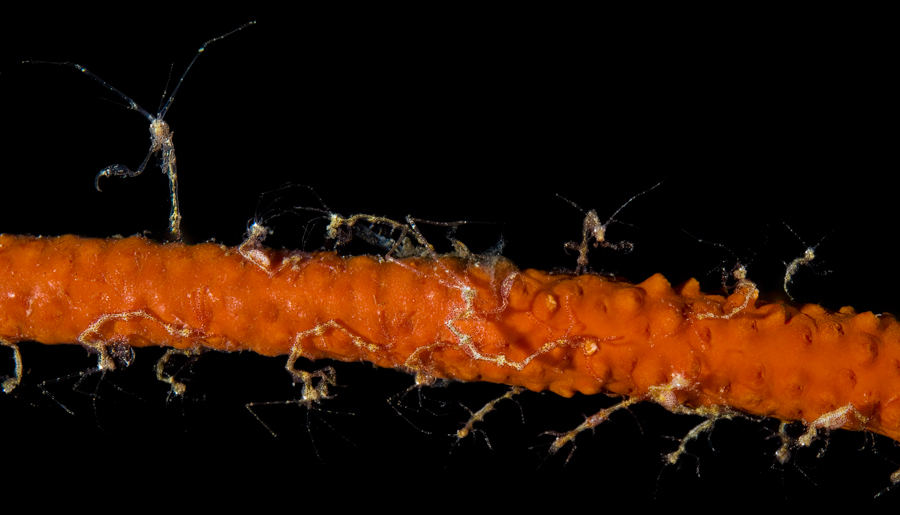
Skeleton shrimp
Hundreds of the little creatures cling to one whipcoral, arms and antennae waving in the current like extras in Men in Black.
Skeleton shrimps are so small that you can be forgiven for missing them. They have angular slender bodies and resemble miniature aliens. They are found on corals and hydroids. In this picture they are on a whip coral. They move in an animated fashion, waving arms in the air, waiting to ambush protozoa or small plankton. Females are said to kill the males after mating, using venom injected by an adapted claw. Such a waste!
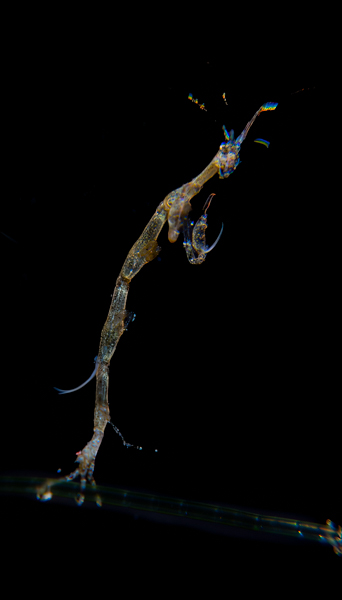
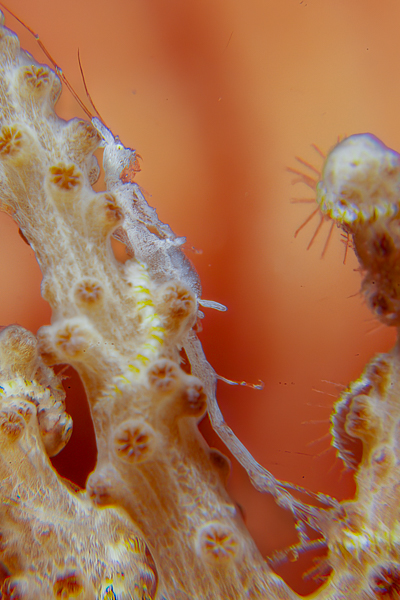
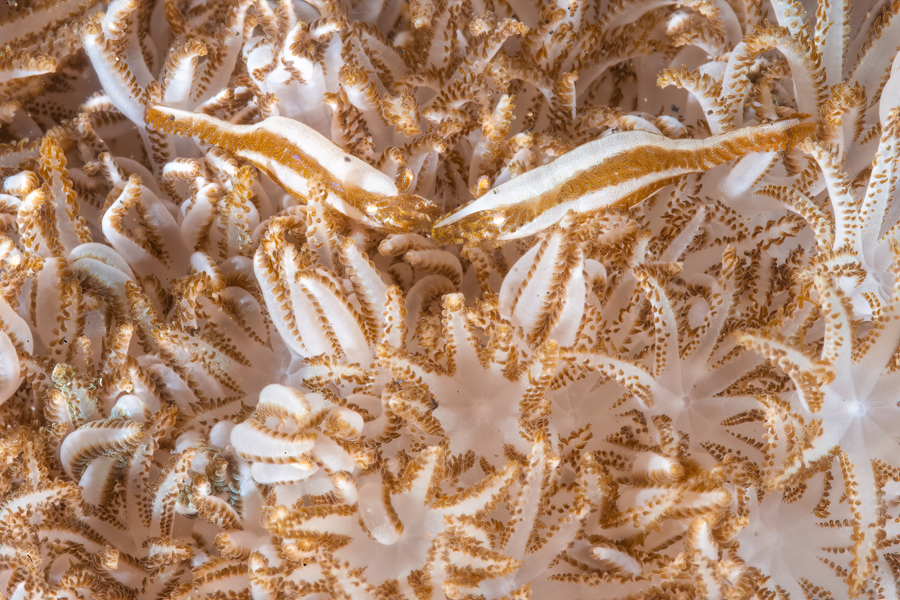
Striped Xenia Coral Shrimp (Hippolyte commensalis)
Xenia striped coral shrimps live on xenia corals , a species of soft coral found in shallow waters. Xenia is one of the few corals which move actively on their own and also known as pulsing xenia.
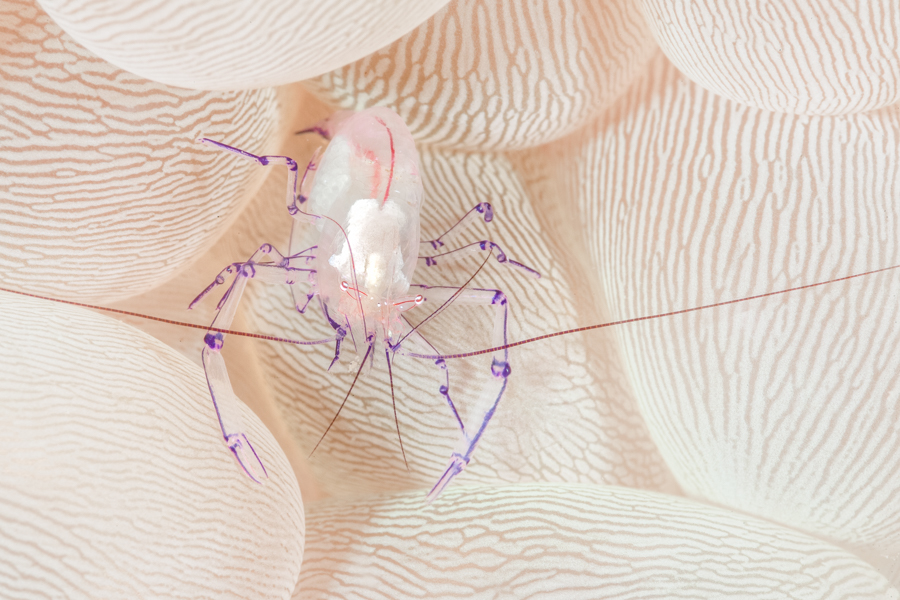
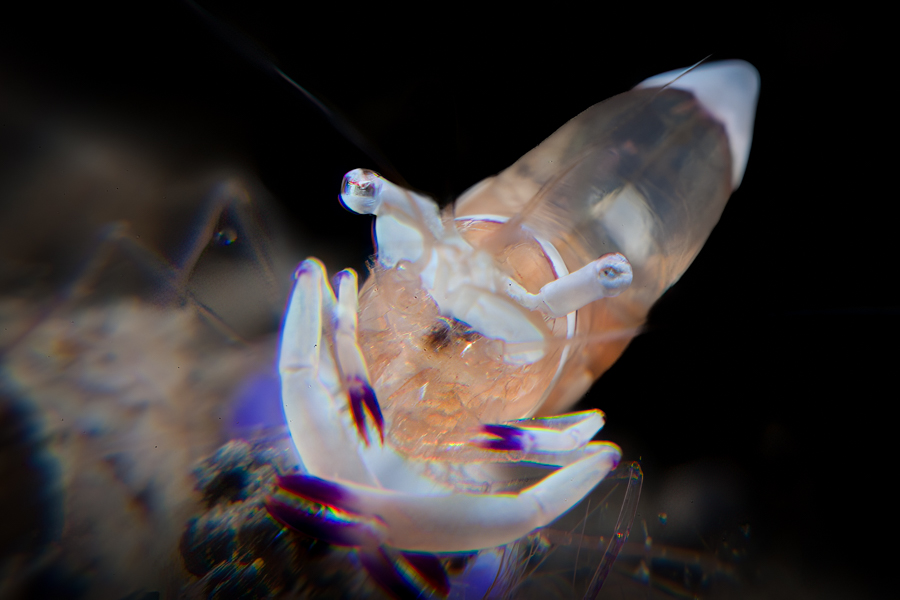
Bubble coral shrimp
Almost see-through except for the purple legs and edging, it dances across the coral and slides into the crevices

Spiny Tiger shrimp
Very rare, this little shrimp lives in the sand and rubble, often in pairs. It belongs in the same family as harlequin and bumble bee shrimps. Personally I think it looks more like a leopard marking but tiger shrimp is the name!
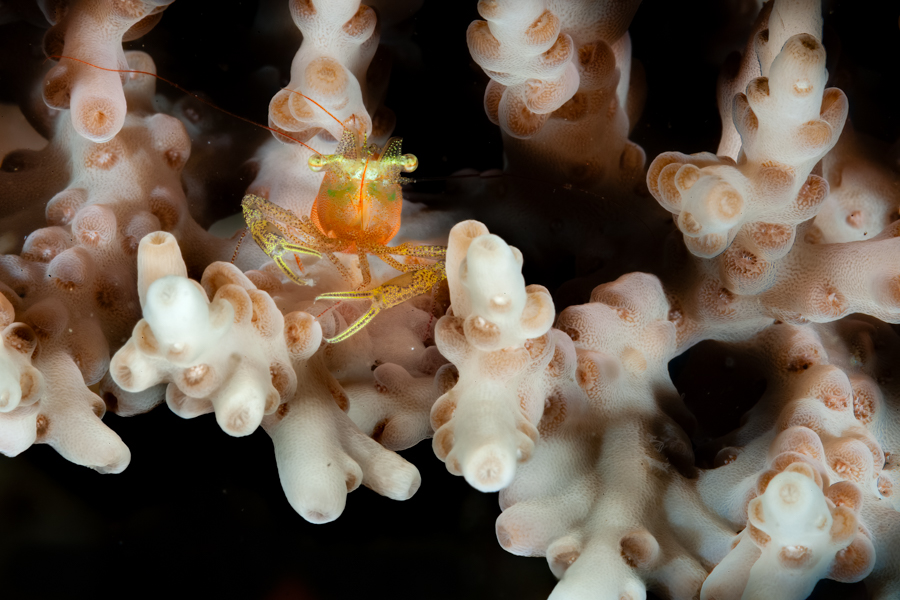
Hard coral commensal shrimp
This little commensal shrimp was hiding in staghorn coral. There are so many commensal shrimp that it is often difficult to identify them accurately.
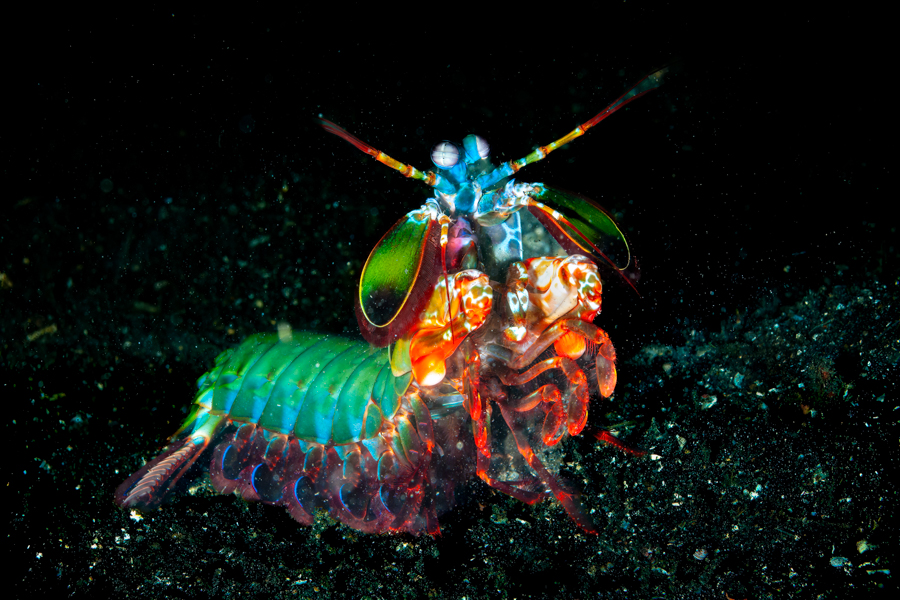
Mantis shrimp
Finally, one of the biggest shrimp species, the mantis shrimp. Typically around 10 cm long, they can reach nearly 40 cm. Voracious predators, these shrimp live in holes and burrows and catch prey with their front legs which are modified either to smash or to spear. The boxers, or smashers, put out their front appendages so fast a pressure wave hits the prey, stunning it. They have even been known to break the glass of a camera dome. Photographers are rightfully wary of close up shots for this reason. When the mantis sees his reflection in the dome he probably thinks it is a threat to his territory. The stabbing mantis shrimps literally harpoon prey with the sharp front leg.
The eyes are mounted on stalks and are independently mobile and they are thought to have the most complex eyes of the animal kingdom. Generally speaking the boxing mantis have round eyes and the stabbing mantis oblong eyes.

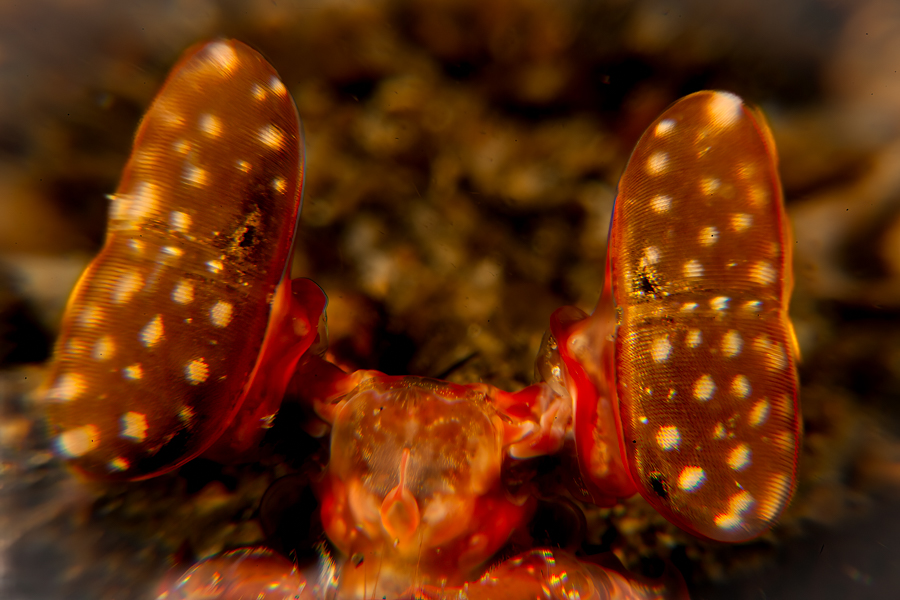
Oblong eyes of a spearing mantis
Lobsters

Squat Lobsters
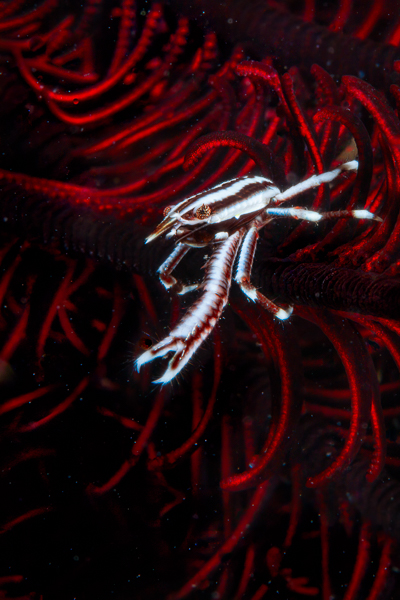
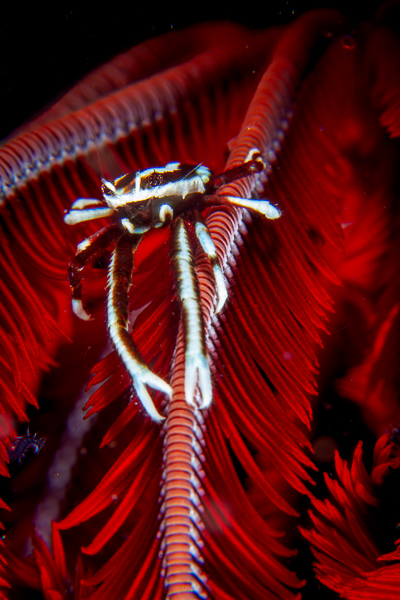
The lobsters we seek in Kungungan are not the type served with garlic butter but rather another group of small commensal animals living in the corals and sea stars, the squat lobsters. They resemble true lobsters in some ways but are related to hermit crabs and mole crabs. The body is flattened with long tails held curled beneath the thorax. The most conspicuous appendages are the first pair of legs which end in claws. They may be filter feeders or detritus feeders.
A common squat lobster is found on the feather stars, typically hiding in the feet , rather than the arms, usually black and white striped.