The search for the Pygmy Seahorse
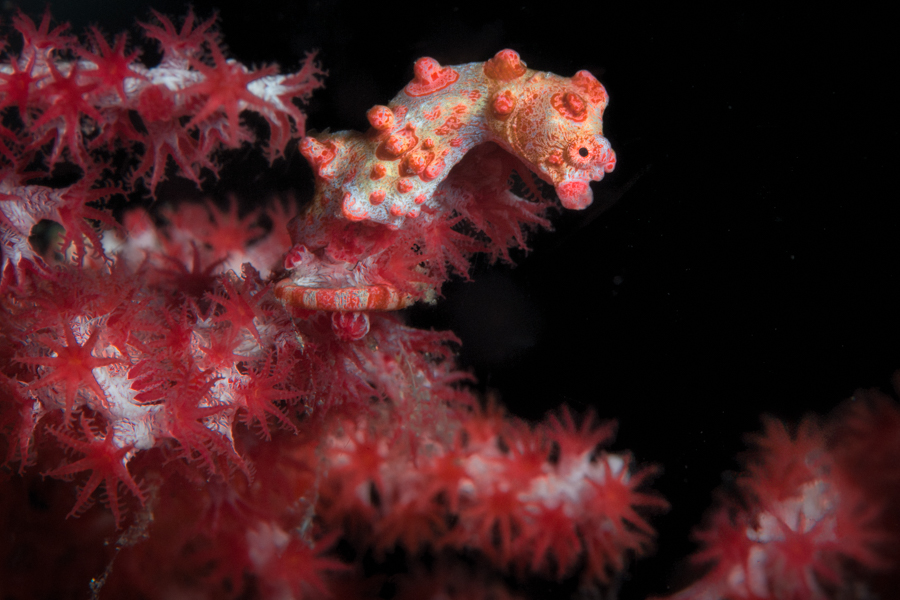
Pygmy seahorses are the reason many divers and photographers travel to the Indo-Pacific and Kungkungan. From a practical point of view they are also the photographers nightmare. They are only found at depth, usually 30m plus and are so small ( maybe 1 cm or less long if you dont include the curled tail) and so well camouflaged it takes ages to find them, even if you know they are there,
Seahorses and Pipefish

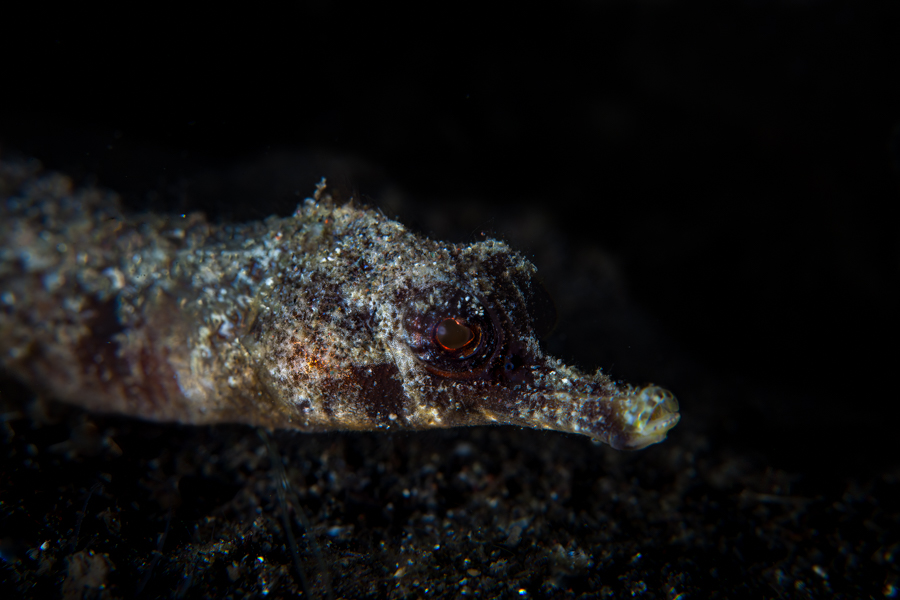
Pipefishes are a subfamily of small fishes which, together with seahorses and sea dragons, form the family Syngnathidae. This refers to the unique feature of fused toothless jaws which are used to suck prey in like a straw.
Anatomical evidence suggests seahorses are modified pipefish.
A seahorse is any of 46 species of the genus Hippocampus, from the greek for horse and sea creature.
Seahorses range in size from 1.5 cm to 35 cm and are named for their equine appearance with bent necks, long snouted heads and a distinctive tail and trunk. They are one of only 2 species of fish to swim vertically. They have no scales but instead are armour plated which protect them from predators.
Their fins are used for steering but they are very poor swimmers and they mostly are found resting and anchored to a stationary object.
Pipefish and seahorses leave most of the parenting to the males who brood the offspring in a pouch or a particular body area through a placenta like connection. A degree of monogamy is common, sometimes for life or else for a breeding season. This is thought to be due to a mate-guarding behaviour. Because survival of the babies is low, and because the females take a lengthy period to produce eggs, then the male can incubate while the female prepares the next clutch of eggs, shortening the interval between clutches.
Seahorses
The evolution of seahorses from pipefish may have been an adaptation related to the biomechanics of prey capture. The unique posture of the seahorse allows them to capture small shrimps at larger distances than the pipefish is capable of.
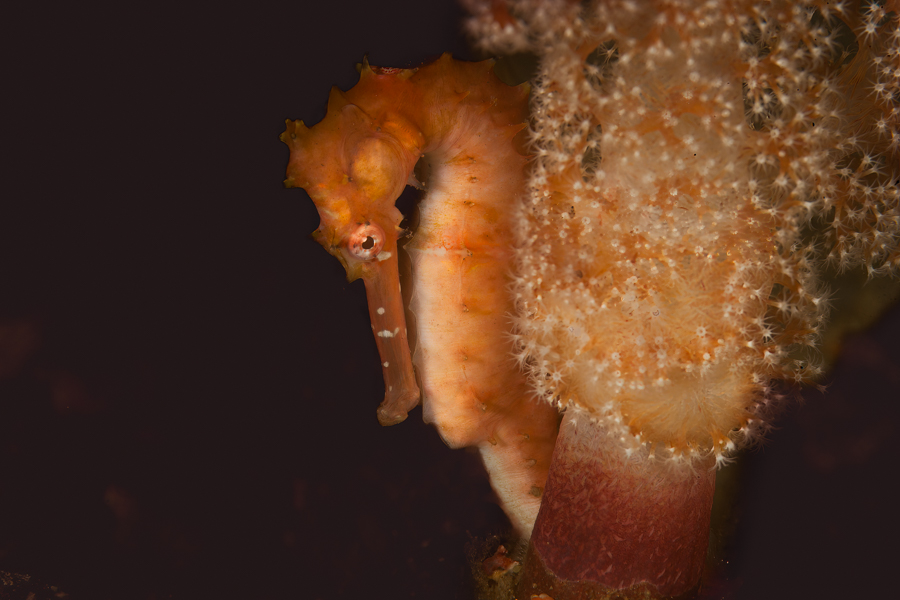
Thorny seahorse, Hippocampus histrix
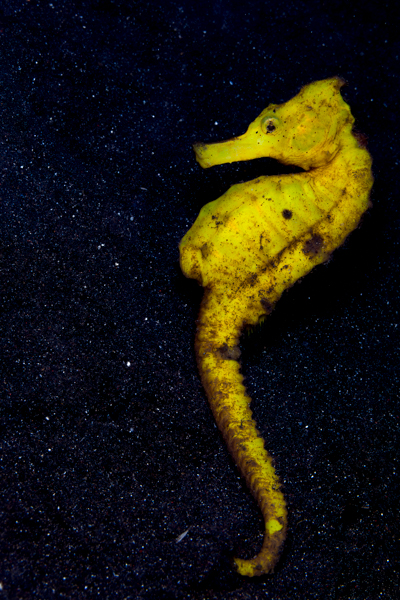
Slender seahorse, Hippocampus reidi
Seahorses use their long snouts to catch food. Their digestive system is simple and not very efficient so they must eat constantly to stay alive.
They feed on small crustaceans and shrimps and practice stealth hunting to slowly lean towards the prey to get within striking distance as it floats past.
When they are born the baby seahorses are fully formed and the clutch may be from 5 to 2500 babies. Survival to adulthood is considered to be less than 0.5% which accounts for the large broods.
Pygmy Seahorses
Pygmy seahorses are 8 species of tiny seahorses less than 2.7 cm long.
There are 2 types seen regularly at Lembeh, the hippocampus burgibanti and the even rarer hippocampus denise. We were lucky to find yet another species there, even rarer for us, the weedy pygmy seahorse or hippocampus pontohi, named after one of the local Indonesian guides
Because it takes so long to find them, and because they are so deep, the time to set up for a shot is often frustratingly short. They are also typically shy and turn away from the light making backside shots much more common than a perfectly lit face or profile. You are excited, narced and short on air. Not the best conditions for the winning shot. Still they are so gorgeous you just keep coming back for more, backsides and all.
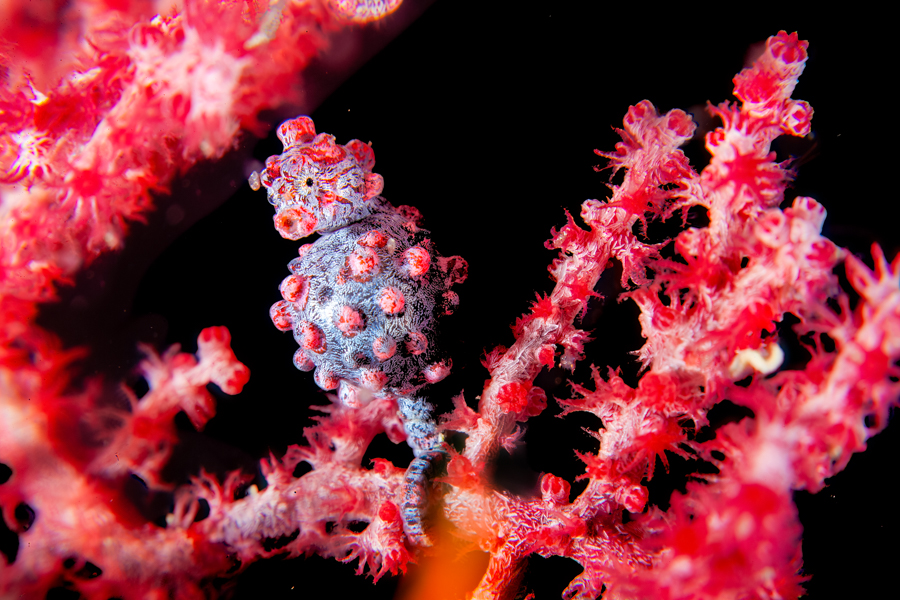
Hippocampus bargibanti
Living on Muricella fan coral their camouflage is immaculate. This one is pregnant for sure!
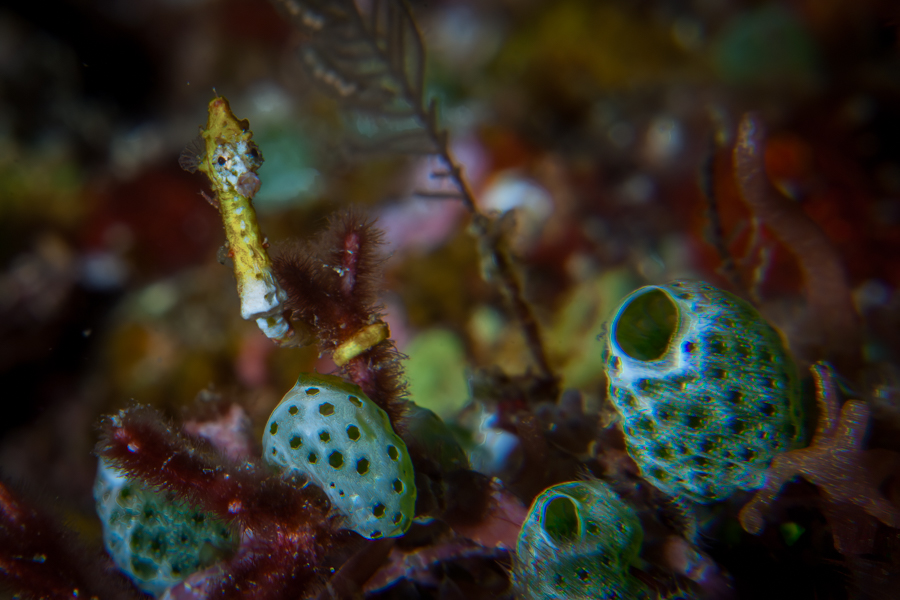
Hippocampus pontohi
These tiny seahorses are often found on walls and associate with Halimeda sp seaweed although we found this little fellow holding onto a tunicate.
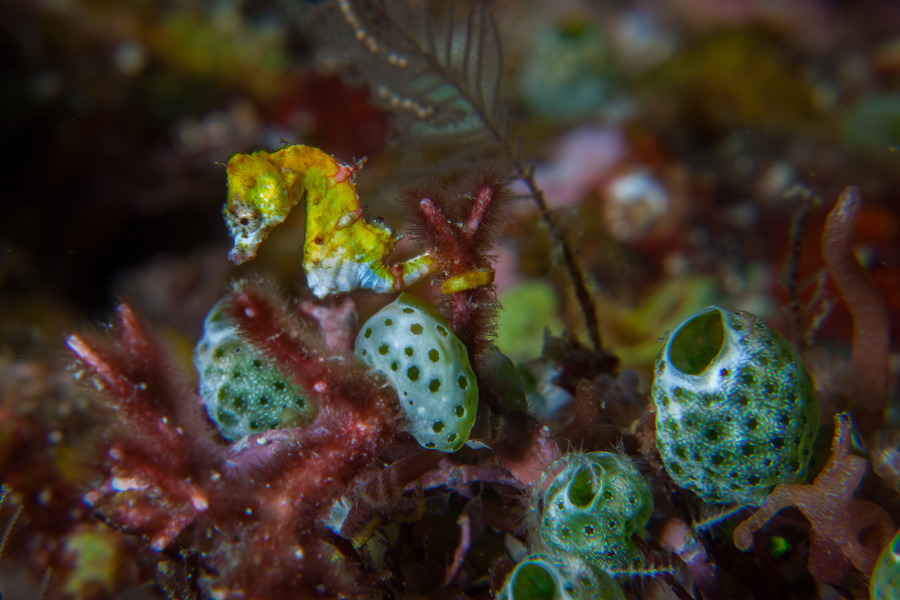
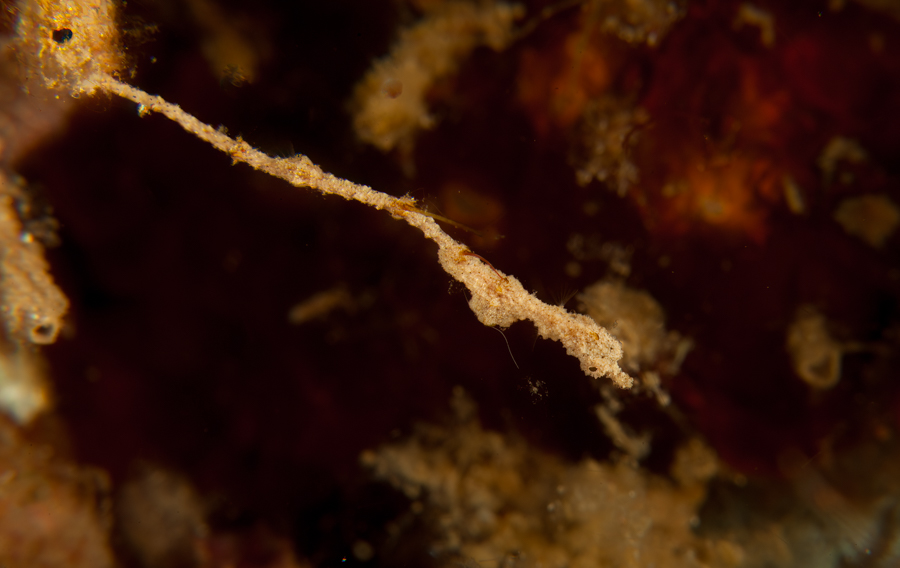
Shortpounch pygmy pipehorse, Acentronura breviperula
The pipehorses are a subfamily of seahorses and they are a weird combination of the two. They have heads like pipefish but they have shorter snouts, they swim horizontally like pipefish but there is a visible pouch like a seahorse and they often anchor themselves to things by the tail. This little fellow was a first for us and quite exciting.
Pipefish
Pipefish look like straight bodied seahorses with tiny mouths. The name derives from the long slender snout, which is like a long tube. The mouth is toothless. There is always a dorsal fin and a caudal fin for swimming but the other fins are often absent or vestigial. They are long slender snake like fish that weave in and out of the coral and weed, difficult to see and often impossible to shoot.
Like seahorses they have a modified skeleton formed into armour plating and males incubate the eggs in a ventral pouch.

Double Ended pipefish, Trachyrhamphus bioarctatus
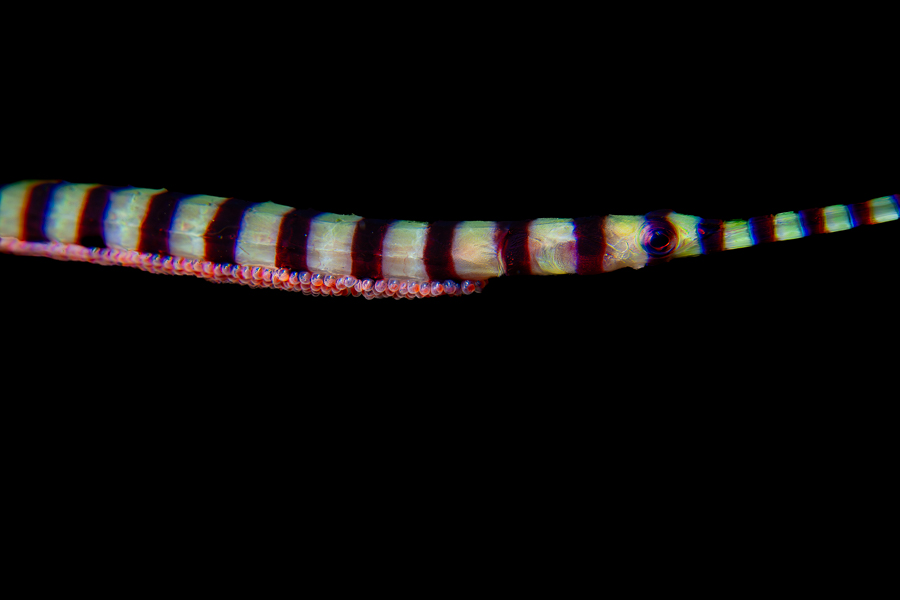
Banded pipefish, Dunckerocampus dactyliophorus
This male is carrying eggs on his abdomen
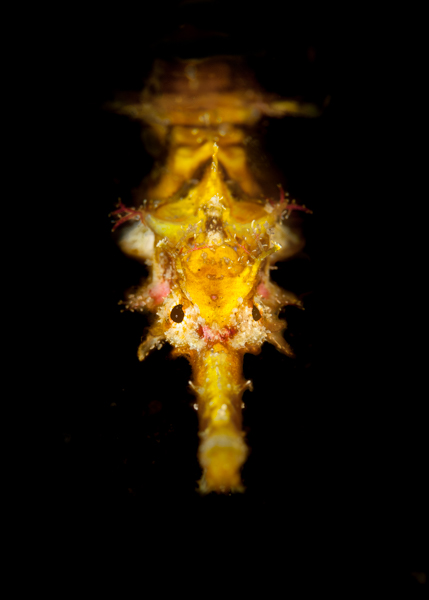
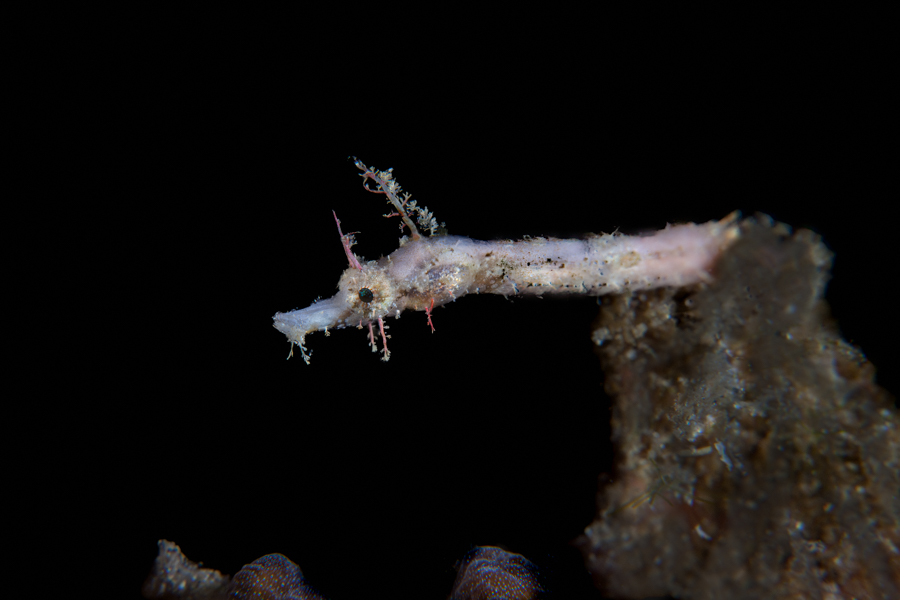
Liberty's pipefish
Named after our dive guide in Kungkungan who was the first to find it. He was a truly remarkable dive guide and had eagle eyes and an air of calm patience which instilled such confidence. Surrounded by the noisy excitement of the guests, he presented a calm oasis of reason and he rarely disappointed. We came to like and respect his love of the ocean and his tremendous skill in finding the smallest and most impossible models for our lenses.
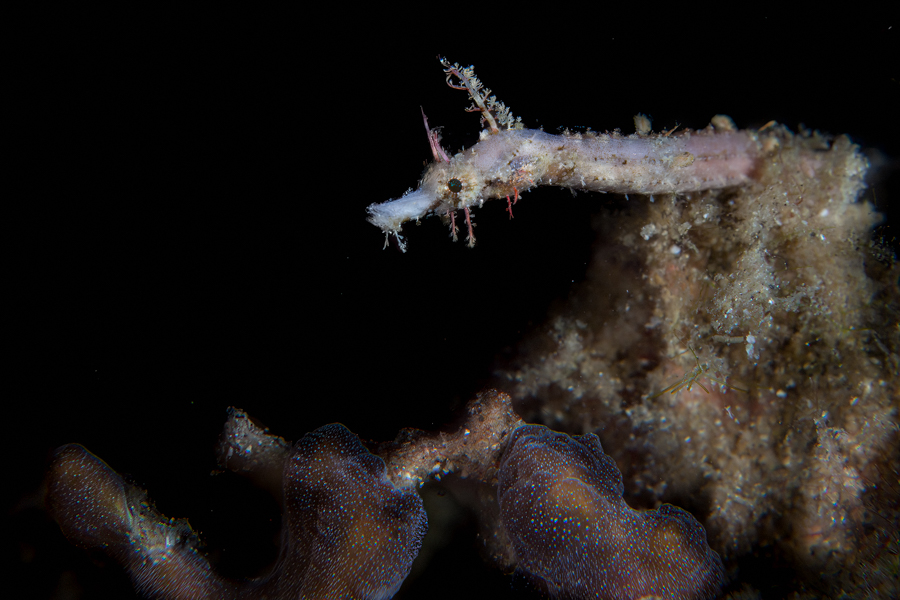
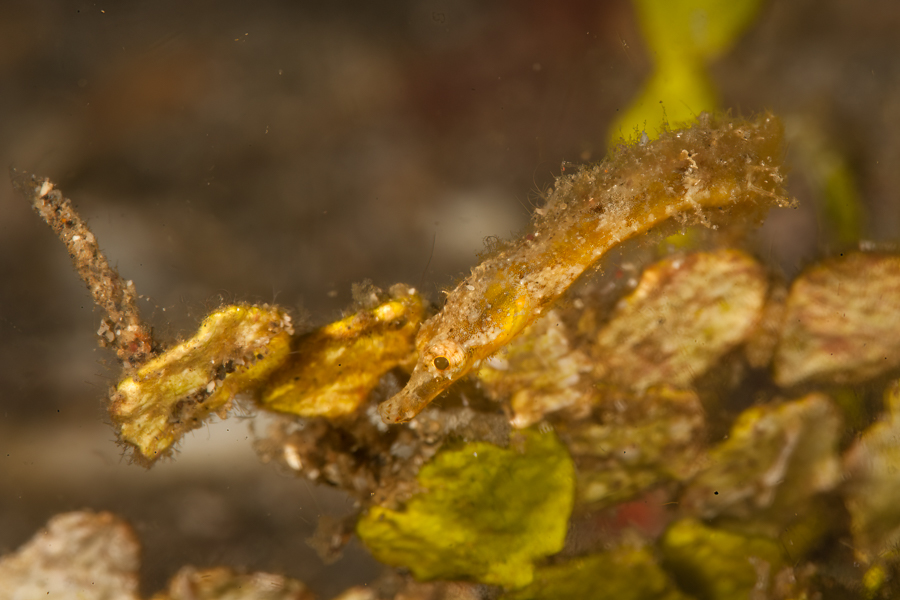
Corythiochthys Sp
I have not managed to identify this little chap. Possibly a juvenile.
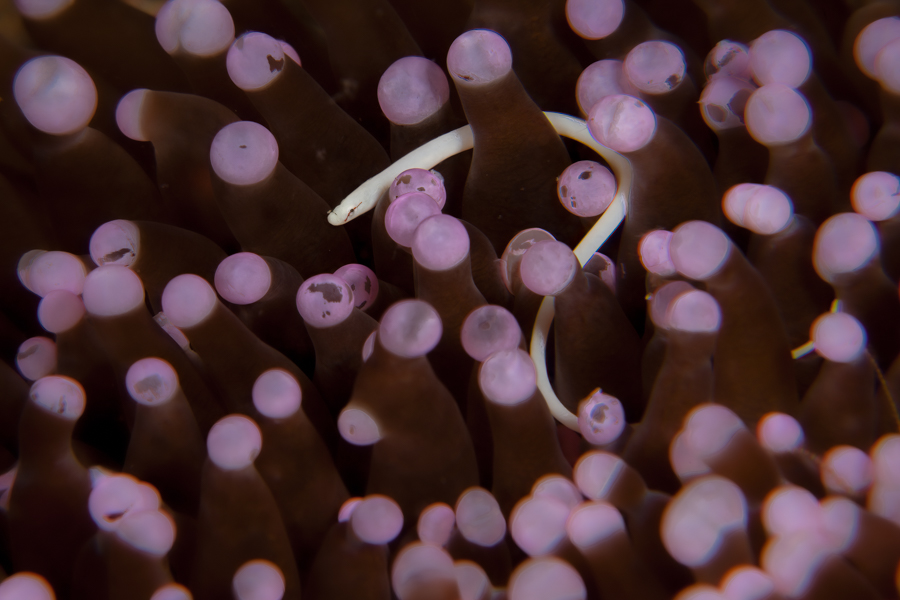
Mushroom coral pipe fish, Siokunichthys nigrolineatus
This tiny pipefish lives its whole life in one mushroom coral. Usually present as a pair, they are well camouflaged against the striated floor of the coral polyp.
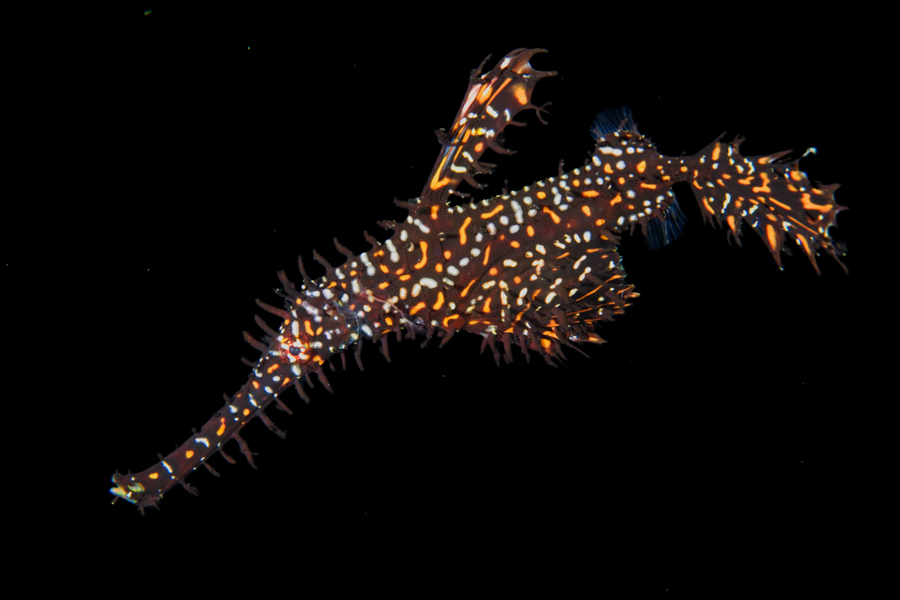
Ornate or Harlequin Ghost pipefish, Solenostomus paradoxus
Ghost pipefish are also long and thin, and the male carries the babies in a pouch, but they have broader flattened bodies and fins. Known as false pipefish they belong to a different genus to true pipefish.
They are often found in pairs floating next to corals or feather stars, drifting in the current. The ornate ghost pipefish is a particular favourite because of the coloration and interesting feathery appearance.