Sodwana 2025

"At sea I learned how little a person needs, not how much"
Robin Lee Graham
Welcome to Sodwana 2025, another dive into the generous bounty of the familiar Sodwana reefs.
It has been an odd year this year, so much rain, humidity to die for and mosquitos as big as sultanas. Every year at Sodwana is something new, every season changes, and this year we had a ring side seat for conditions we had never seen before.
Our reefs took a hammering from this meteorological onslaught, initially something of a shock to us, but then you realise you are seeing yet again the diversity and resilience of our favourite place, and new wonders to ponder.
Come and dive in.



-
 Trumpet fish,
 -
 Lion Fish
 -
 Blue Spotted Ray
 -
 Peacock Flounder
 -
 Ragged Scorpionfish
 -
 False Stonefish
 -
 Whipcoral Goby
 -
 Schooling Surgeonfish
 -
 Hawksbill Turtle
 -
 Common Octopus
 -
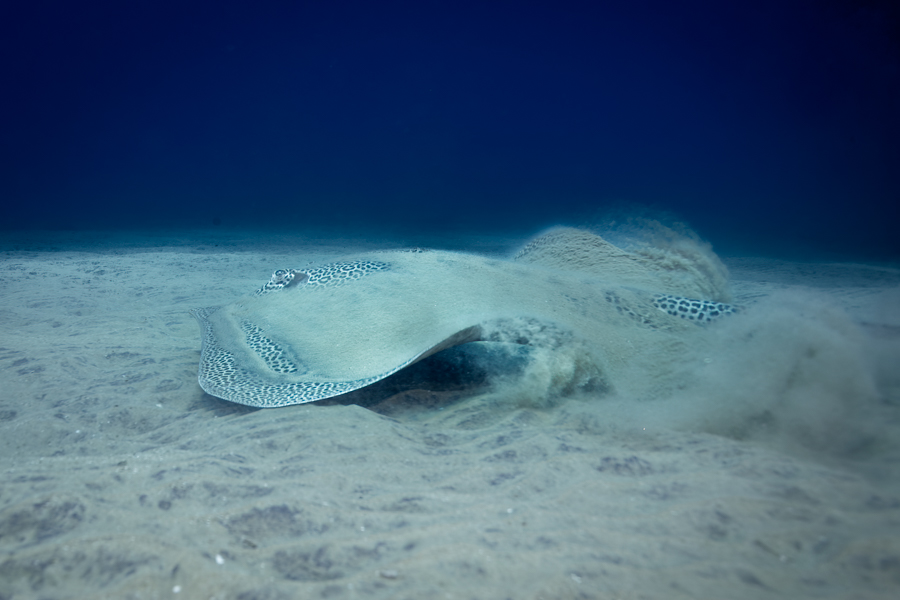 Leopard Ray
 -
 Honeycomb Moray Eel
 -
 Blue Kingfish hunting
 -
 Yellow legged hermit crab
A Toothy Problem
Looking at some of the pictures this year it occurred to me how very interesting the mouths and teeth of sea creatures are. They represent such a wide diversity of adaptations to prey and environment. So here are a few to consider, and when next you dive look closely. You can deduce so much about life style and habits and diet without consulting a single book!
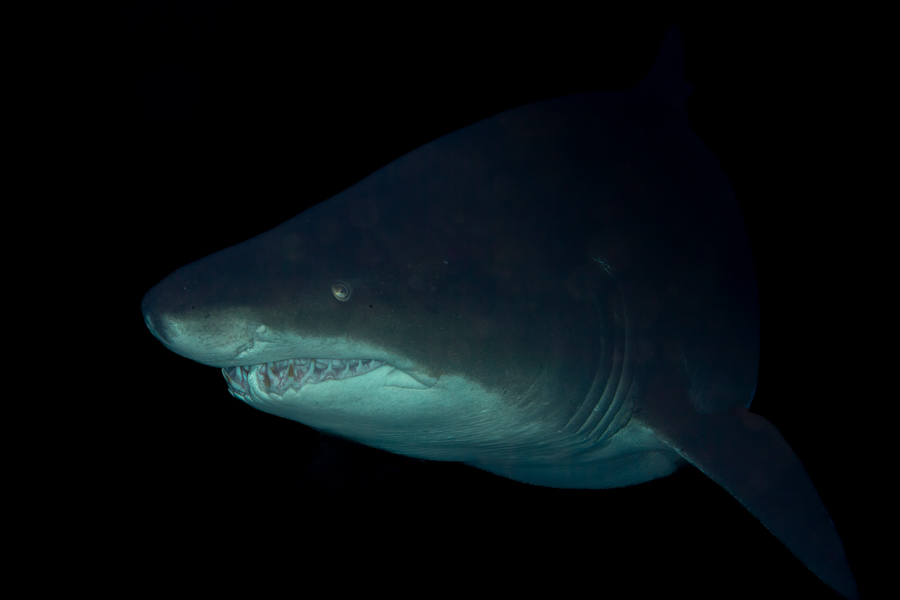
Of course we start with the apex predator, the shark. The Ragged toothed shark has pointy teeth which he sheds regularly. These are tools for grabbing and holding but not so good for biting bits off. They tend to eat fish they can swallow whole and can be seen shaking their heads from side to side when trying to bite off a piece of a larger prey.
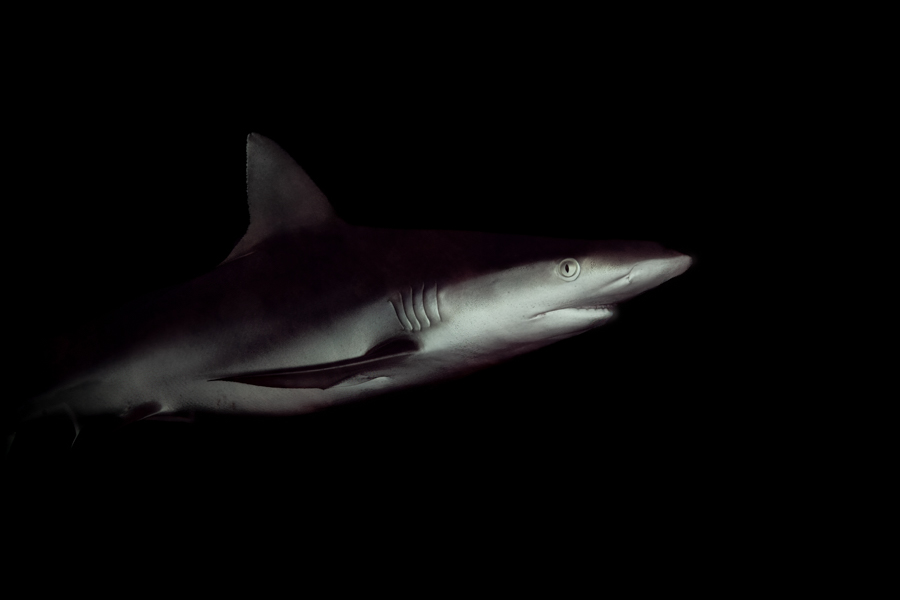
The white tip on the other hand has broader triangular serrated teeth in the upper jaw and more pointed serrated teeth in the lower jaw so he can grip and tear. The teeth are embedded in flexible tissue which can be retracted when not in use. This protects the teeth and makes them more efficient in hunting. That's why these reef sharks, and many other types of sharks, look toothless when you see them gliding past.

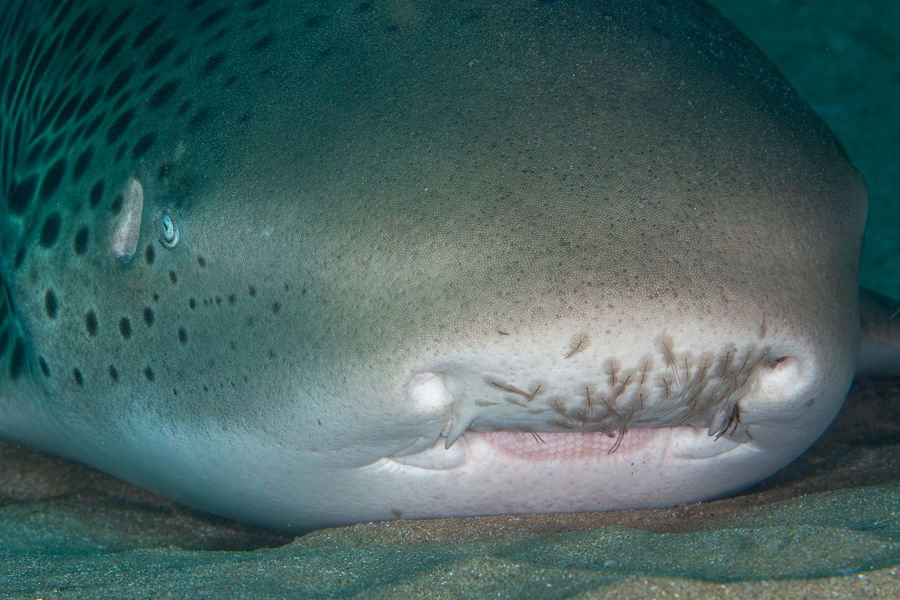
The Leopard Shark is an infrequent treat and we found this guy snoozing off the end of Big Stringer. He has what is known as pavement dentition, rows of flat teeth with overlapping edges like a roller in the lower jaw. He uses these teeth to grip and crush rather than cut and tear so he eats hard shelled invertebrates he finds in the sand.
This shark also has a bunch of parasites hitch hiking on his nose. About 50% of leopard sharks harbour these parasites called copepods. They are the fleas of the sea and feed from the host blood.
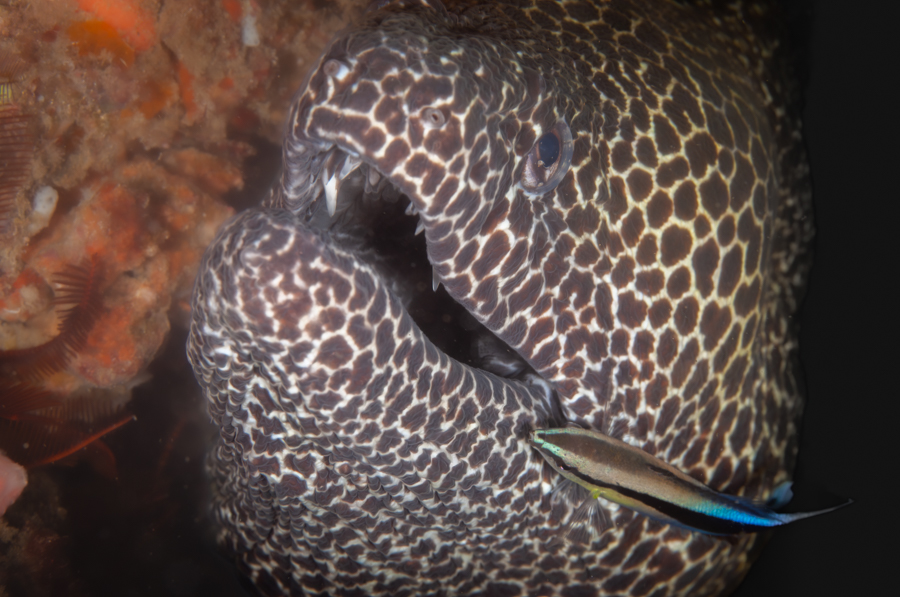
We are all familiar with the sharp rows of needle like teeth on many moray eels and most of us have experienced the pointy end of a Black Cheeked Moray. In fact moray eels have 2 sets of teeth, the ones you see and a second set called pharyngeal teeth which lie folded in the throat. The front teeth catch the prey and the pharyngeal teeth are projected forward to grab the prey and then pull it back into the throat. Small fish and crustaceans are the usual diet. It's a good job this little guy is a cleaner and off the menu of this Honeycomb Moray, Gymnothorax favagineus
The moray eel below is an even more fascinating guy. This is a Zebra Moray, Gymnomuraena zebra, more uncommon than most morays on the reef because he is nocturnal and hides in caves. He eats crustaceans and you can see rows of pebble like teeth in the roof of his mouth which crush the crabs and shrimp he eats. How cool is that.


The Hawksbill Turtle has a beak like the parrotfish group. The turtle especially likes sponges and if you see sponges on the reef with chunks out of them the chances are it's a Hawksbill doing the chomping. There are fine serrations on the edge of the beak to assist in cutting but it not uncommon to see them tugging and tearing to rip bits off.

The Ember Parrotfish, Scarus rubroviolaceus, above, uses his beak for a different prey. Indeed you may say he is strangely over equipped because he eats mostly algae. The thing is the algae he eats lives inside the coral, which he gets by biting off pieces of hard coral which are ground down by molar like teeth in the throat. So the beak is used as a sort of a nail clipper. You will often see him attacking coral viciously, white crumbs flying.

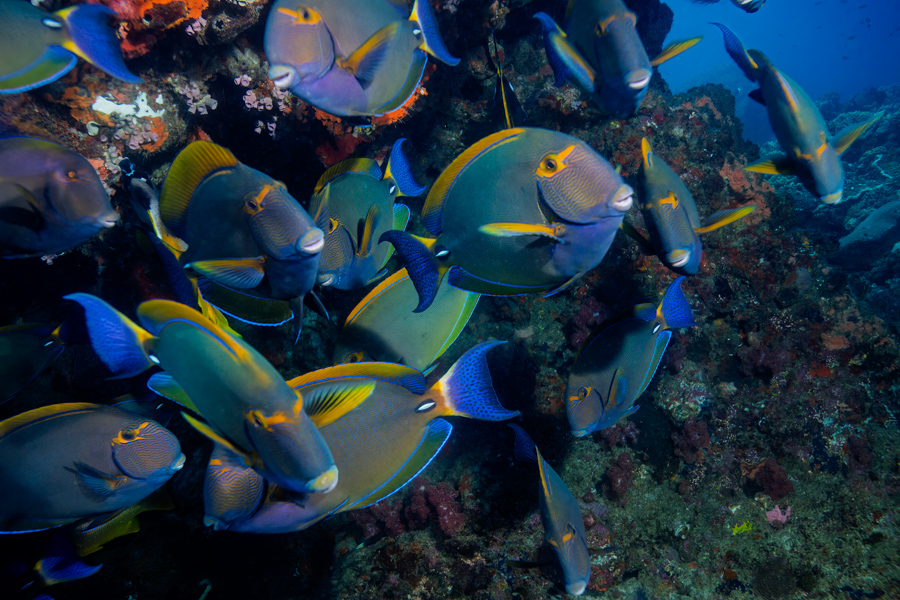
These are Elongate Surgeonfish, acanthurus mata, and they also graze on algae. Unlike the parrotfish, surgeons graze on algae beds rather like a cow grazes on pasture. They have a sort of tooth plate which they use to bite the algae while using suction to pull it into the mouth and they have an extra jaw joint called an intramandibular joint which allows them to "chew" in the plane of the fish. You can see the tooth plate below.
They are important to prevent algae overgrowth on the reef.
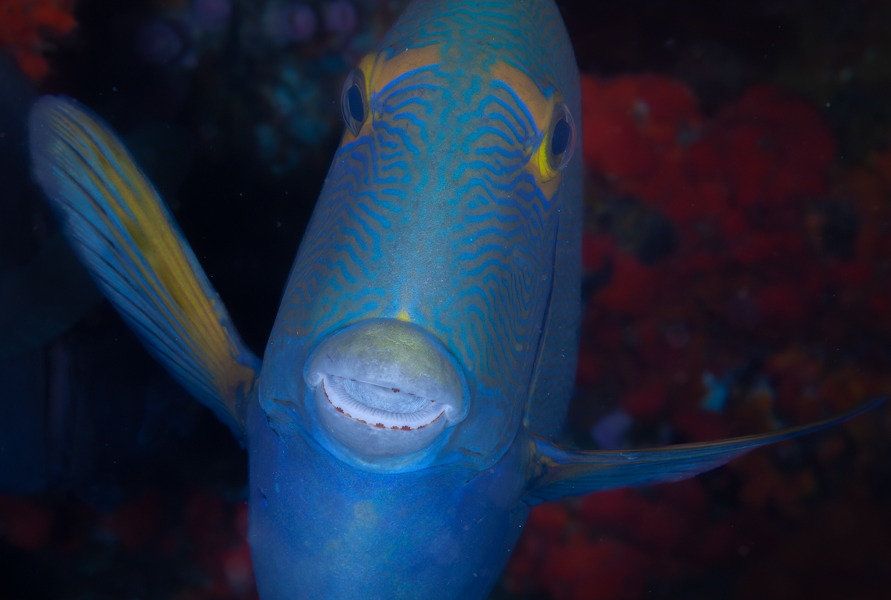


Butterflyfish, like these Teardrop Butterflyfish, Chaetodon interruptus, have small concave "kissing" mouths and they have small brush like teeth which allow them to nibble on coral polyps, algae and sometimes plankton. You will often see them grazing along the reef, kissing the coral.

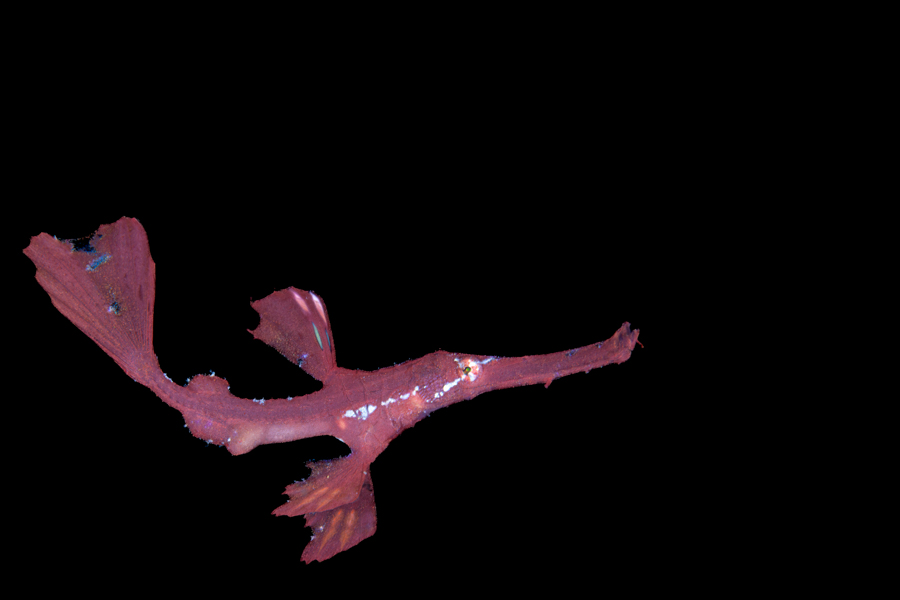
The Trumpetfish, Autostomus chinensis, the Robust ghost pipefish, Solenostomus cyanopterus, and the Scribbled pipefish, Corythoichthys flavofasciatus, are all examples of fish with fused jaws. At the front end of their long bodies is a tubular snout and they feed by using suction to vacuum up unsuspecting prey. They drift around and hunt by ambush and may change colour to hide amongst fans, sea grass and corals. They eat small crustaceans and, in the case of the Trumpetfish, small fish.

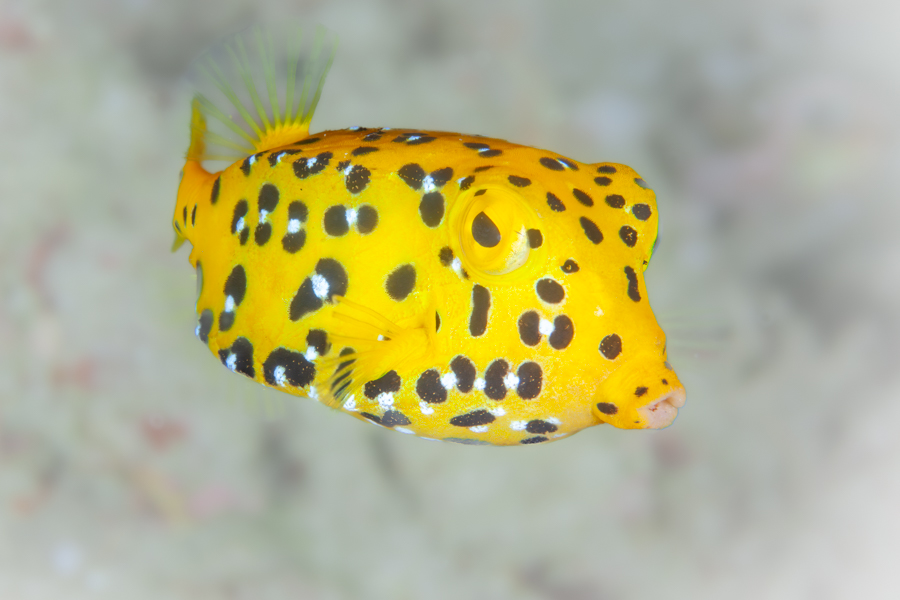
Above is a little juvenile Yellow Boxfish, Osctracion cubicus, The snout is pointed with a small mouth and he eats algae and small crustaceans and worms he finds in the sand. He may use his mouth like a straw to blow into the sand to uncover his prey.
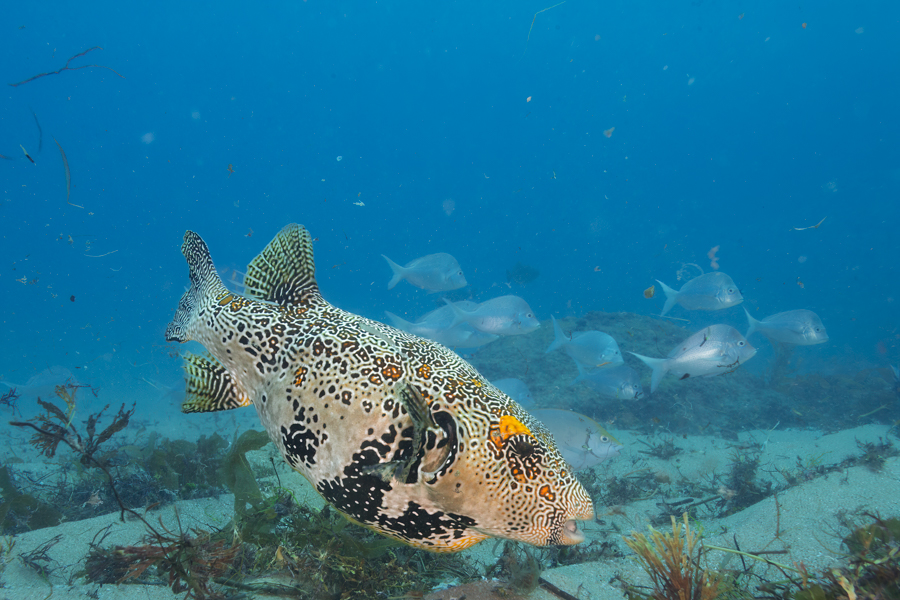
Above is the adult Yellow Boxfish. Adults are often hovering near the sea bed at the side of the reef blowing up plumes of sand while the juveniles often hide in caves.

This Yellowmouth sweetlips, or Barred Rubberlip, Plectorhinchus plagiodesmus, has just swallowed this little fish whole. I don't know if it is eating it or offering it a lift. Rubberlips usually eat crustaceans and they have teeth for grinding. They may blow plumes of sand in search of prey. I think we have to watch this guy from now on to see what he is doing on the reef.
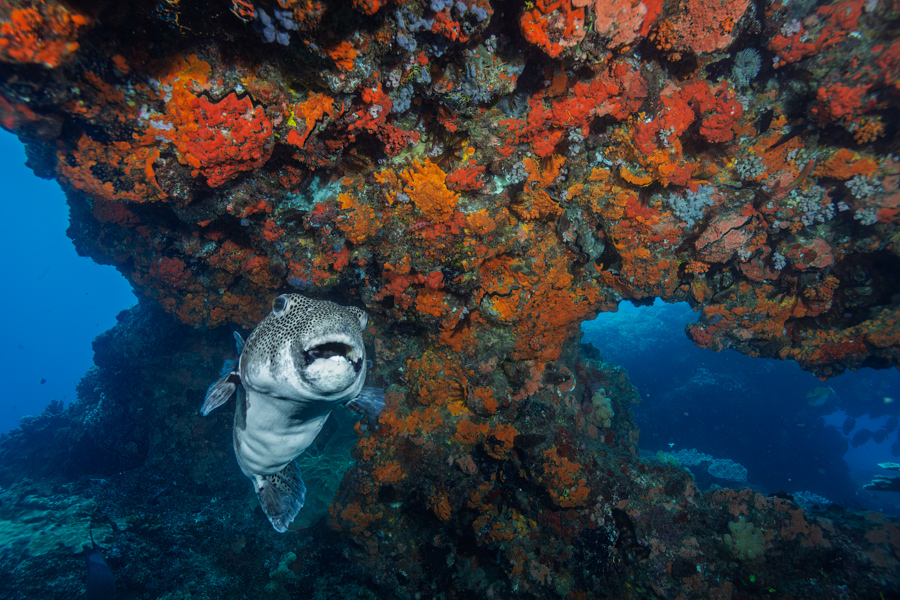
This huge Star Puffer, Arothron stellatus, feeds by means of a beak and eats crustaceans, sponges and coral.
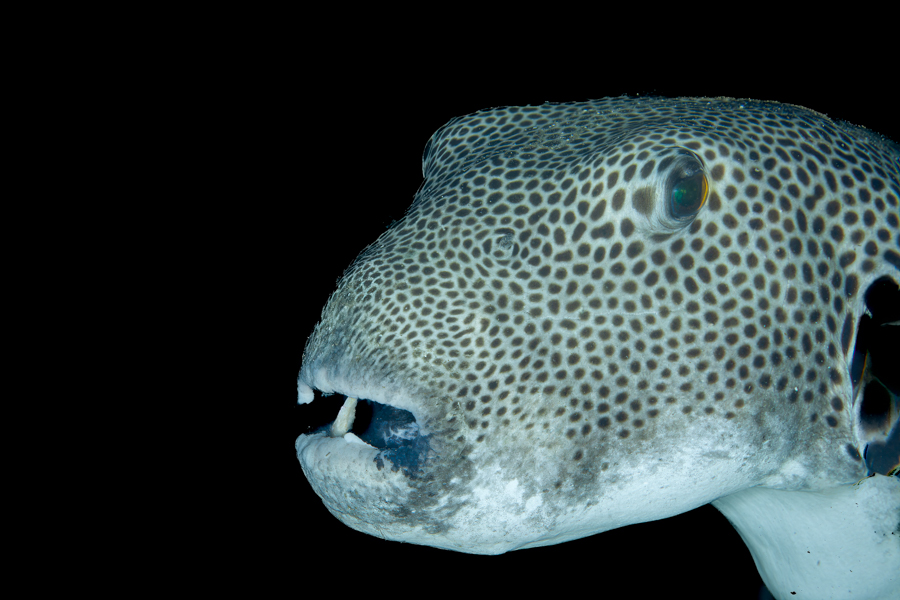
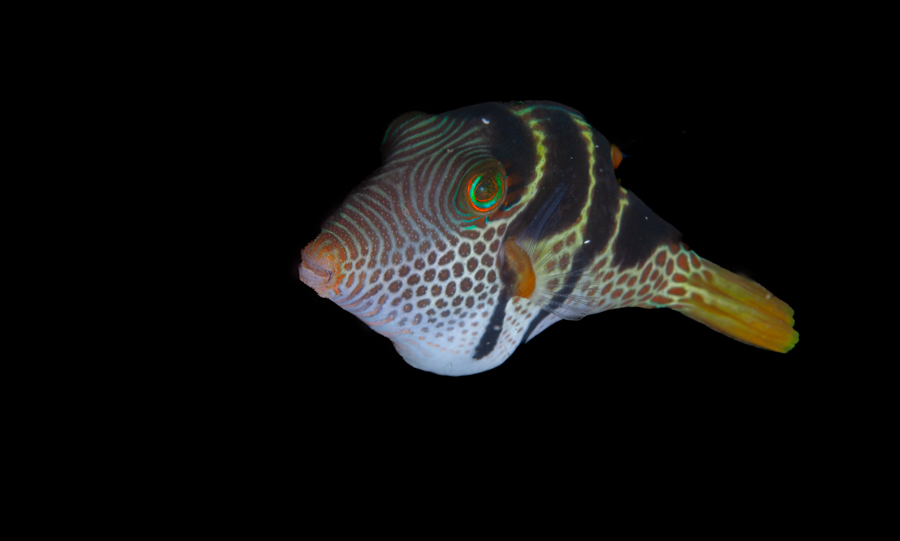
The Model Toby, Canthigaster valentini, is a member of the puffer family and has beak like teeth. He eats algae and small crustaceans.

The triggerfish family and The Triton Triggerfish, Balistoides viridescens, especially, has an impressive set of gnashers, particularly when he is headed straight for you and having a bad hair day. He eats hard bodied prey and is a major predator of the Crown of Thorns Starfish so maybe he is not all bad after all.
The Clown Triggerfish, Balistoides conspicullum, is more handsome but has the same mouthparts and diet. These two beauties were doing a mating dance I think.

The friendly Potato Bass, Epinephelus tukula, has an interesting set of teeth like a large rasp. Back in the day when we used to feed them, and I know it was wrong but we knew no better then, he would often try and eat your hand. He is impatient you see. Sometimes your hand would come out looking like it had been rubbed across a fine grater. The whole of his mouth is lined with tiny needle shaped teeth which you can see in the bottom jaw if you enlarge the picture. The teeth grab and hold their prey ensuring any fish entering that cavernous mouth never leaves, and making him an apex predator.

Scorpionfish and frogfish all hunt by stealth. When prey is in range they open their gaping mouths wide, causing a suction force which whips the unsuspecting fish straight down their throats. Watch out for the yawning scorpion fish and you will see just how wide he can open his mouth. Sometimes bigger than his body.
This is a Weedy Scorpionfish, Rhinopias frondosa, we found this year on Ribbon Reef and a really unusual colour. I don't think I have ever seen this coloration before. Underwater he looked almost white.

So now you know what to look for when you are cruising the reef and all these different adaptations will make sense when you see where the fish are hanging and what they are doing. Have fun.
Snooting and Backlighting
We are always interested in different lighting techniques even though I have lost most of my proper snoots and am down to one homemade broken coke bottle snoot at the moment.
You have to choose your model, he must stay still and have lots of crags and planes to give dimensionality and texture.

Here is the weedy scorpionfish again. He looks pretty cool on side light but I think the snoot size was wrong.

This is a lesson in snoot vs back lighting. For the Paperfish the back lighting is much more dramatic but you need a fish that is almost see through to get the best effects.
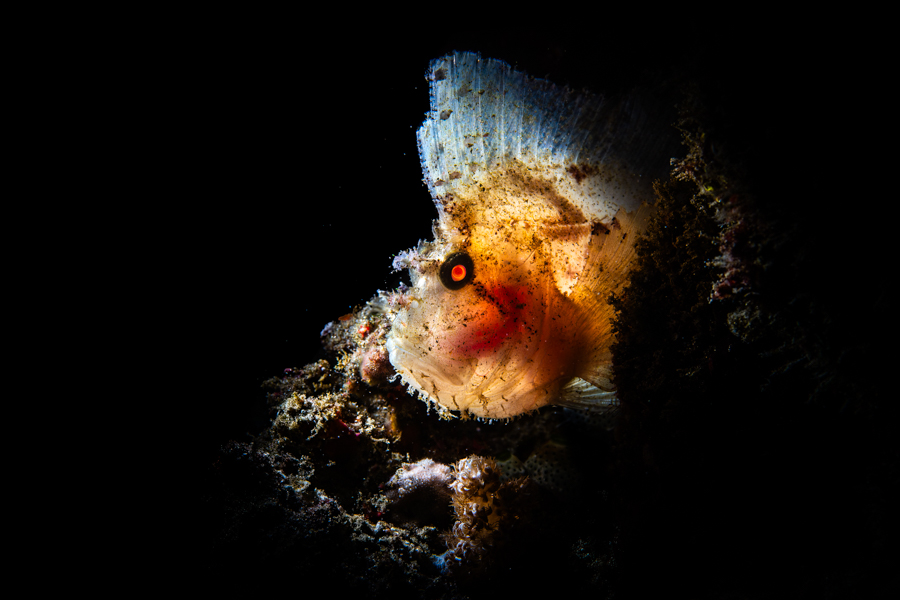
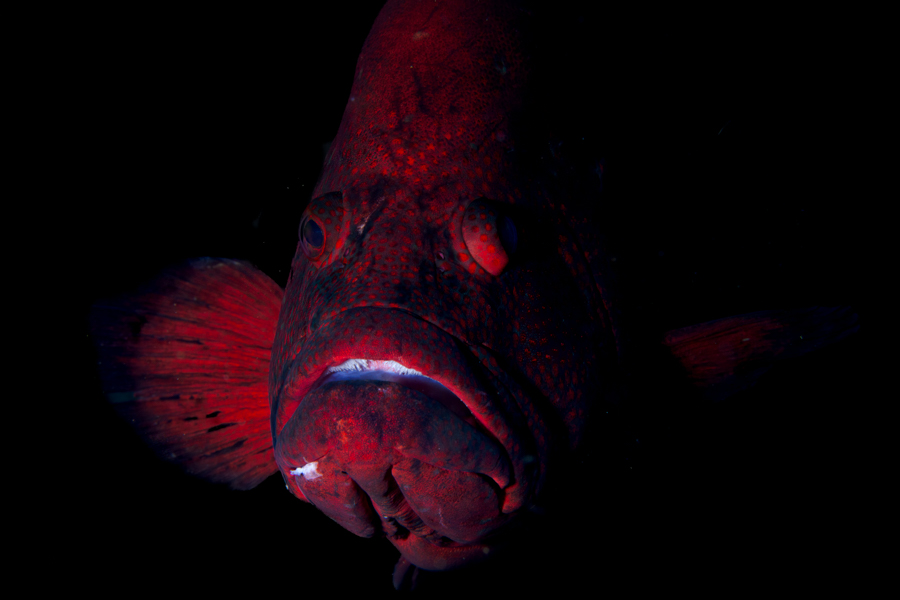
These 2 are examples of accidental side light. Something blocked my right strobe and so threw the fish into relief. I like it but did not plan it. I also like the fact the trumpetfish nose is out of focus as it gives a sense of movement, he almost shimmers in the picture.

Odds and Sods and Bits and Bobs
Here are a few of the less common (or my favourite) subjects for this year.
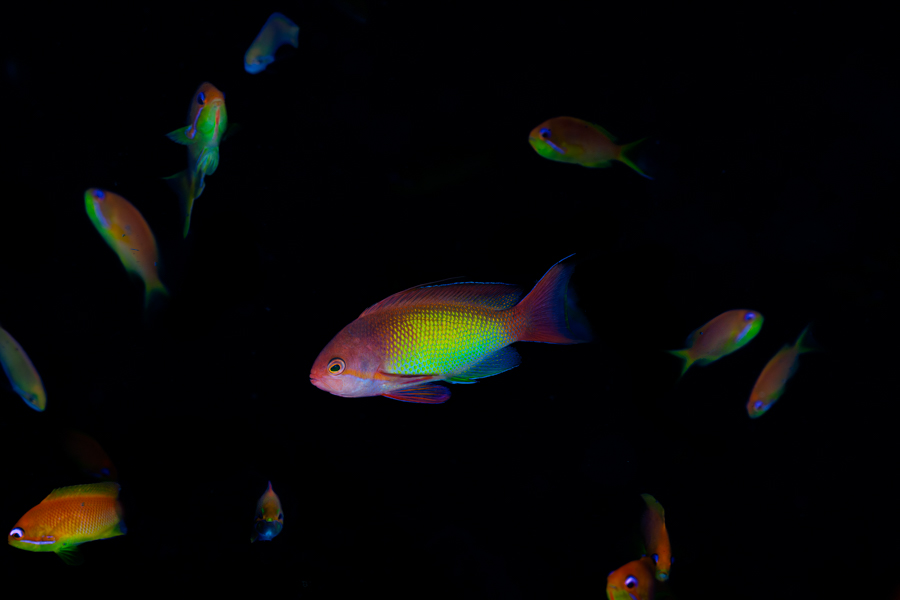
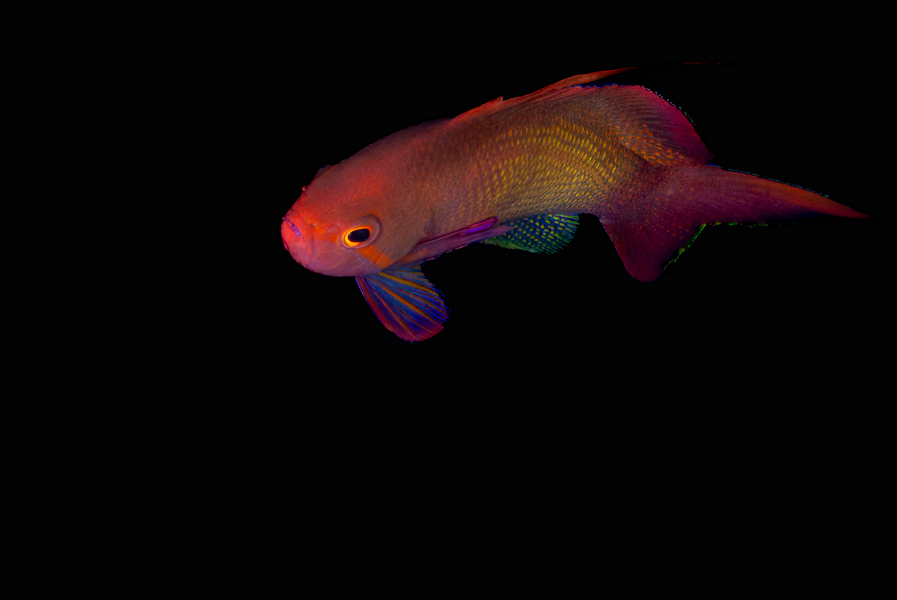
The beautiful male Sea Goldie always dresses to impress. He is a bit of a coward though. He always runs and hides before his hareem, leaving the ladies to fend for themselves.
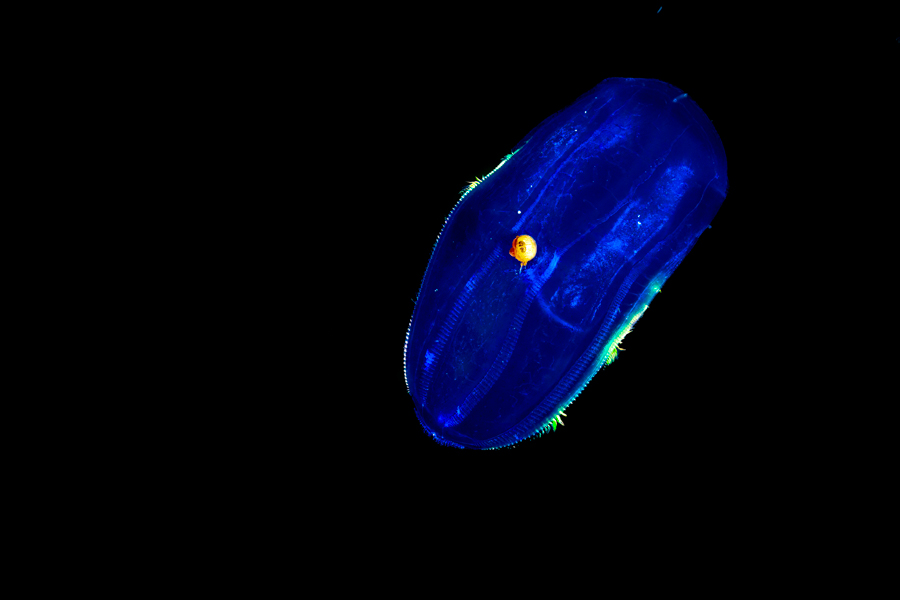
Back in mid water we searched for the little jellies but they were in short supply this year. A little comb jelly with an amphipod attached.

The tiny rosy spindle cowrie, Plenacovolva rosea, is a spindle shaped elongated cowrie. It is always associated with gorgonians and feeds on the polyps. We see a lot of cowries on our dives and they are pretty voracious coral eaters, you can always see dead patches of coral in their wake, but this one is pretty unusual for us. Maybe we must look a little harder next time.


Nudibranchs were in short supply (relatively) this year. Here are 2 of the more unusual.
Above is the Blue Dragon, Pteraeolidia ianthina. Amazingly well camouflaged and delicate on the background of these barnacles. He actually eats hydroids so I think he is just passing through.
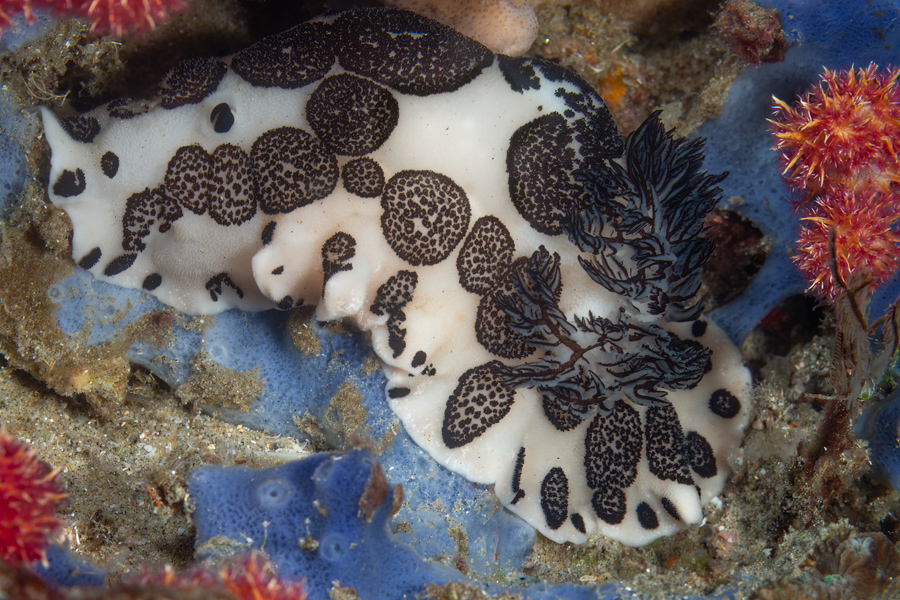
Below is the Funeral Dorid, Jorunna funebris. He is a huge nudibranch, this one is about 10 cm long, but I have only ever seen him in rock pools before, he seems to like the intertidal zone. Still the book says he can occur up to 20 m and he is often associated with a bright blue crusting sponge and voila there he is on his blue carpet. He is so attached to this blue sponge he has been in the same place on Little Stringer for about 4 months so you can go and visit. If you miss him there are lots in the big Granny's rockpool opposite the Hippy Shop at Salt Rock.

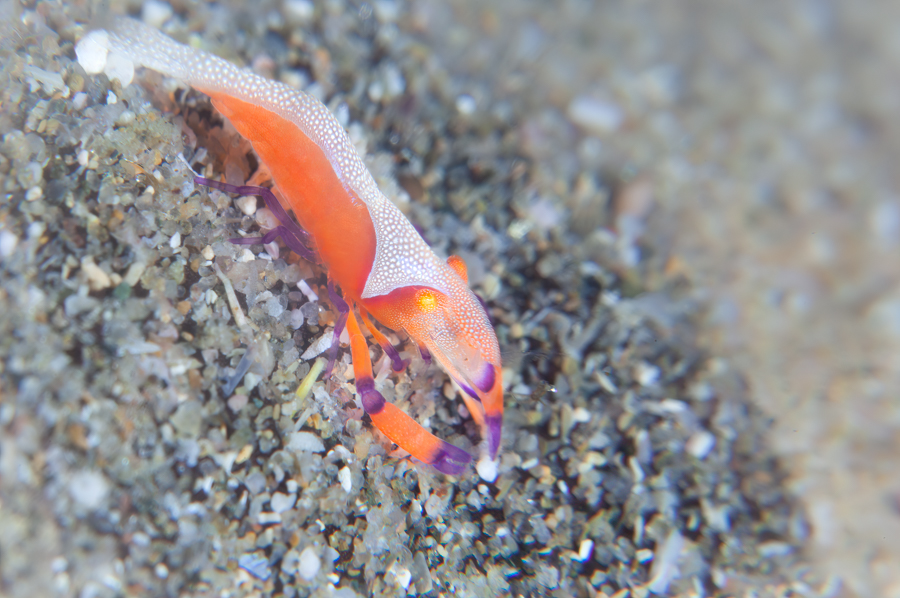
These 2 little shrimp have been common at Sodwana over the years but I have not seen them for several years at Sodwana, until this year, so I have to put them in.
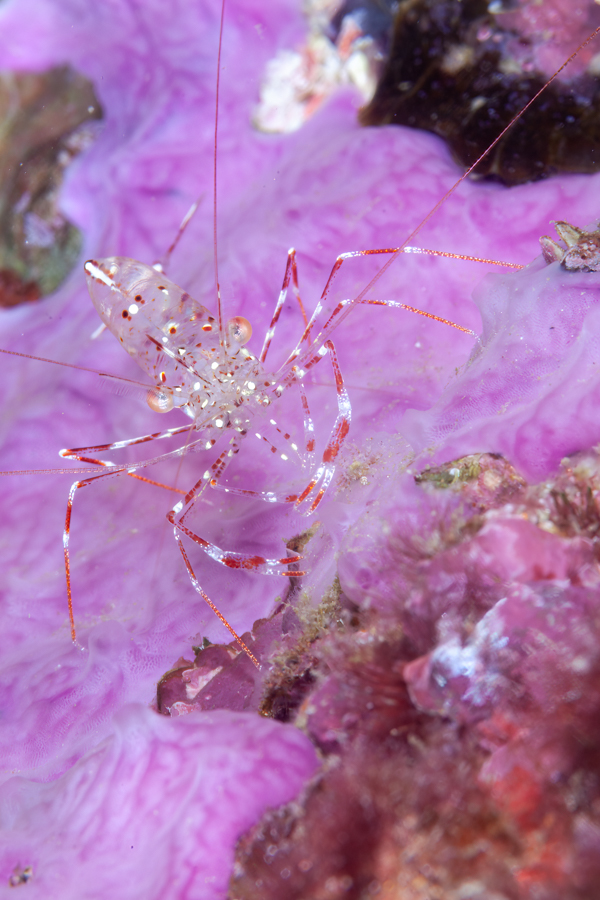
Above is the tiny Ankers whipcord shrimp, Pontonides ankeri. This one was mid way down Bikini.
Below is the glorious Emperor shrimp, Periclaminus emperator, hitchhiking on a sea cucumber.
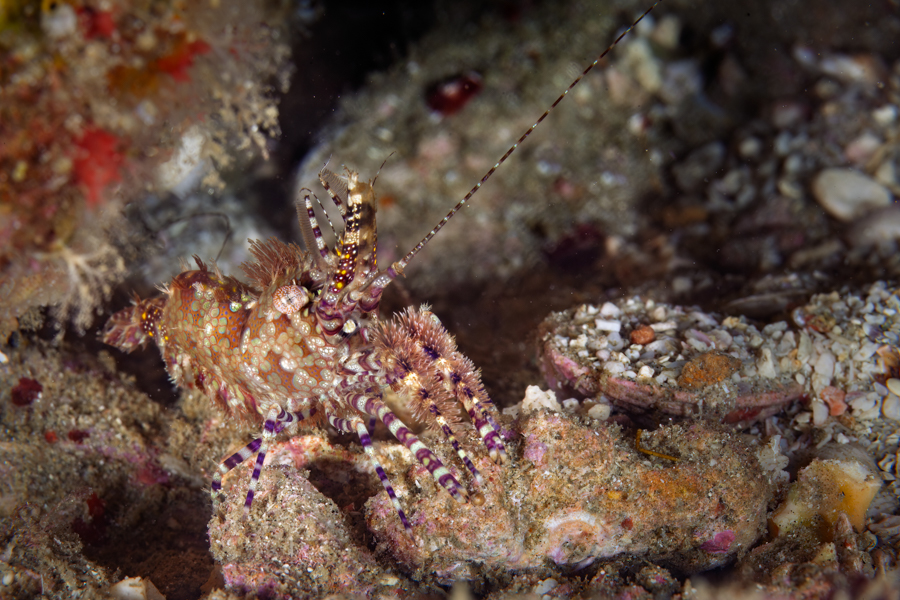
Another old friend. After years and years without seeing him he popped up in Pothole. The Common Marble shrimp, Saron marmoratus. It is likely he will be there for a long time as this was his usual haunt, under the stony rubble in the pothole. In fact he is under the same rock so it is probably an offspring of the original family that lived there.

This is the Long armed shrimp, Pericarpalis longicarpus. He is quite common in caves and overhangs and belongs in the cleaner shrimp group but this picture of the 2 was cute. Maybe mating, maybe just pals, who knows.

Another common resident, Twofer humbug, Dascyllus carneus. He lives with the juvenile Palate surgeons ( Little Dorys) in branching coral heads but if you blow this picture you will see such beautiful luminous blue colouration that I fell in love with him all over again.

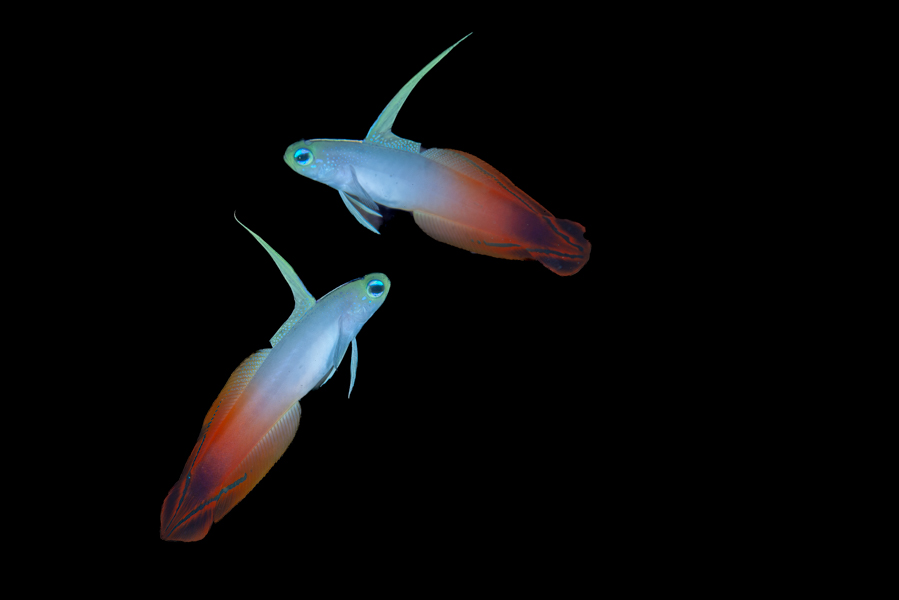
Last one. These are Fire Dartfish, Nemateleotris magnifica. They live in pairs or groups in burrows and dart in when danger approaches. For danger read diver. So I was on a mission to get them up in the black and both in focus. It took a while.
Coral Bleaching
So let's talk about the elephant in the room, coral bleaching. It is a term that strikes dread into the heart of divers and not one I thought we ever had to worry about. Being on the edge of the coral range we thought we would be the last place affected. Indeed sometimes we felt smug that while all the equatorial sites were suffering we would be last man standing.
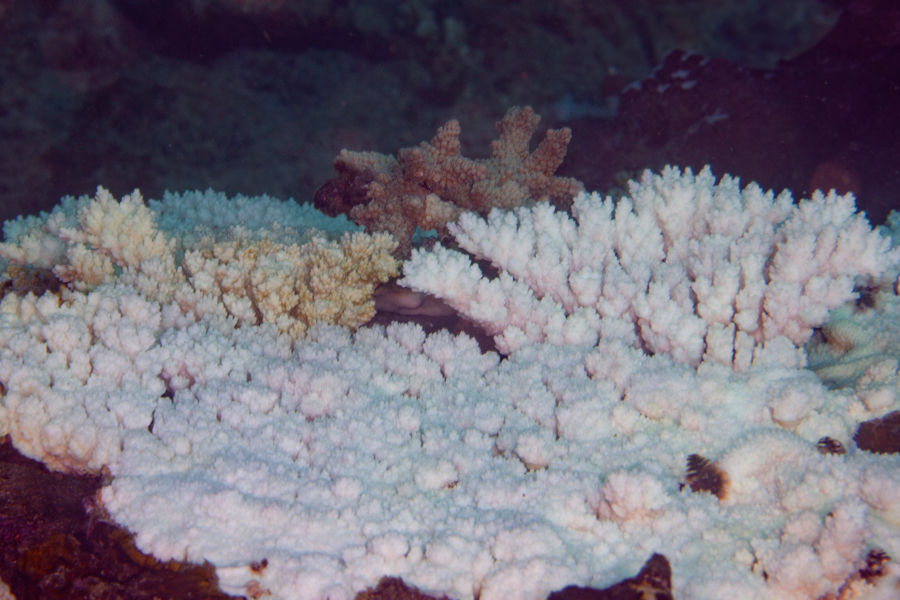
This year on Sodwana we saw a lot of bleaching. Guru Greg says it is common for the crusting corals to bleach a bit here in summer but the bleaching this year was way more than that, it affected plate coral, stag coral and brain coral, not just encrusting corals. It bleached anemones and sponges. At one point, swimming over 2 mile felt like coral Armaggedon there was so much white.
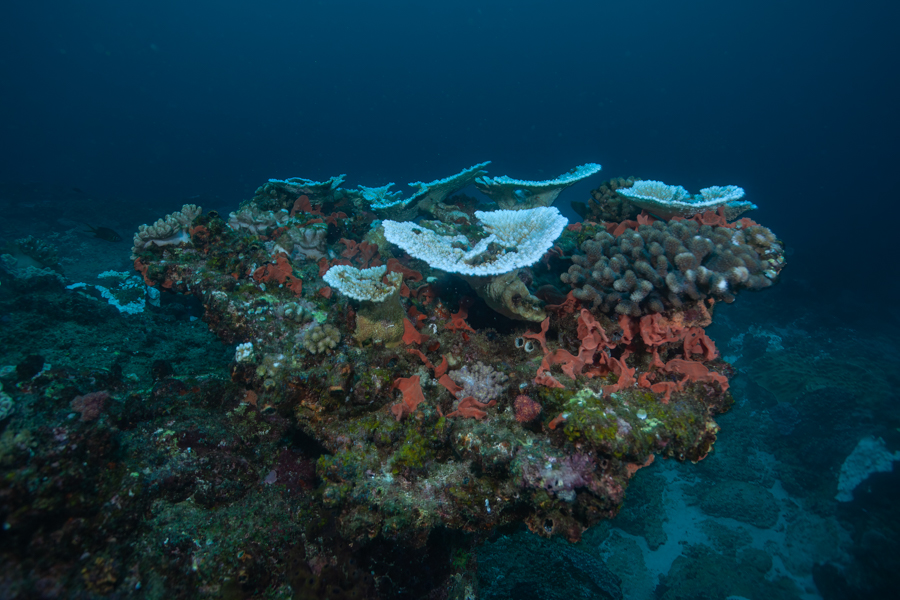
I was shocked and scared. Greg reassured me that in normal circumstances the coral here recovers, it does not die. Still these were far from normal circumstances.
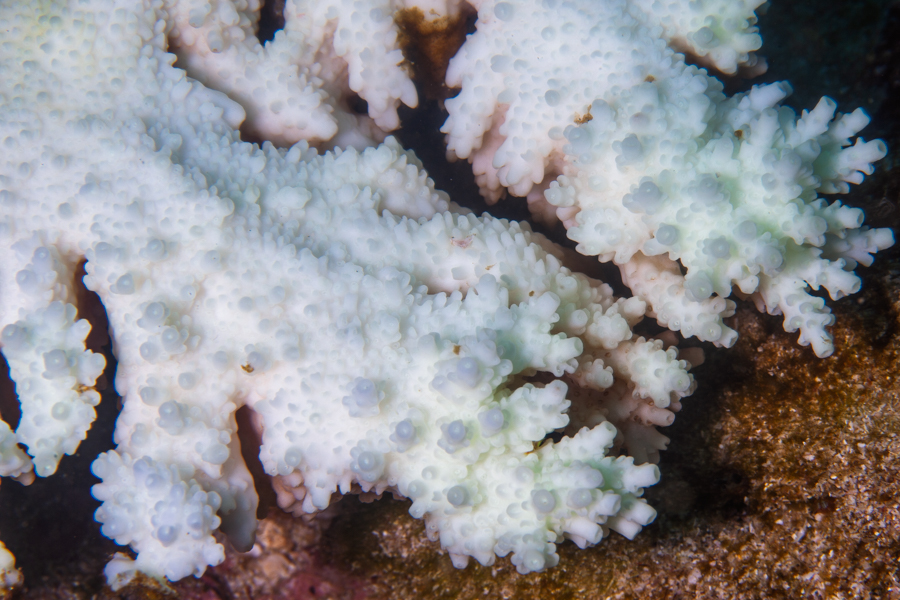
I did some research. I may be wrong so don't quote me but I did find out stuff which made sense to me.
Coral bleaches when it is shocked by changes in its environment it cannot adapt to. The main stressors for coral are temperature and fresh water. Heavy rains and run off dilute the salinity of the water and also potentially introduce high concentrations of land based pollutants.
This made more sense in the context of this year. Our temperatures have not been any different than usual. Summer is hot but the water temperature rarely or ever exceeds 29C. However, the rain fall this year has already exceeded the usual annual rainfall on our East Coast and Sodwana has a river which empties in the bay close to the reefs.
It is likely both factors played a role this year, but the heavy rains were certainly not typical and could explain this unexpected phenomenon.
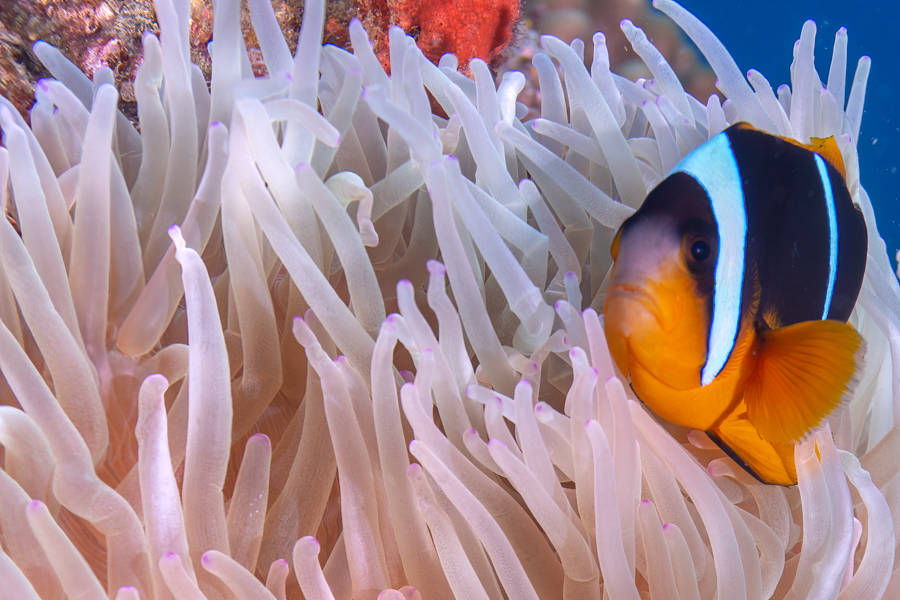
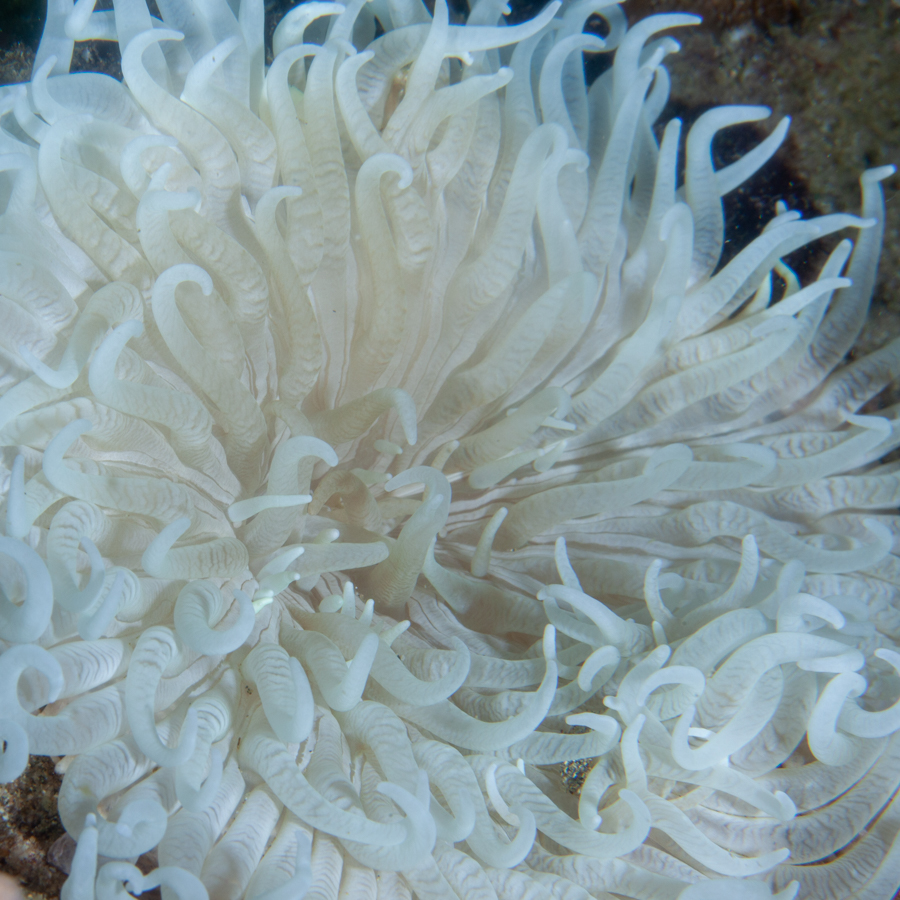

This Twostripped Anemonefish is in a bleached anemone. Even the mantle was white. Just the tips of the tentacles are purple in the top picture. He looks a bit grumpy doesn't he? The anemone fish do not prefer the bleached anemone. Maybe they get less food or something. Quite a lot of the bleached anemones we saw had no fishy or other tenants and were empty.
Below is the anemone as it is supposed to be!
I won't lie, after the first shock of this phenomenon I found some incredible beauty in the stark contrast of the coloured fish and the bright white background.

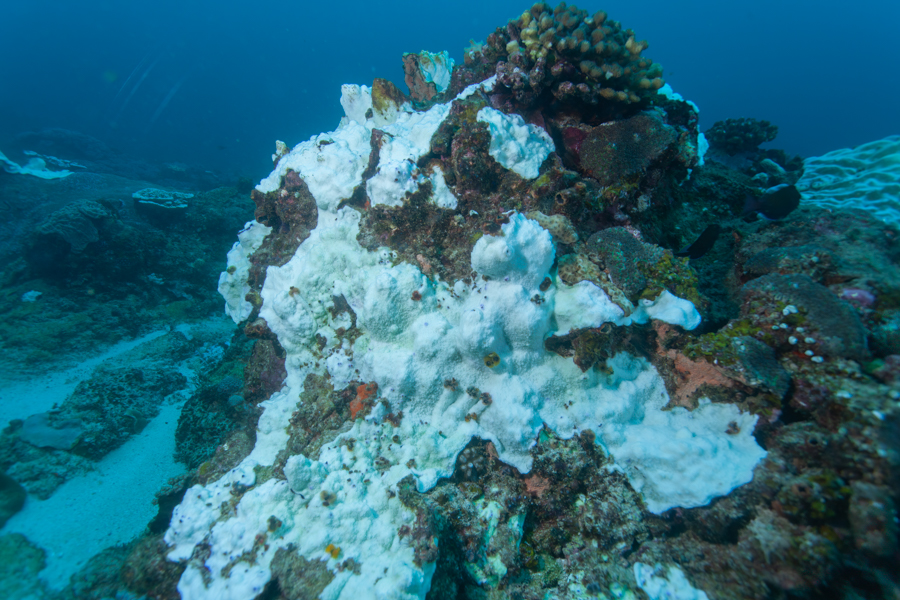
Bleached encrusting coral
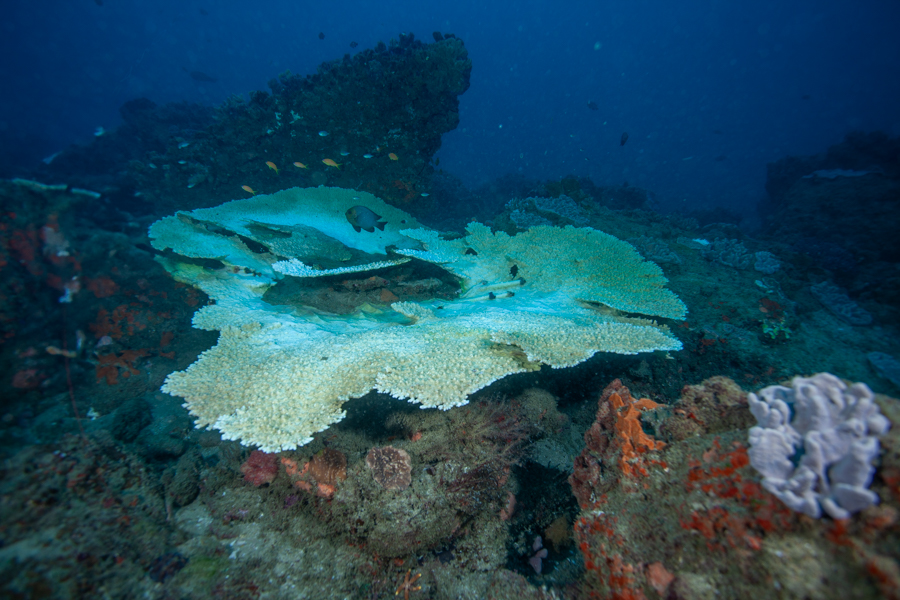
Bleached plate coral
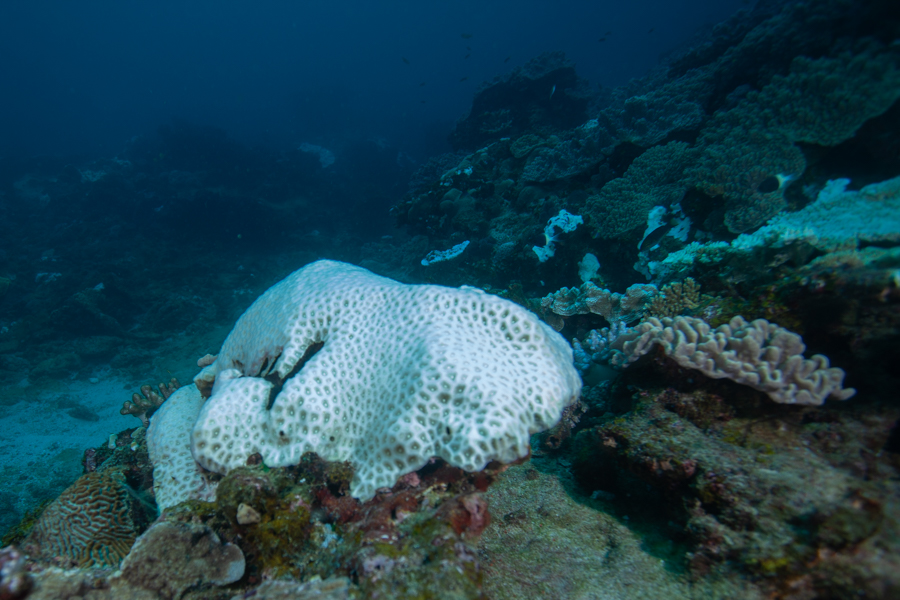
Branching and stag horn corals
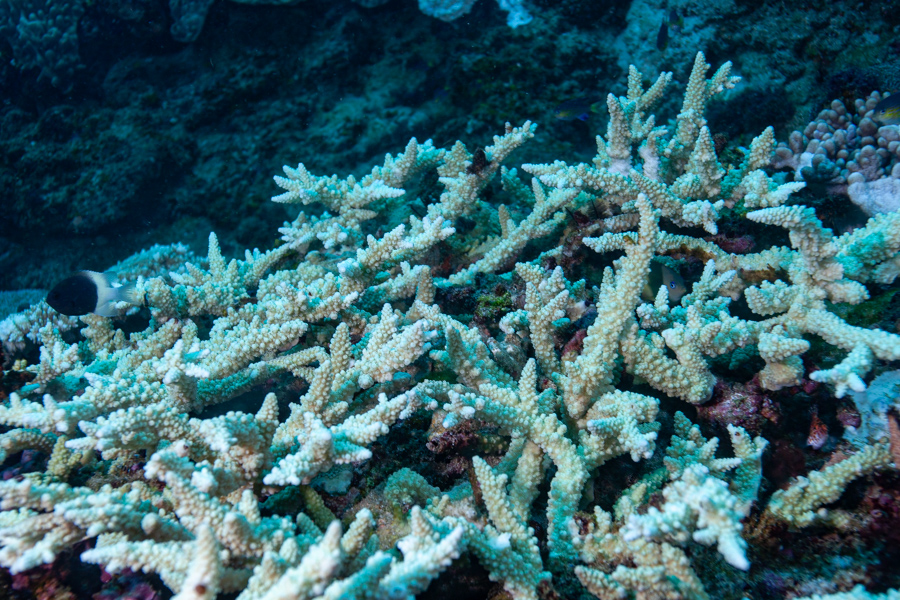
Bleaching is caused by the fact the zooxanthellae, a form of algae which live in the coral, become dysfunctional or toxic due to the environmental stress and the coral expels them.
Zooxanthellae are small algae that live in symbiosis with the coral polyp. In fact the coral cultivates this algae like a gardener and benefits from the production of sugar and nutrients. This means the coral does not have to catch so much food by hunting. They are responsible for the colours in coral and anemones and sponges so when they are expelled the host animals become white. The coral is not dead but now it has to fend for itself so its ability to survive depends on the availability of nutrients in the water.
If the stress which causes the bleaching is short lived or below a certain threshold for survival then the corals and sponges continue to fend for themselves until they repopulate with new zooxanthellae and return to their usual colour and function.
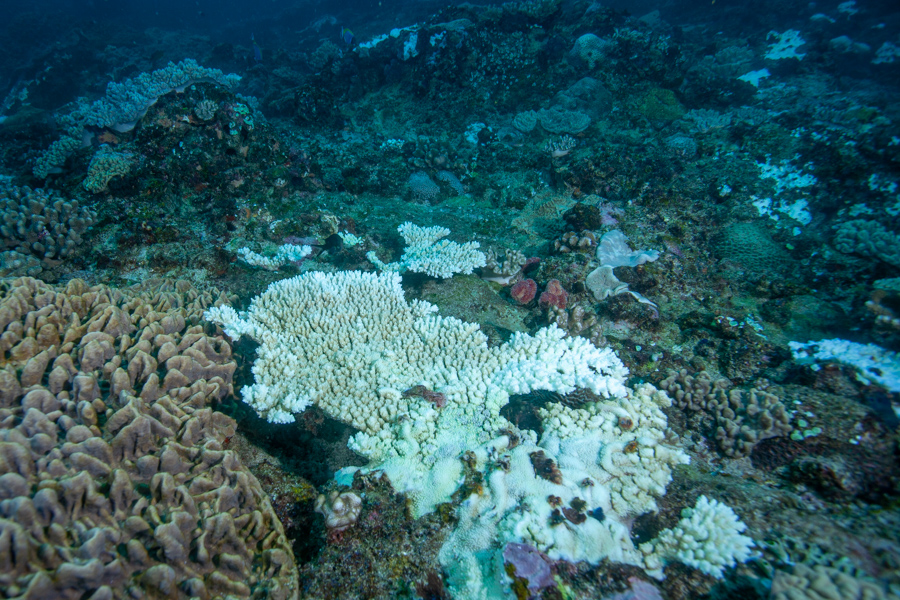
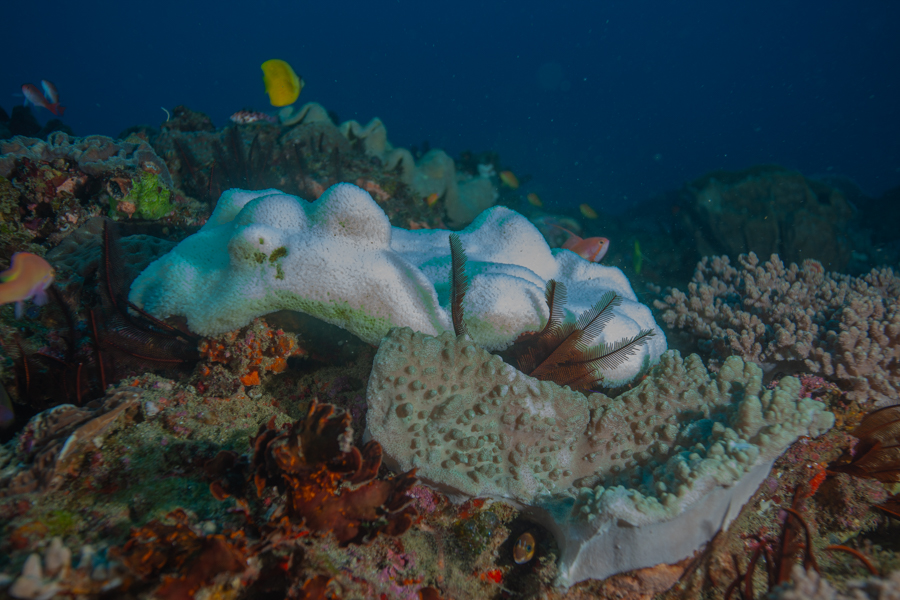

Bleached sponges. Just to remind you the picture below is the normal appearance of a barrel sponge.

When the coral is in the process of expelling or repopulating zooxanthellae it goes through colour transitions, usually taking on a purple tint or showing purple patches or rims. I sure hope what we are seeing in the photos below is part of the recovery. I am optimistic.
Let's hope this rain was a one off and not part of the great climate change shift. It just goes to show how resilient our reefs are but there are limits. I don't want to test them.
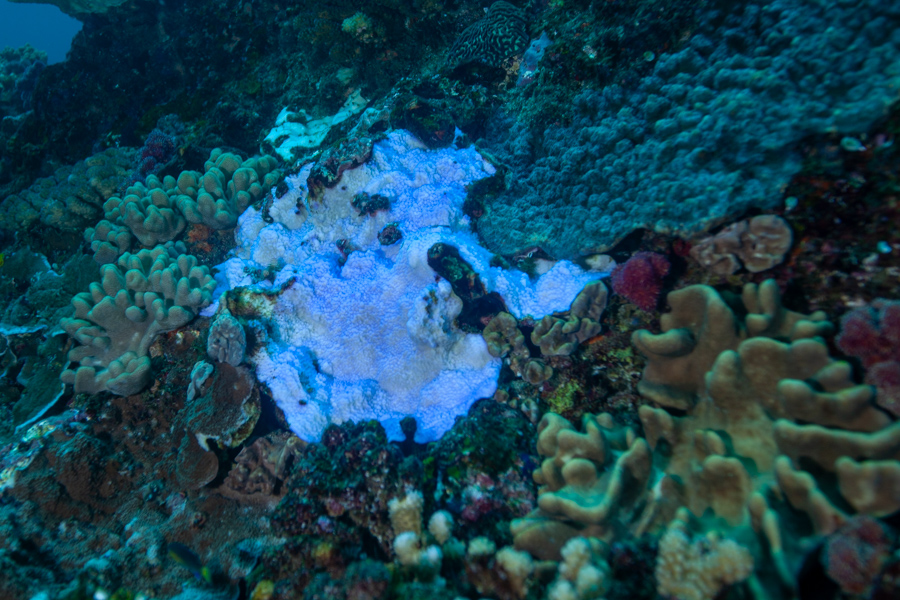

So just to emphasise there is beauty in bleaching. This little Pyjama nudibranch was found wandering on a piece of dead coral! Pretty cool actually.
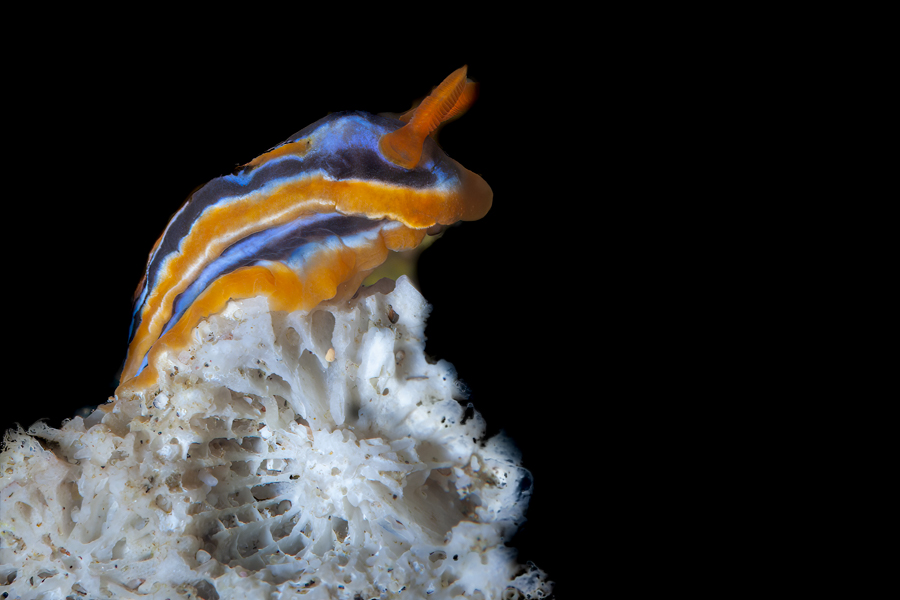
As a final part of the story we think this is a coral planula, basically a coral polyp the size of a grain of rice which I found floating at the safety stop. It's a sign of hope and renewal don't you think!

Friends Old and New
A final shout out to all our friends, old and new, under the water and on top. It is always a pleasure spending time with you, You Rock!!

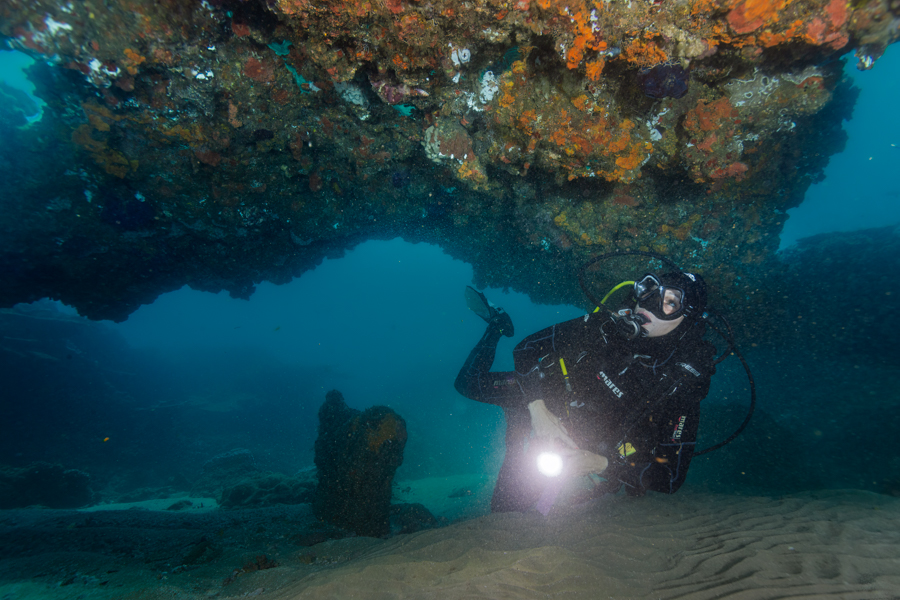
Gerrit and Lara and Laras 100 th dive!
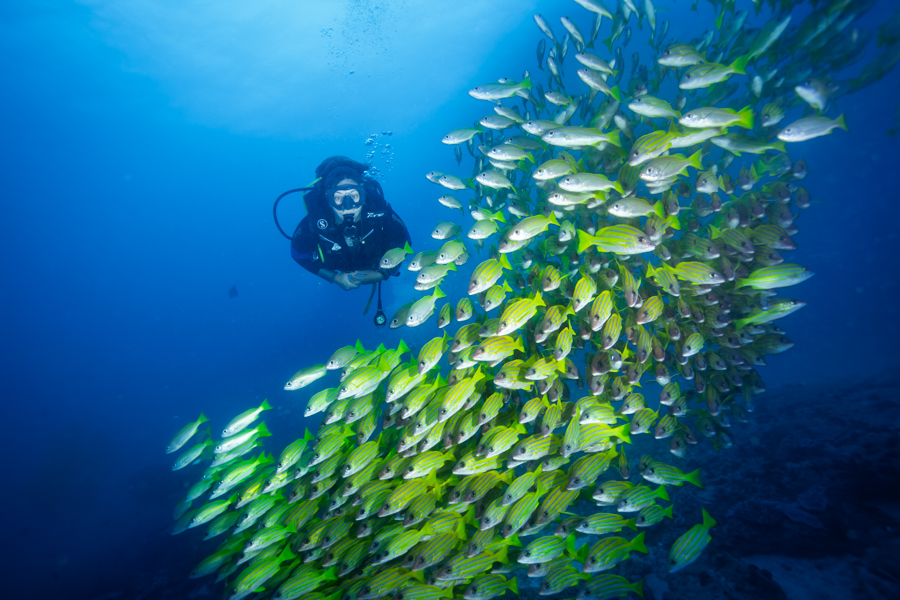

Our friends from the Freestate, Brenda and Kobus with their boys. I think we have been on the beach at the same time for 3 years running now. Same time same place next year!

Mother and daughter down time!

The volunteers!

True Love!
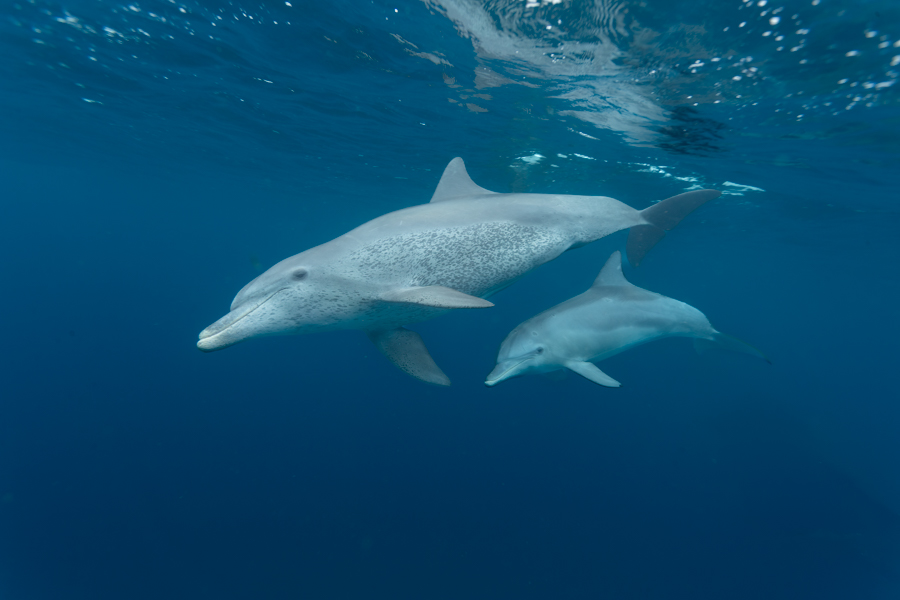
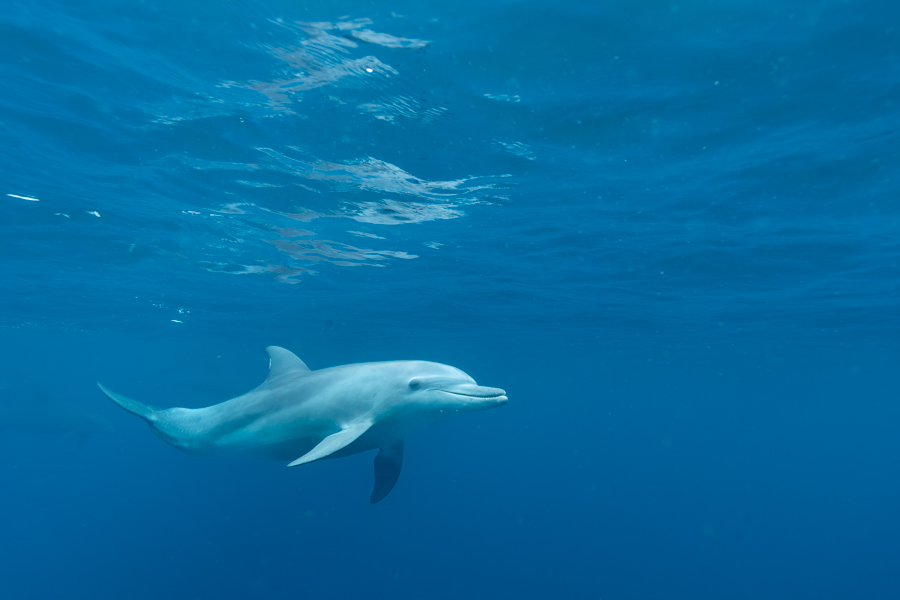
Always End With a Dolphin
Such steady companions. This year the dolphins on the backline were sometimes hard to find. What with big waves and rain they preferred to stay out of trouble, but as soon as the sun shone they came to sprinkle their inimitable stardust.

I hope you enjoyed Sodwana 2025. We had a ball as usual. So much to see and do. So much more to appreciate every year.
At risk of being repetitive thanks to Scuba Centre, the best on the beach. Greg is the man. We love you. Diving with Greg and Bron and Tonya is always a treat. Kudos to Thobani for putting up with us getting lost on every dive.
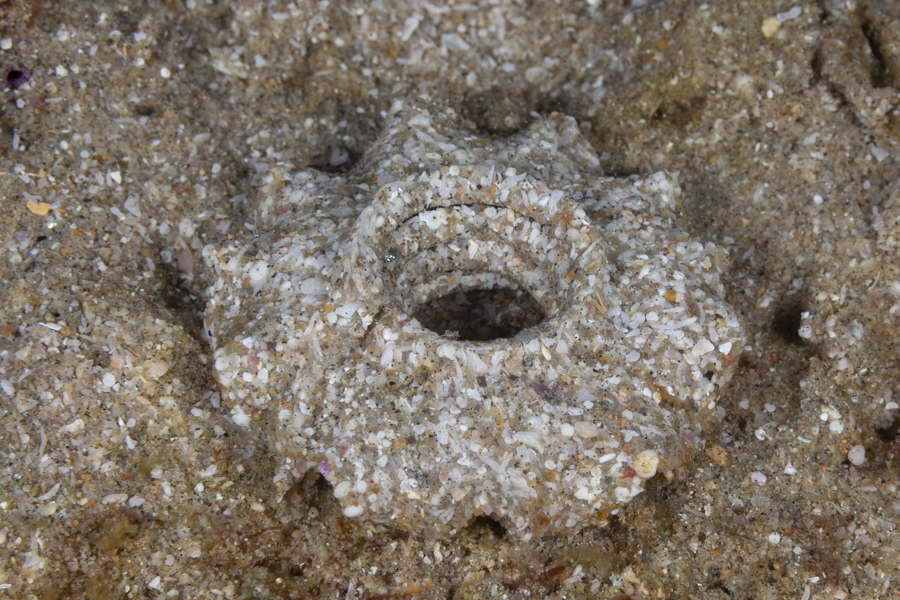
As an aside I found more of these things you see below this year and it's definitely a worm cast. I lost the argument, Dudley is right. He may argue he is always right but we will see about that!