Angola Take Two
Success is not final, failure is not fatal: It is the courage to continue that counts."
Winston Churchill
Angola in traveller terms, is really a country frozen in time. Traveling here is like traveling the world 50 years ago.
Until 2017 tourist visas into Angola were almost impossible to get. You needed to have a planned itinerary and an invitation from an Angolan business to even be considered, safari overlanders were virtually unheard of.
For this reason Angola's journey into tourism is still very new. It's no good grumbling about the lack of facilities and infrastructure, you have to celebrate in the interest and wonder of the people you meet, and revel in the untamed wilderness. The opportunity to free camp in places still untouched by development, debris and economic exploitation is priceless. The generosity of everyone we met was humbling.
So despite the many uncertainties and unknowns we set off again. The best decision we ever made.

Another Day, Another Border
“There are very clever man-made things, and there are also very stupid man-made things; borders between countries fall into this second category!”
Mehmet Murat ildan
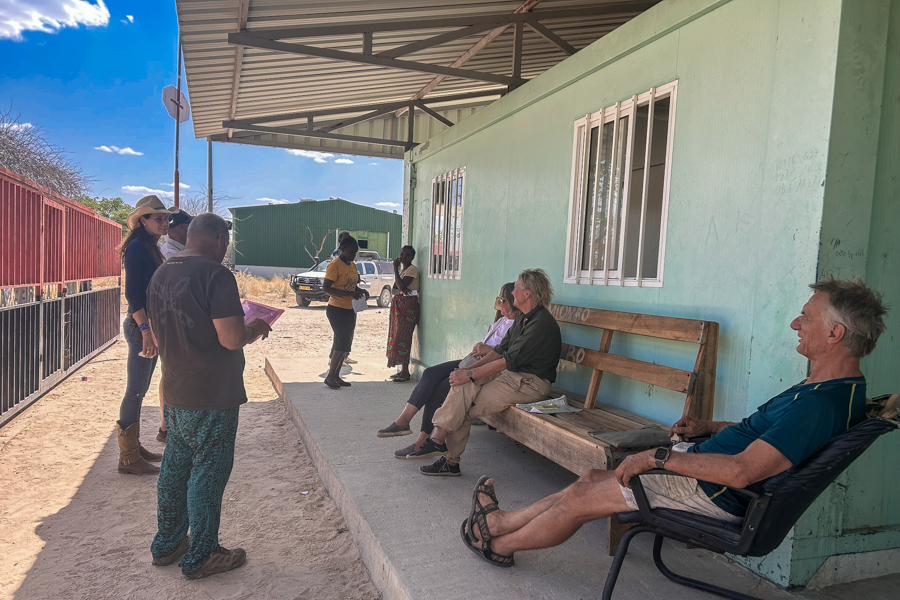
We rolled into Katwitwi border. At first glance it was a bit less rustic than Rundu, proper buildings even on the Angolan side, but no one was around. We had a lengthy wait before discovering that despite the buildings, immigration was in a rusty old container by the fence.
There was a very excitable policeman who clearly wanted us to do something. Eventually he herded us onto a bench and took our passports. They started processing the pedestrians and now more people poured in from the Angolan side and still we sat.
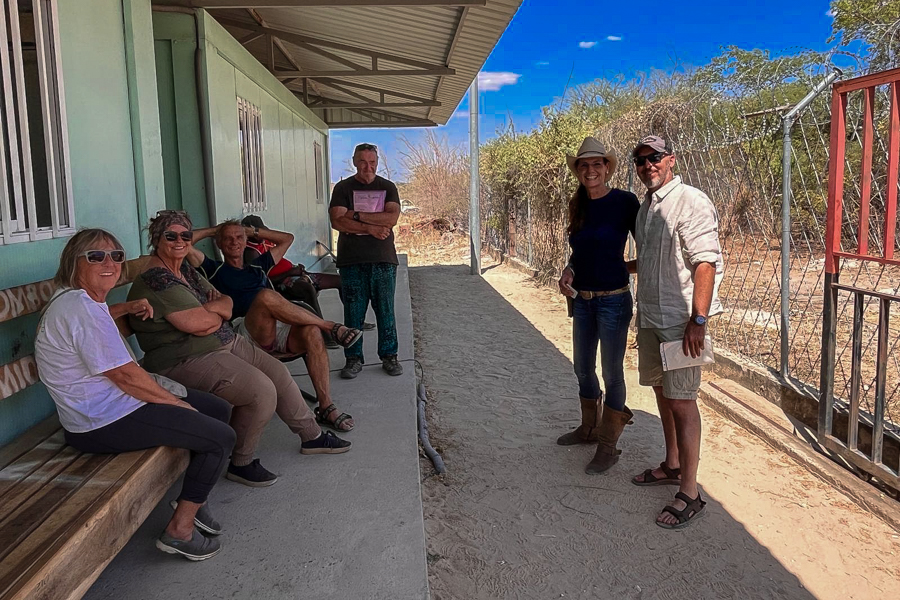
A Namibian couple turned up and we chatted. They were Rudi and Annette and had just been staying with Stefan. They have a lodge and game farm and had sold him elephants so they had been to check if they were settling in. It’s a small world and we said we would visit them on our way home. We were beginning to get the impression everybody knew Stefan. Mr Angola.
Interesting company whiled away the 2-3 hours we spent waiting for our turn. Eventually we were processed and at least the visa did not looked forged and tampered with this time. We rolled out in intense heat, a 6 or 7 hour journey ahead of us for 150 km.
Welcome to Angola, again.
The Ferry
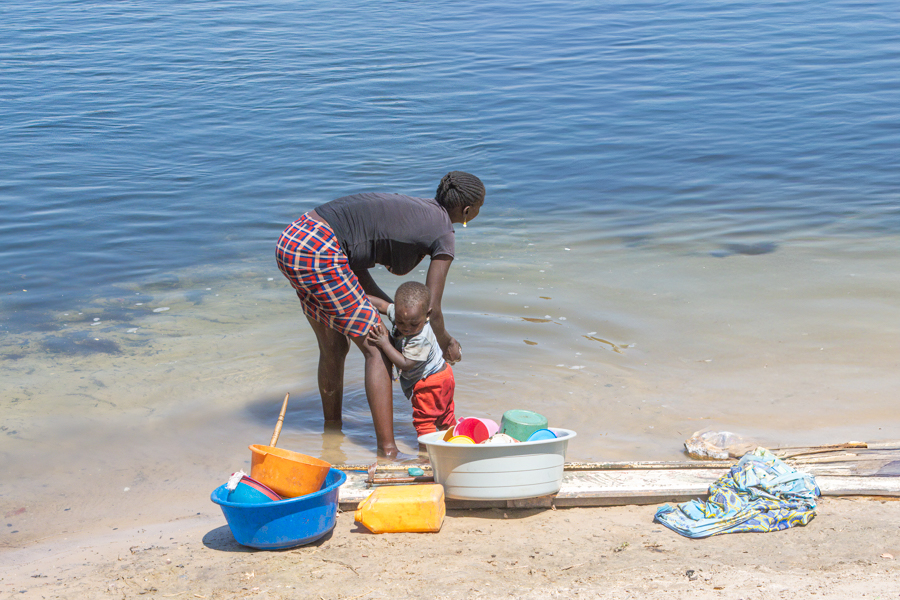
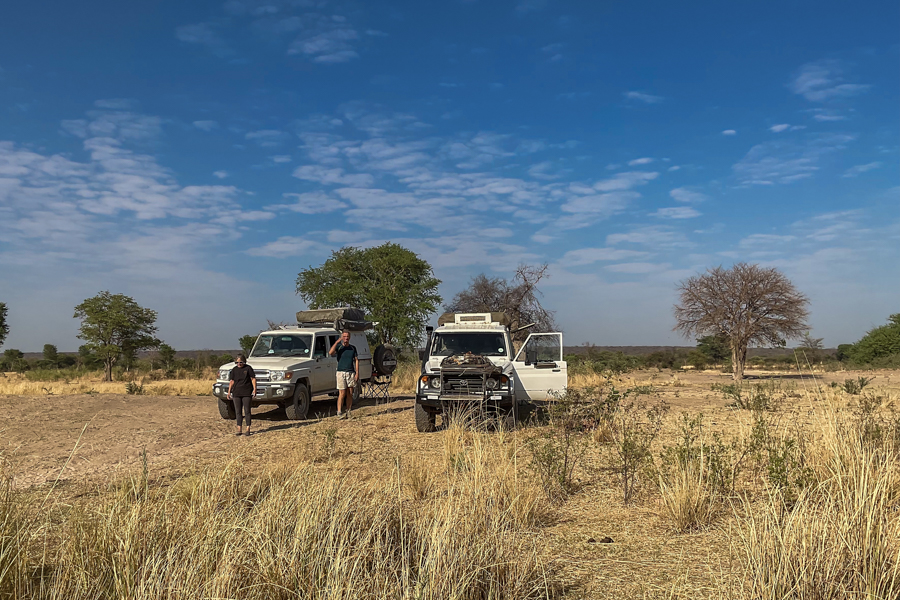
The road was sandy and rocky but nowhere near as bad as the roads back east. Lots of deviations and detours had been cut next to the road so we weaved back and forth. There was a bit more traffic, mainly motor bikes and Kewasaki tricycles overloaded to the gills, and neat villages every 10-15 km.
No accommodation was evident, nor did we see any fuel. Carmen, who, at 5 ft tall and 50 kg soaking wet, is the smallest of the party, was game to seek out the fuel mafia in every village, but we had enough fuel for now and we restrained her enthusiasm.
We had one police stop but they checked our papers and waved us on. Everyone was friendly.
As the sun went down we drove off the road down towards the river to camp. There were people washing and collecting water and we asked if we could camp by using mime. They seemed amused and no one bothered us.
We had a lovely night serenaded by night jars and the odd donkey but got up ridiculously early as no one had told us we had come through a time zone.
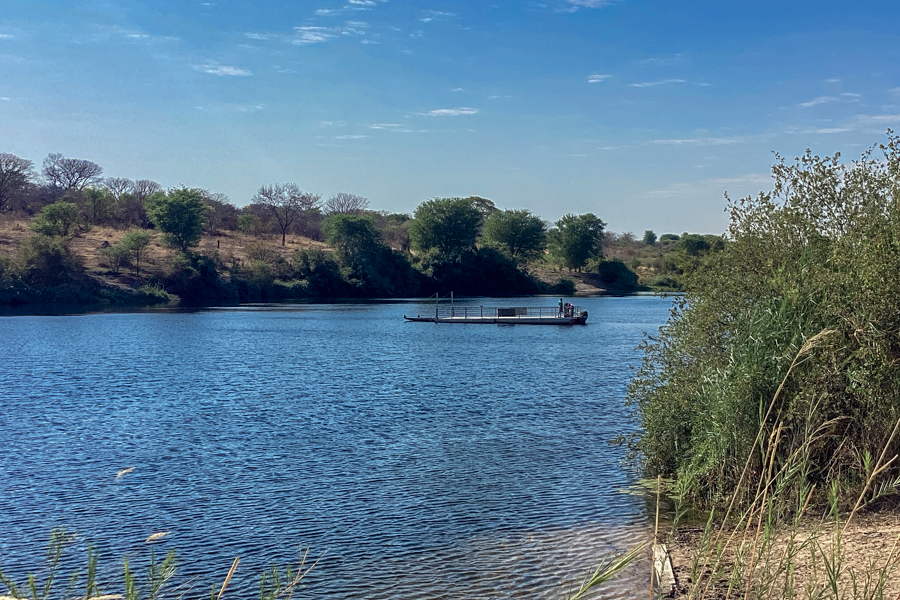
Next day we made it to a river crossing. This is the Okavango River, or Cubano River as it is known in Angola. A small single car ferry was moored on the opposite shore and we shouted until they launched to meet us.
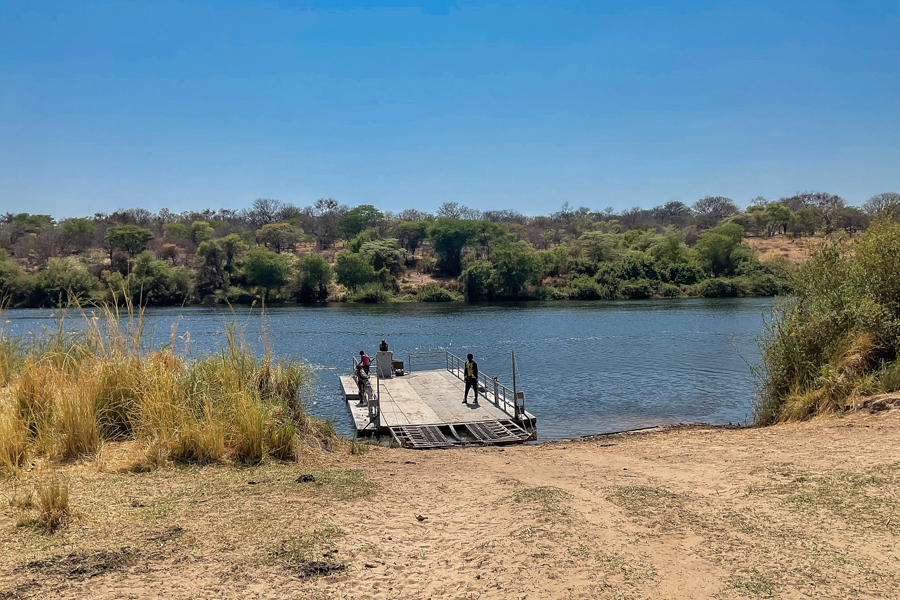
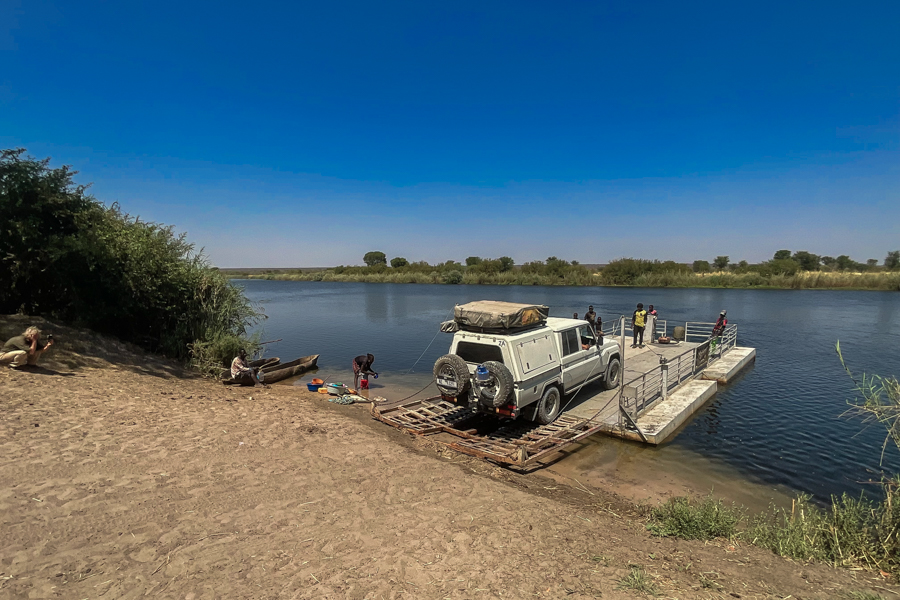
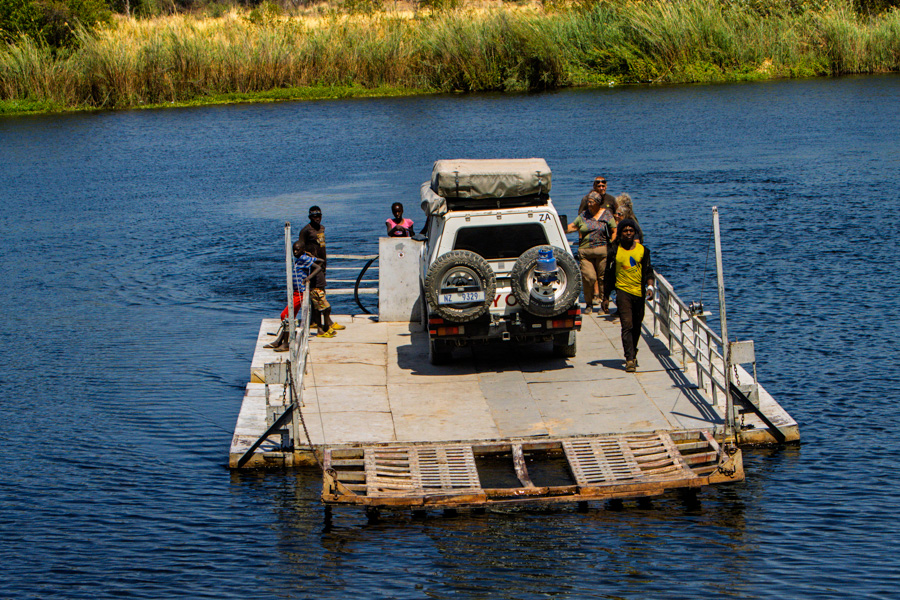
The ferry put-putted slowly across. It looked like it was driven by children. The trajectory started to look a bit shaky as the nose drifted out of the current and it became clear they had stalled. Laughing we speculated they had no fuel. Little did we know that was exactly what had happened.
30 minutes went by and then 2 youngsters materialized from a bush with a gas can. We unloaded Ian’s car and the boys set out with their guides to find fuel.
1 hour later they were back with the goods. They had had a crash course in the fuel mafia. Every village has a group of young men with barrels of fuel available at a price. They were ripped off of course.
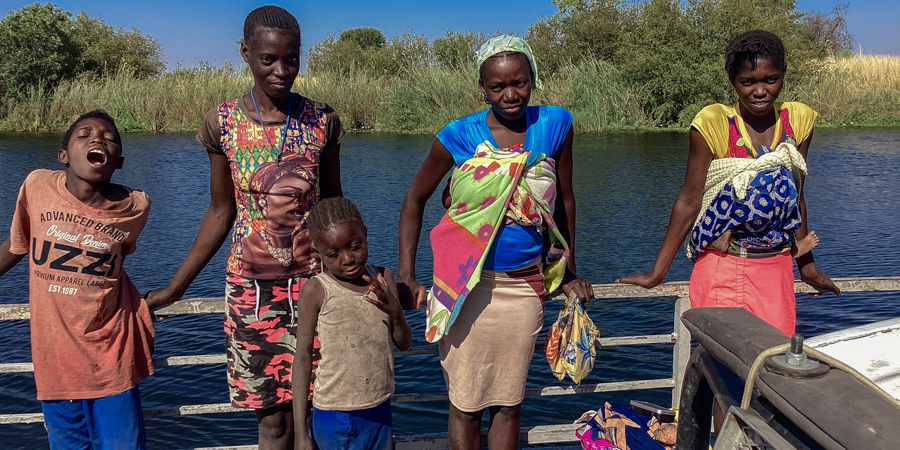
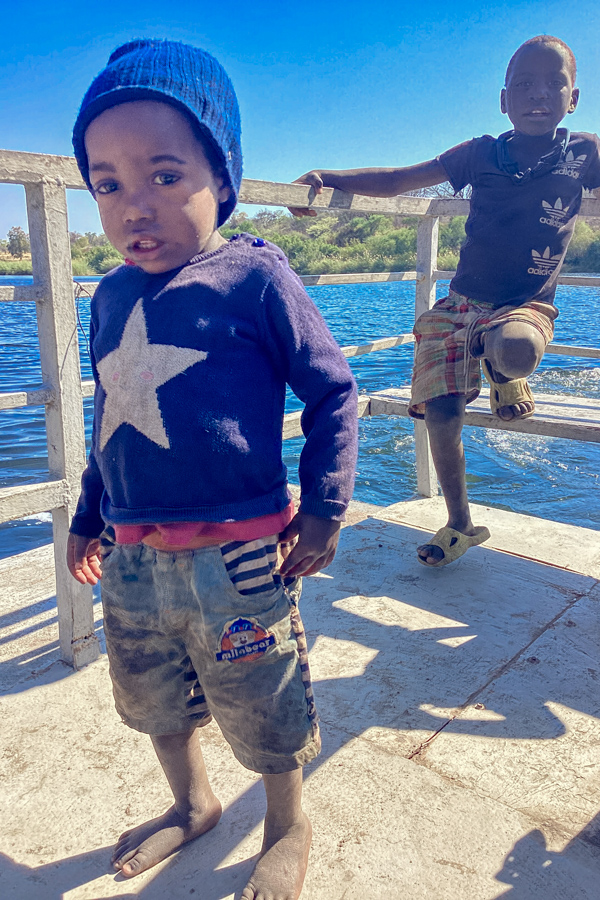
The rest of the ferry ride went smoothly. The real captain came across this time but he let his young daughter drive. We were joined by some local women with their babies who had washed in the river while they waited.

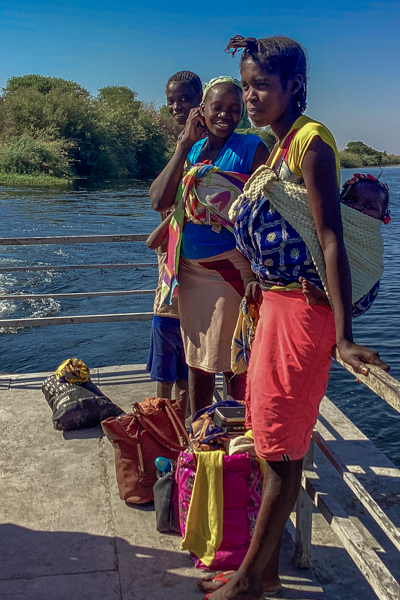
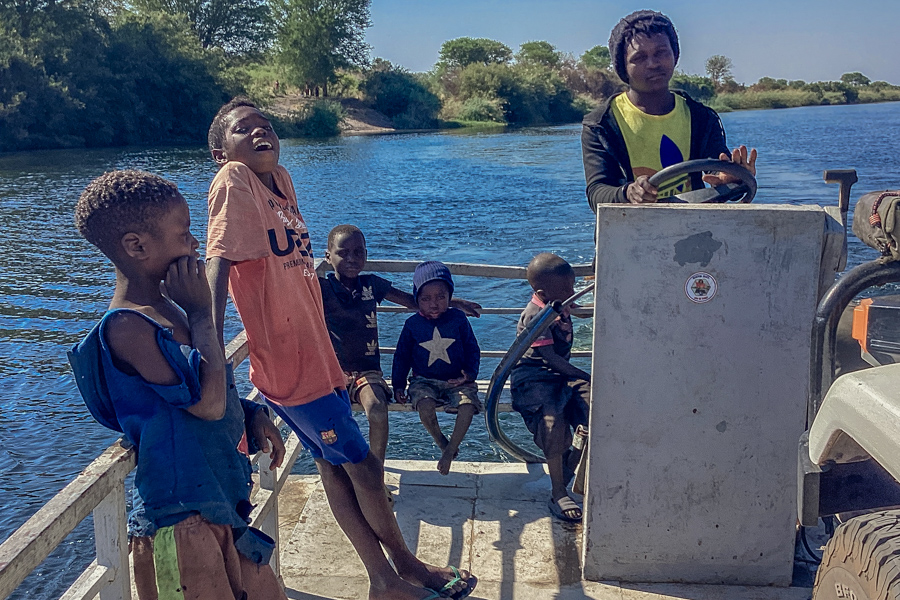
Cuatir
We arrived at Cuatir basecamp around lunch time. We were nearly driven off the road by a police car racing in the opposite direction. They were taking fuel to the ferry!
We were welcomed warmly, Stefan told us we could camp anywhere and opened a chalet to use the bathroom. There was one other overland group there trying to mend a fuel line.
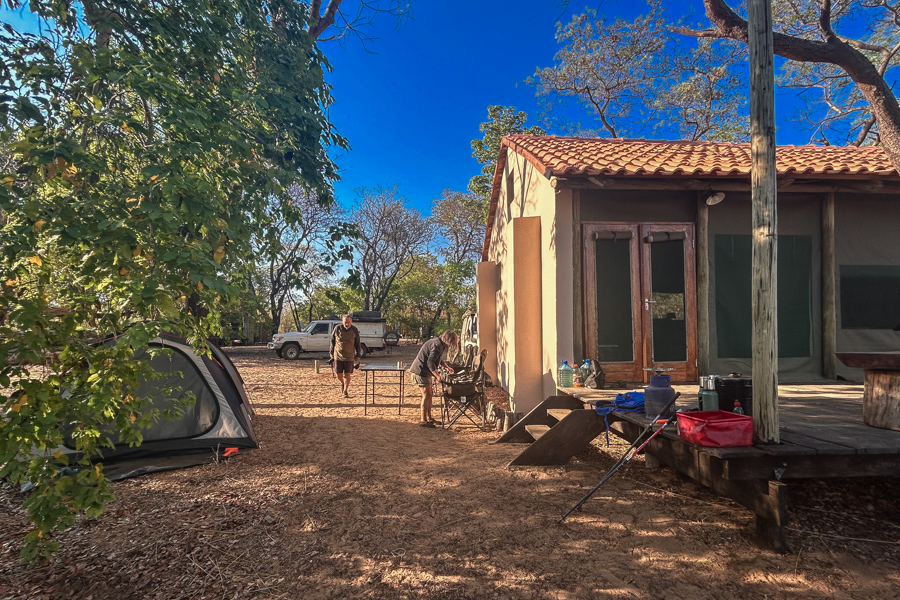
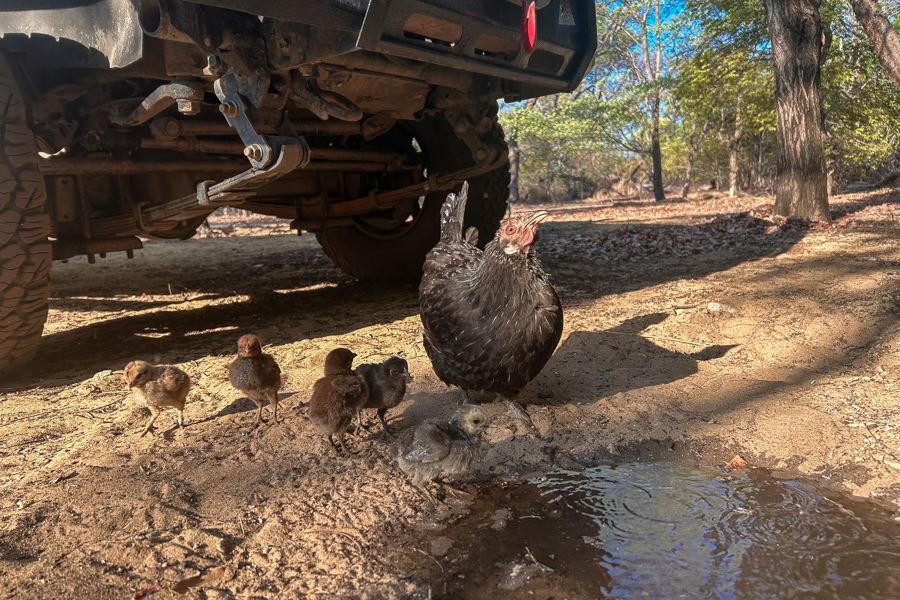
They opened a chalet for us to use the bathroom and we looked out on an unobstructed view into the reed beds. Camp chickens kept us company but I think there was one less chick every day.
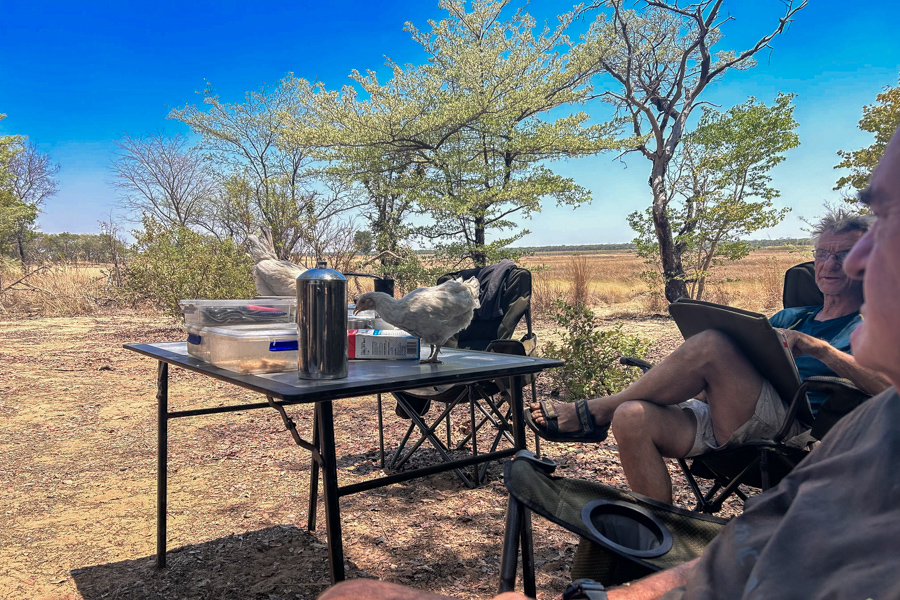
Stefan took us into the reserve to find the elephants who were at a waterhole near camp.
They certainly looked happy. There are 26 of them and they have landed in elephant heaven, patches of forest, lush grassland going down into wetland and reed beds.
The reserve is bounded by rivers on 2 sides and there seems to be very few people around the park. Small families live next to the rickety bridges over the rivers and act as gatekeepers.
Little or no poaching has been reported since Stefan took over.
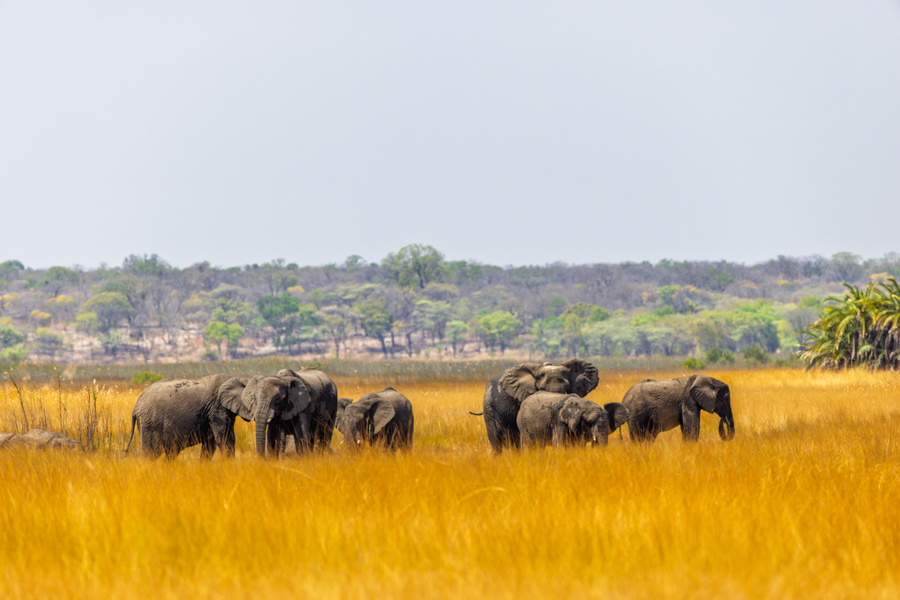
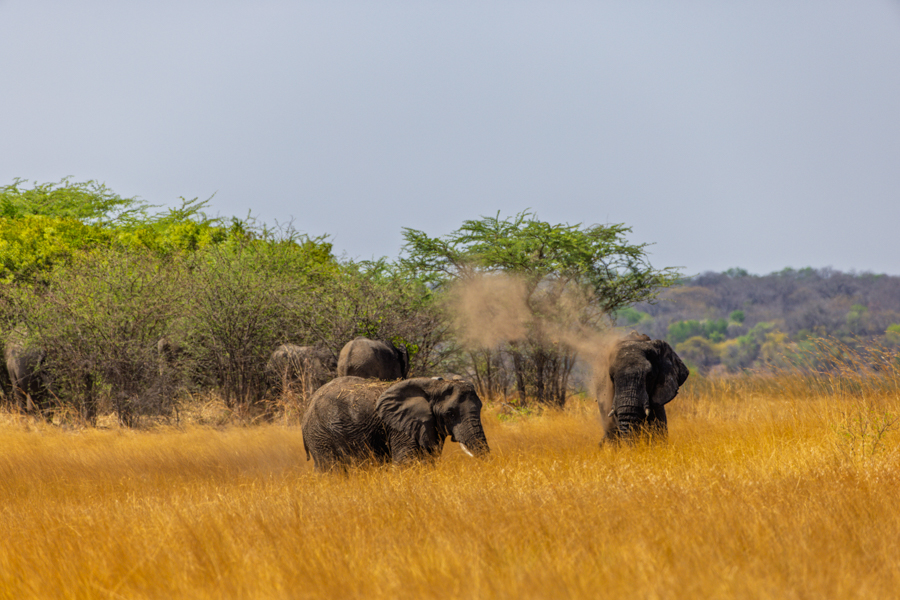
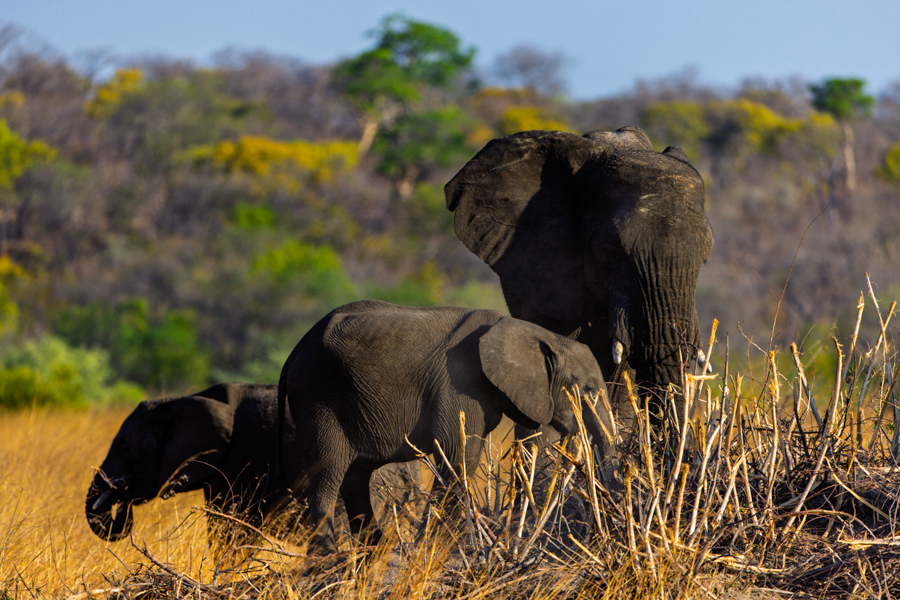
Later that afternoon Stefan again led us out In the reserve and we ended up at a boma upon a hill overlooking the reserve where we shared drinks and snacks and watched the elephants in the distance.
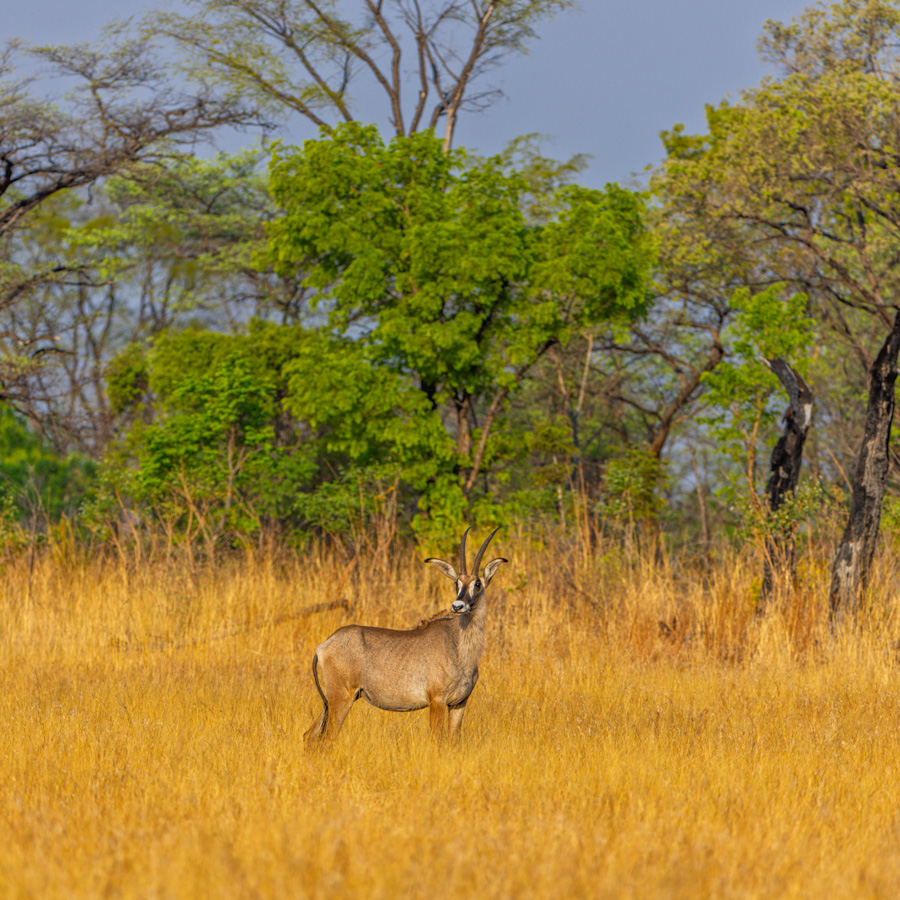
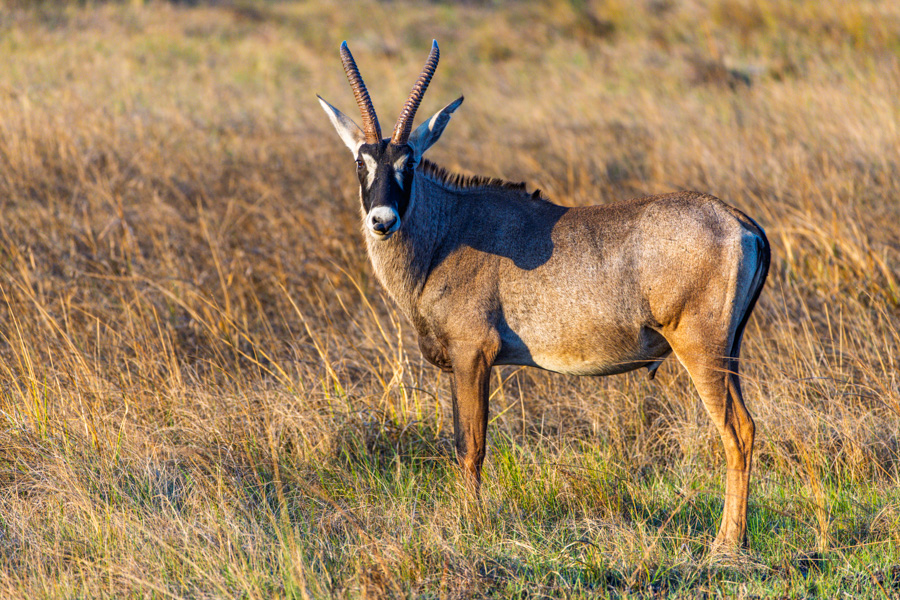
For 3 days we roamed his reserve. Game is shy but there were plenty of sightings of roan antelope, reed buck and impala and the elephants kept popping up, kings of the reserve. They have already uprooted trees and water pipes, the scamps. We saw a few graceful giraffe.
He has cheetah and wild dog but no lion as yet. Shy sitatunga lurk in the reed beds. The roan antelope are his pride and joy. It took him 5 years to lure them out of hiding.
There are plans for the future, to expand the reserve and introduce buffalo and lion. Essentially there is little development between Cuatir and Luengue- Luiana 700 km east. He has a dream to link the two. Ambitious but if anyone can do it he can. Currently he has made an offer on a further 200 km2 over the river and the president is considering it. This is the only private game reserve in Angola and there is some paranoia and suspicion from the authorities to combat. Already the secret police have been sniffing around.
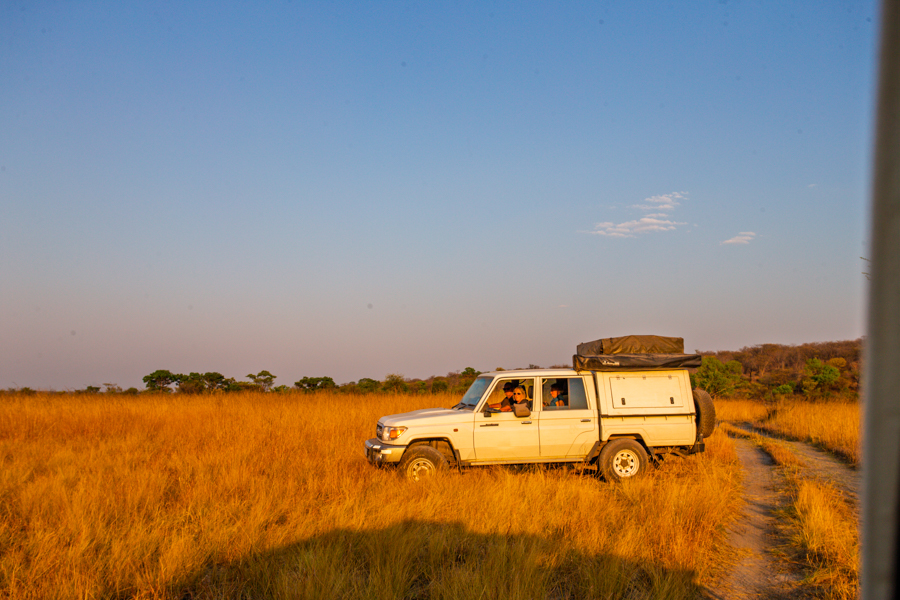
Stefan encouraged us to go off-road but we were a bit wary of the wetlands.
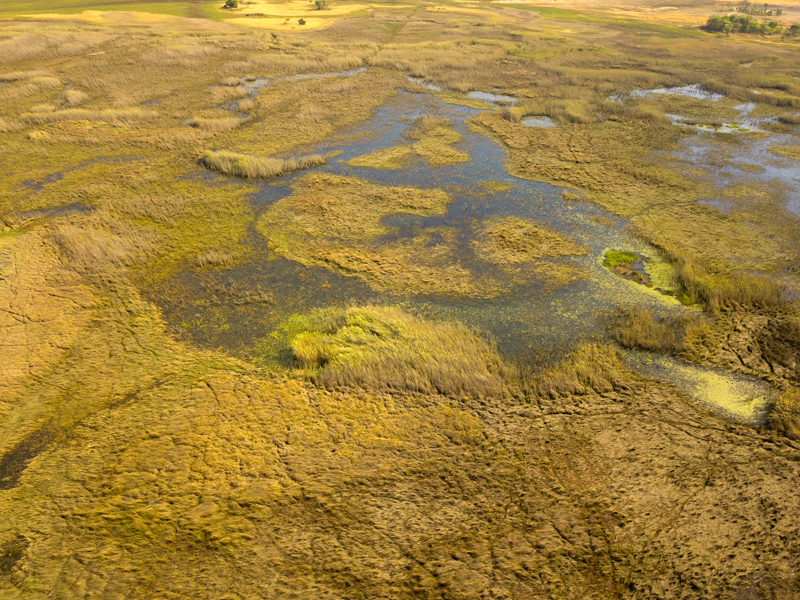
Ariel view of the wetlands
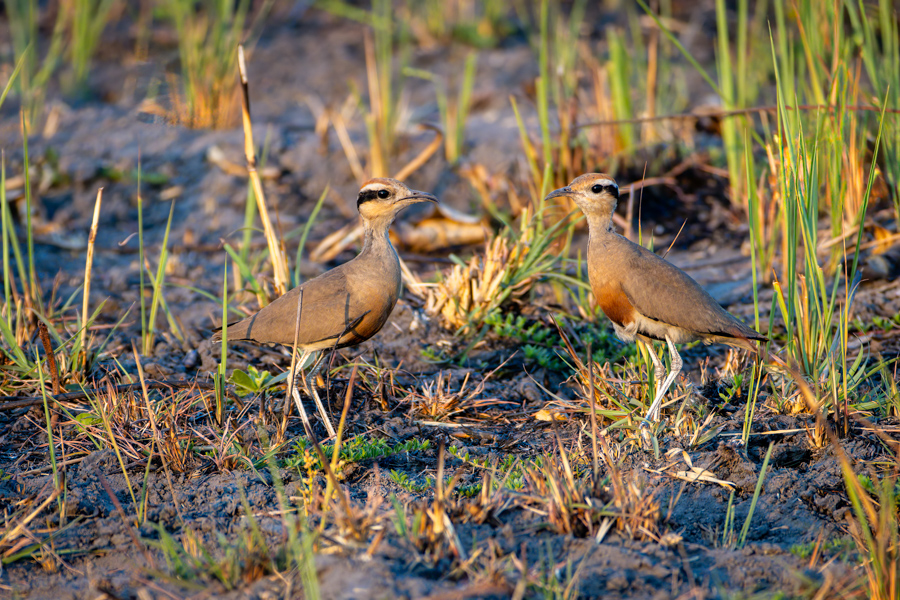
Temmicks Courser
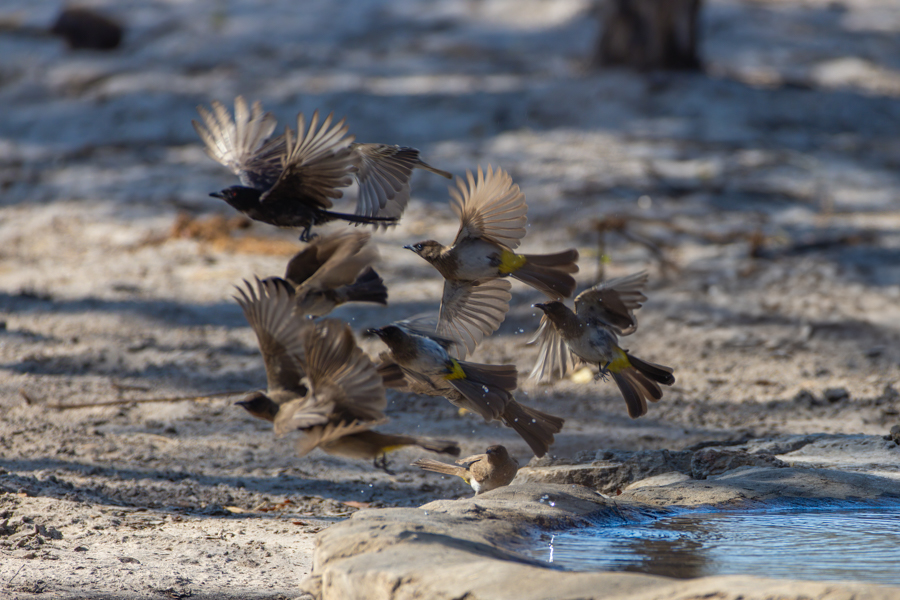
Black Capped Bulbul
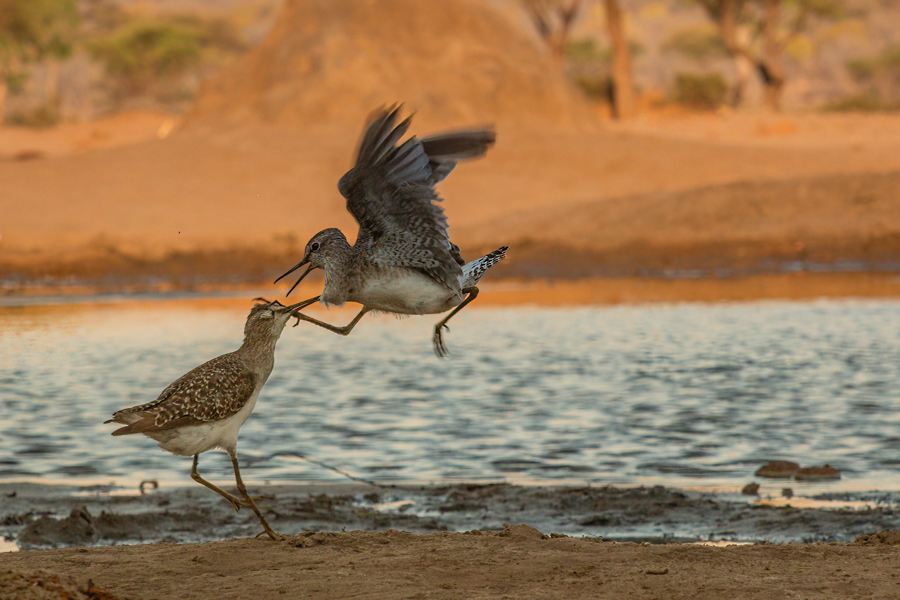
Fighting Ruffs

Scattered waterholes gave opportunity for birding, Yellow-throated Petronius, Meyer’s parrot and Yellow canary, Temmicks courser and a blue eared starling to name a few.
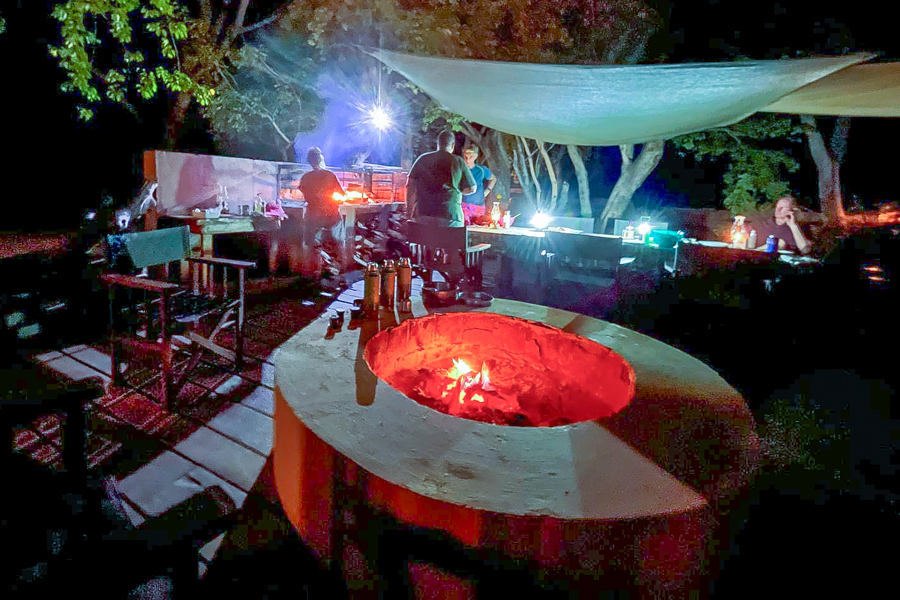
In the evenings the landscape was framed in orange light. At night we cooked together around a communal fire.
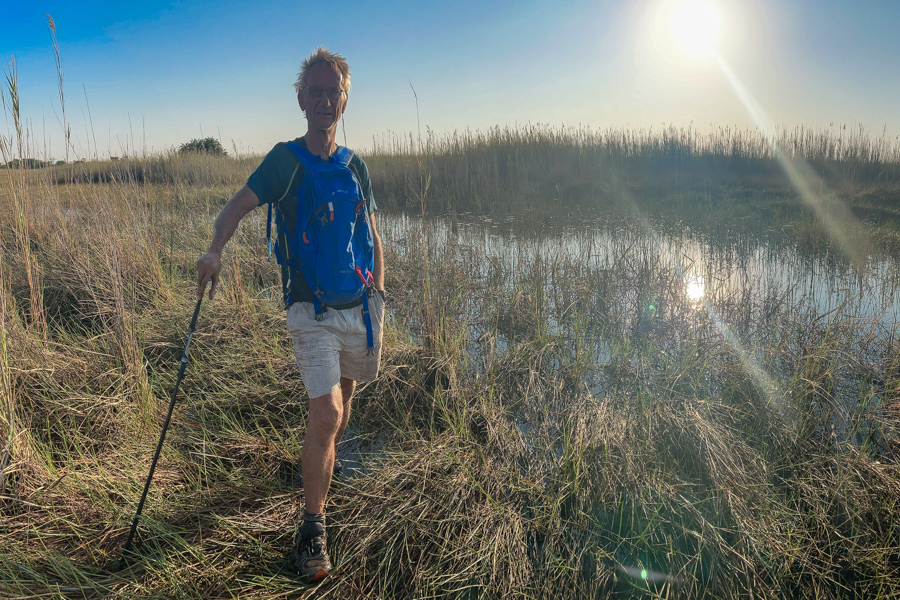
We took a walking and canoe tour early one morning to try and find the sitatunga but, apart from wading in the swamp up to our thighs, we were unsuccessful. Ian balanced precariously in a dugout but still saw nothing but banks of reeds.
It did not help we could not communicate with the guide.
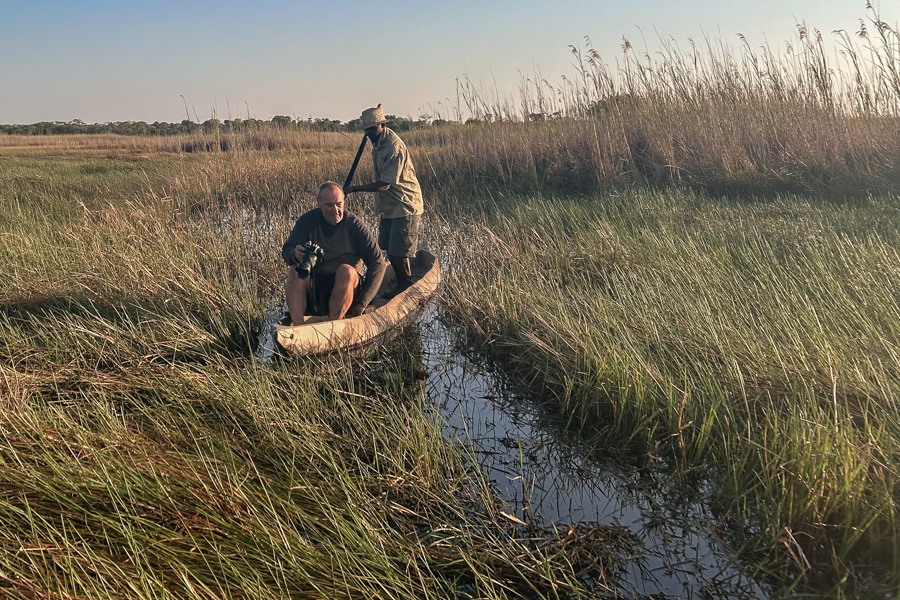

Stefan
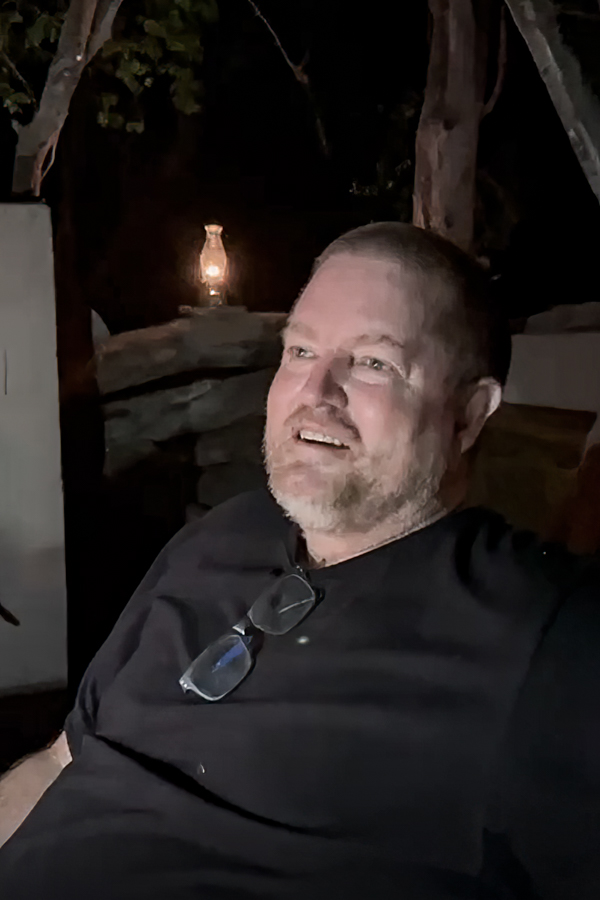
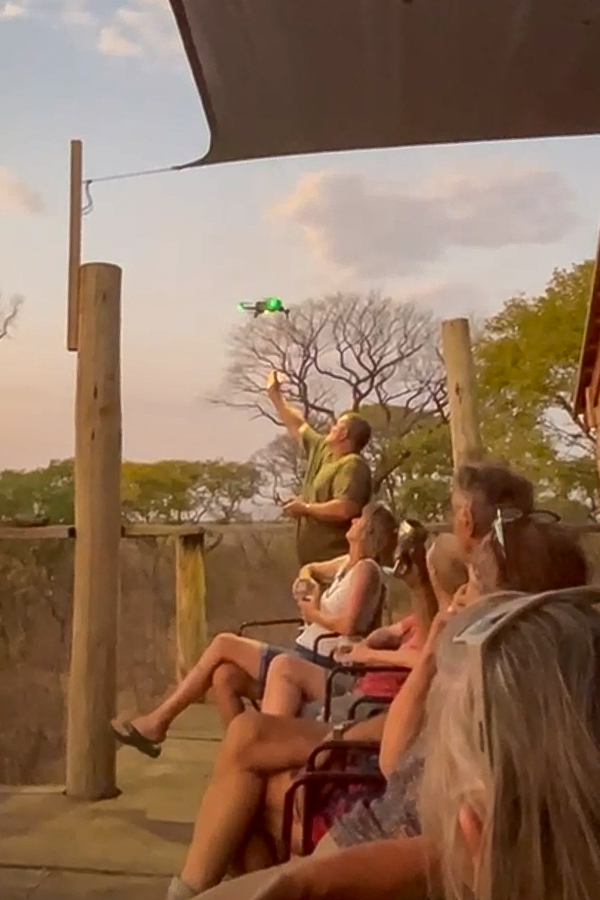
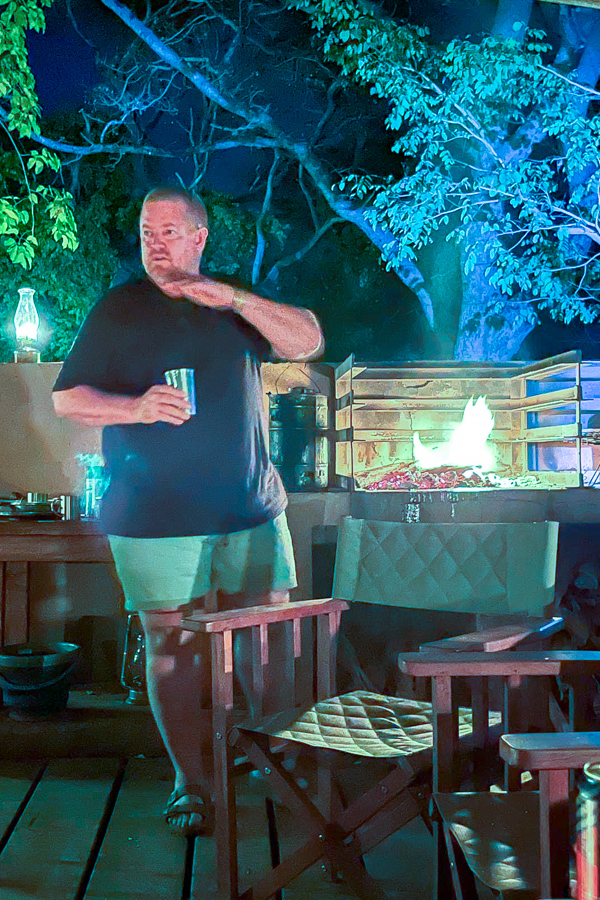
Photos courtesy of Sonia who always had her cell phone at the ready for behind the scenes shots!
So this part of the blog would be incomplete without a bit more about Mr Angola himself, the amazing Stefan van Wyk.
Sometimes you meet people larger than life. He really put our trip on track with his warmth, generosity and freely offered help and advice.
He enabled us to plan a route which took in lots of highlights, but was manageable in the time frame and fuel constraints.
He gave us confidence to continue despite our many setbacks.
He operates a high end tour company in Southern Angola, 3 teams of guides and a bespoke itinerary. The emphasis of the tours vary but the coast line, local tribes and landscape are the main draw. Some war tourists and some persistent wildlife enthusiasts.
The war in Angola put paid to most of the game in the south so big herds are only reported in Luengue-Luiana and we just showed how hard that was to reach. He has owned Cuatir for 9 years and he clearly loves the wild and Is passionate about his project to restore it to its past glory.

Sharing supper around the fire after a brutal game of Canasta.
He started as a pilot and owned an airline company who ferried all the gas and oil people around. Then Angola went through a period of recession and inflation when the oil crash occurred, the dollars were not coming into the country and he could not pay for the parts and maintenance unless he used a highly inflated black market. This led to a cash flow crisis and he sold the company.
He then went into partnership developing Flamingo Lodge on the coast but later sold out and turned his attention to Cuatir.
So if you are thinking of an Angola trip he is the man to contact, he will set you on your way, even if you are self driving and not using his tourist services.
He has a few camp sites scattered around to service his guests and he welcomed us without hesitation wherever we needed help finding accommodation.
I am pretty sure his guided trips would be well organised and full of opportunities to meet the local people he clearly feels so connected to.
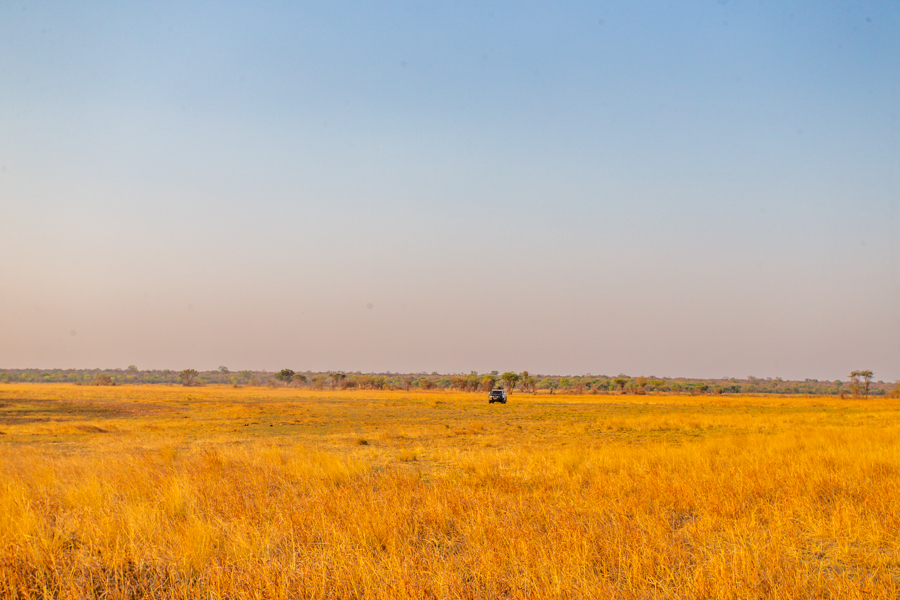
Stefan roaming the reserve in his cruiser. He was always out and about following his new elephants.
He bought us SIM cards and helped us contact our wayward partners left in Botswana. There were times I am sure he thought he was dealing with a bunch of baby bunnies we were so clueless. To his credit he never showed anything but mild amusement. Everywhere we went people seemed to know and like him. His staff adored him. A pretty good recommendation I would say.
He also offered to buy the Beast so clearly a man of taste.
After 3 days we had to move on and with much gratitude we said our farewells and headed out for our next stop at Menongue. In fact Stefan was also heading out to Menongue en route to meeting his next group of international customers flying in.
He had given us the address of his house in Menongue so we could camp in the garden. He passed us on the road in a cloud of dust. The ferry was on point, the boss had just been through!